The 30 Greatest Jazz Songs of All Time, Ranked by Our Critics
The greatest famous jazz songs of all time span more than a century of recorded music, from Louis Armstrong’s 1923 cornet recordings for OKeh Records to the global streaming era, and selecting the definitive 30 requires weighing cultural impact, critical consensus, recording quality, and documented influence on subsequent musicians. No single list can satisfy every jazz listener, but this ranking draws on those four criteria to build the most defensible case possible.
Table of Contents
- How This List Was Built, Selection Criteria Explained
- Why the Definitive Recording Matters, Not Just the Composition
- The 30 Greatest Famous Jazz Songs of All Time, Full Ranked List
- #1. So What, Miles Davis (1959)
- #2. Take Five, The Dave Brubeck Quartet (1959)
- #3. West End Blues, Louis Armstrong and His Hot Five (1928)
- #4. A Love Supreme, Pt. I: Acknowledgement, John Coltrane (1964)
- #5. Strange Fruit, Billie Holiday (1939)
- #6. ‘Round Midnight, Thelonious Monk (1957)
- #7. Ko-Ko, Charlie Parker (1945)
- #8. Take the “A” Train, Duke Ellington Orchestra (1941)
- #9. Body and Soul, Coleman Hawkins (1939)
- #10. Sing, Sing, Sing (With a Swing), Benny Goodman (1937)
- #11. My Favorite Things, John Coltrane (1960)
- #12. Moanin’, Art Blakey and the Jazz Messengers (1958)
- #13. Maiden Voyage, Herbie Hancock (1965)
- #14. Birdland, Weather Report (1977)
- #15. The Girl from Ipanema, Stan Getz / João Gilberto featuring Astrud Gilberto (1964)
- #16. One O’Clock Jump, Count Basie Orchestra (1937)
- #17. Spain, Chick Corea (1973)
- #18. God Bless the Child, Billie Holiday (1941)
- #19. Footprints, Wayne Shorter (1966)
- #20. Black Bottom Stomp, Jelly Roll Morton and His Red Hot Peppers (1926)
- #21. Hotter Than That, Louis Armstrong and His Hot Five (1927)
- #22. In the Mood, Glenn Miller Orchestra (1939)
- #23. Chameleon, Herbie Hancock (1973)
- #24. Singin’ the Blues, Bix Beiderbecke and Frankie Trumbauer (1927)
- #25. A Night in Tunisia, Dizzy Gillespie (1946)
- #26. Watermelon Man, Herbie Hancock (1962)
- #27. Joy Spring, Clifford Brown (1954)
- #28. Carolina Shout, James P. Johnson (1921)
- #29. Blue Train, John Coltrane (1957)
- #30. Fly Me to the Moon, Frank Sinatra with the Count Basie Orchestra (1964)
- Era Distribution, How This List Covers Jazz History
- Quick-Reference Table, All 30 Famous Jazz Songs at a Glance
- Honourable Mentions, Five Songs That Almost Made the List
- Frequently Asked Questions About Famous Jazz Songs
- What is the most recorded jazz song of all time?
- What is the best-selling jazz song of all time?
- What famous jazz song has the most cover versions?
- What is the most famous jazz song used in a film?
- What is a good famous jazz song for someone new to the genre?
- Where This List Goes From Here
Jazz has produced an estimated half a million commercially released recordings since the first sessions in 1917. Narrowing that ocean to 30 songs demands hard choices. Some beloved tracks don’t appear here because a pop crossover hit isn’t the same as a compositionally significant jazz performance. Others are absent because the most famous recording is a cover, not the definitive version. What remains is a list that spans Hot Jazz, Swing, Bebop, Hard Bop, Modal, Fusion, and vocal standards, a genuine cross-section of the best jazz songs of all time, not a nostalgia playlist.
For quick orientation: the most famous jazz songs of all time tend to cluster around two pivotal years, 1939 and 1959, when the music underwent seismic shifts. Both years are well represented here. The roots of the genre in the 1920s are equally present, because you can’t understand where jazz went without knowing where it started.
How This List Was Built, Selection Criteria Explained
Four criteria drive every placement on this list. Cultural impact comes first: radio play history, documented sales records, film and television licensing, and verifiable streaming reach all factor in. A song that changed what listeners expected from jazz scores higher than one that impressed only specialists.
Critical consensus comes second. Jazz24’s 2019 listener poll gathered 1,500 nominations from its audience and placed “Take Five” at number one, with “So What” a clear second. DownBeat’s historic critics’ polls, running continuously since 1936, provide a long-term consensus view that no single-year survey can match. JazzTimes retrospectives and AllAboutJazz editorial rankings supplement those data points.
Recording quality ranks third, and it’s a criterion most competitor lists ignore entirely. A composition recorded badly, or in a version that doesn’t capture the performer at their peak, ranks lower than the same song caught at the right moment in the right studio. This list anchors every entry to a specific recording and album, not just a title.
Documented influence on subsequent musicians ranks fourth. Published interviews in DownBeat, liner notes from named producers, and verifiable musician testimony all count. A song that changed how the next generation played jazz carries more weight than one that was simply popular in its moment.
Why the Definitive Recording Matters, Not Just the Composition
“Autumn Leaves” has been recorded well over a thousand times. “Body and Soul” is cited by some discographers as the most-recorded song in jazz history. Ranking either requires choosing one version and defending that choice. This article does exactly that: where composer and performing artist differ, both are credited, and the specific album is named. That methodology separates this list from every Spotify playlist that treats all versions as interchangeable.
Era balance is also built into the selection process. At least five songs come from the Hot Jazz and 1920s era, six from Swing, six from Bebop and Hard Bop, six from Modal and Post-Bop, four from Fusion and the contemporary period, and three vocal jazz standards that cut across multiple eras. Some songs satisfy multiple categories simultaneously.
The 30 Greatest Famous Jazz Songs of All Time, Full Ranked List
The best jazz songs of all time don’t belong to a single decade or style. The 30 entries below span 1921 to 1977, covering the most famous jazz songs from the 1920s through the fusion era, the best old jazz songs of the Swing period, and the modal masterworks that redefined what jazz could be. Each entry names the definitive recording, the composer, and the specific musical detail that earns its place here.
#1. So What, Miles Davis (1959)
[ERA: Modal Jazz] composer: Miles Davis | Kind of Blue, Columbia Records, 1959
Paul Chambers walks a lazy, unhurried bass line for eight bars before the horns answer, and in those eight bars, jazz changes direction permanently. “So What” opens Kind of Blue, the best-selling jazz album in history, with a two-chord modal structure built on D Dorian and E-flat Dorian that abandons bebop’s rapid harmonic movement entirely. The effect is spacious, almost meditative, and it was genuinely shocking in 1959.
The composition’s genius is its simplicity. Miles Davis gives his soloists, John Coltrane, Cannonball Adderley, and Bill Evans, a harmonic canvas wide enough to paint anything. Herbie Hancock, Chick Corea, and Wayne Shorter have all cited this recording in published interviews as the record that changed their approach to improvisation. Columbia Records has cited multi-platinum RIAA certification for Kind of Blue, with estimated U.S. sales exceeding five million copies. No other jazz album comes close. For a deeper look at the harmonic revolution this track sparked, see our guide to modal jazz and how Miles Davis replaced chord changes with scales.
The Miles Davis official site documents the full context of the Kind of Blue sessions. Also see the complete Miles Davis biography for the full story of his career.
#2. Take Five, The Dave Brubeck Quartet (1959)
[ERA: Cool Jazz / Post-Bop] composer: Paul Desmond | Time Out, Columbia Records, 1959
“Take Five” is the first jazz single to sell one million copies, a fact documented by Jazz24 in their 2019 listener poll. Paul Desmond wrote the melody almost as an afterthought during a rehearsal break, and it became the most recognizable instrumental phrase in 20th-century popular music. The 5/4 time signature, five beats per bar instead of the standard four, should have made it inaccessible. Instead, it became ubiquitous.
Joe Morello’s drum break in the middle section is the most-studied odd-meter passage in jazz education. Brubeck’s piano vamp, two chords alternating in a hypnotic pattern, locks the rhythm down while Desmond’s alto saxophone floats above it with a tone critics have consistently described as pure and cool. The Jazz24 poll placed this at number one among 1,500 listener nominations. Dave Brubeck received a Grammy Lifetime Achievement Award in 1996, according to the official Dave Brubeck accolades page.
#3. West End Blues, Louis Armstrong and His Hot Five (1928)
[ERA: Hot Jazz / 1920s] composer: Joe “King” Oliver | OKeh Records, 1928
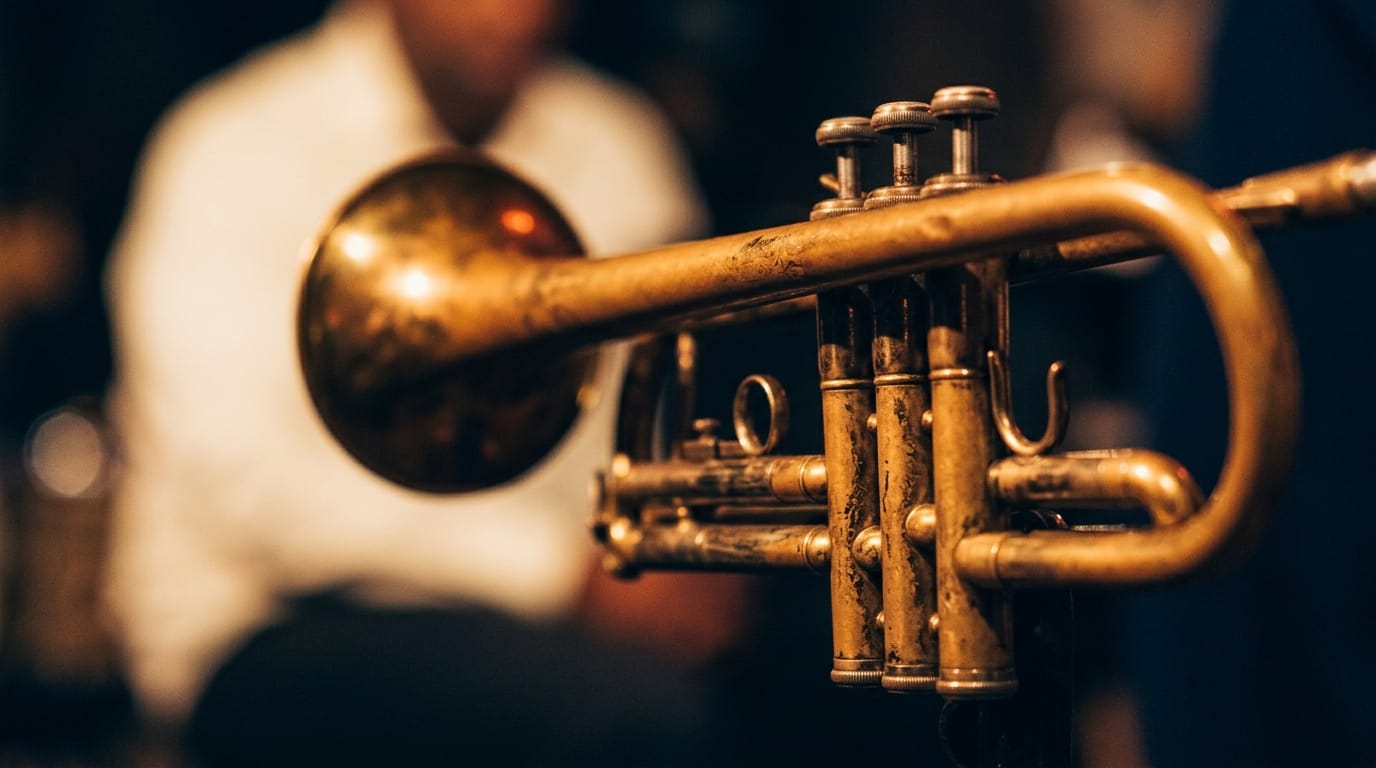
The opening cadenza lasts roughly fifteen seconds. Armstrong plays it unaccompanied, without meter, in E-flat, and by the time the band enters, jazz has become an art music. That cadenza is cited in virtually every jazz history text as the moment the music crossed from entertainment into something more serious. Recorded on June 28, 1928, “West End Blues” is the most analytically significant track of the 1920s and one of the most famous jazz trumpet songs ever committed to wax.
“West End Blues” was inducted into the Grammy Hall of Fame in 1974 and selected for the Library of Congress National Recording Registry in 2003. The song was composed by Joe “King” Oliver, Armstrong’s mentor, but Armstrong’s version so thoroughly transforms the source material that it functions as a new composition. The Louis Armstrong House Museum biography documents the full context of his Hot Five period.
#4. A Love Supreme, Pt. I: Acknowledgement, John Coltrane (1964)
[ERA: Modal / Post-Bop] composer: John Coltrane | A Love Supreme, Impulse! Records, 1964
Four notes. That’s the bass motif that opens “Acknowledgement” and runs through the entire movement, one of jazz’s most documented leitmotifs. Elvin Jones’s drums enter like a weather system, McCoy Tyner’s quartal piano voicings anchor the harmony without resolving it, and Coltrane’s soprano saxophone pushes toward free jazz while the structure holds. The recording was made in a single session in December 1964.
A Love Supreme was named the number one jazz album of all time by Rolling Stone in their 2003 list. The album was inducted into the Grammy Hall of Fame in 2003. Coltrane received a posthumous Grammy Lifetime Achievement Award in 1992, according to the official John Coltrane biography. “Acknowledgement” is the movement most often cited by musicians as the entry point into Coltrane’s late period, because it still has a pulse you can follow.
#5. Strange Fruit, Billie Holiday (1939)
[ERA: Swing / Vocal Jazz] composer: Abel Meeropol | Commodore Records, 1939
Columbia Records refused to release it. Holiday recorded it on the independent Commodore label instead, and the label conflict itself became part of the song’s history. “Strange Fruit” is a protest song about lynching in the American South, written by a white schoolteacher from the Bronx named Abel Meeropol. Holiday’s performance strips away every jazz convention, the swing, the improvisation, the entertainment, and leaves only the words and a slow, blues-inflected harmonic structure.
Time magazine named “Strange Fruit” Song of the Century in 1999. Holiday’s vibrato deliberately narrows to almost nothing at the song’s apex, a conscious interpretive choice that makes the final image land with physical force. This is one of the most famous jazz blues songs in the repertoire, operating at the intersection of jazz, blues, and political speech. Billie Holiday was posthumously awarded the Grammy Lifetime Achievement Award in 1987, per the Wikipedia list of her awards and nominations.
#6. ‘Round Midnight, Thelonious Monk (1957)
[ERA: Bebop / Hard Bop] composer: Thelonious Monk | Thelonious Monk with John Coltrane, Riverside Records, 1957
Monk composed “‘Round Midnight” in 1943 while working at Minton’s Playhouse in Harlem, the incubator of bebop. The tritone substitutions in the bridge were radical at the time. Miles Davis’s 1957 recording brought the song to mainstream attention, but the Monk/Coltrane pairing on Riverside captures the composer at his most idiosyncratic and Coltrane at the precise moment he was developing his own voice.
This is the most recorded jazz composition by a single jazz musician, with over 1,200 documented versions cited in jazz discography databases. Monk’s piano playing on this recording is a clinic in deliberate dissonance: he places notes slightly outside the expected harmonic resolution, creating a tension that never fully releases. Thelonious Monk received the Grammy Lifetime Achievement Award in 1993, according to the Grammy artist page for Thelonious Monk.
#7. Ko-Ko, Charlie Parker (1945)
[ERA: Bebop] composer: Charlie Parker | Savoy Records, 1945
Recorded in a single session at WOR Studios in New York City on November 26, 1945, “Ko-Ko” runs under three minutes and contains more harmonic information than most jazz compositions three times its length. Parker built it on the chord changes of Ray Noble’s “Cherokee” but altered the harmony so thoroughly that no melody from the original is audible. What remains is pure bebop: fast, angular, and technically demanding beyond anything jazz had produced before.
Parker plays passages at tempos that contemporaries described as technically impossible. The young Miles Davis appears on the session but doesn’t solo, he reportedly wasn’t ready for the tempo. According to the Britannica biography of Charlie Parker, he is generally considered the greatest jazz saxophonist. DownBeat awarded Parker its Critic’s Poll honors continuously from 1950 until his death in 1955. This is bebop’s defining document.
#8. Take the “A” Train, Duke Ellington Orchestra (1941)
[ERA: Swing] composer: Billy Strayhorn | Victor Records, 1941
Billy Strayhorn wrote “Take the ‘A’ Train” as directions to Ellington’s apartment in Harlem, take the A subway line, not the D. Ellington adopted it as the orchestra’s signature theme after its first broadcast in early 1941, and it remained the opening number for the rest of his career. Ray Nance’s trumpet solo on the original Victor recording is a clinic in swing phrasing: relaxed, behind the beat, and swinging harder for it.
The song was inducted into the Grammy Hall of Fame in 1976. Duke Ellington created nearly 2,000 compositions over a career spanning more than 50 years, according to The Kennedy Center’s Ellington profile. “Take the ‘A’ Train” is the most performed of all of them, the song that announced the Ellington Orchestra every night for three decades. See also our feature on the best Duke Ellington songs every jazz listener should know.
#9. Body and Soul, Coleman Hawkins (1939)
[ERA: Swing] composer: Johnny Green | Victor Records, 1939
Coleman Hawkins recorded “Body and Soul” in a single take in October 1939, and for the final two choruses he improvises almost entirely outside the stated melody. This was unprecedented. The song had been a pop standard since 1930, recorded by dozens of artists in straightforward arrangements. Hawkins dismantled it and rebuilt it from the harmonic skeleton outward, modulating chromatically through the bridge a decade before bebop codified the practice.
Scholars at the Institute of Jazz Studies at Rutgers University have documented this recording as a direct precursor to bebop harmony. “Body and Soul” is cited by some discographers as the most-recorded song in jazz history. The Hawkins version was inducted into the Grammy Hall of Fame in 1974. Coleman Hawkins maintained an active recording career from 1922 to 1968, according to JazzDiscography.com. This is the recording that proves jazz improvisation was already moving toward bebop before bebop had a name.
#10. Sing, Sing, Sing (With a Swing), Benny Goodman (1937)
[ERA: Swing] composer: Louis Prima | Victor Records, 1937
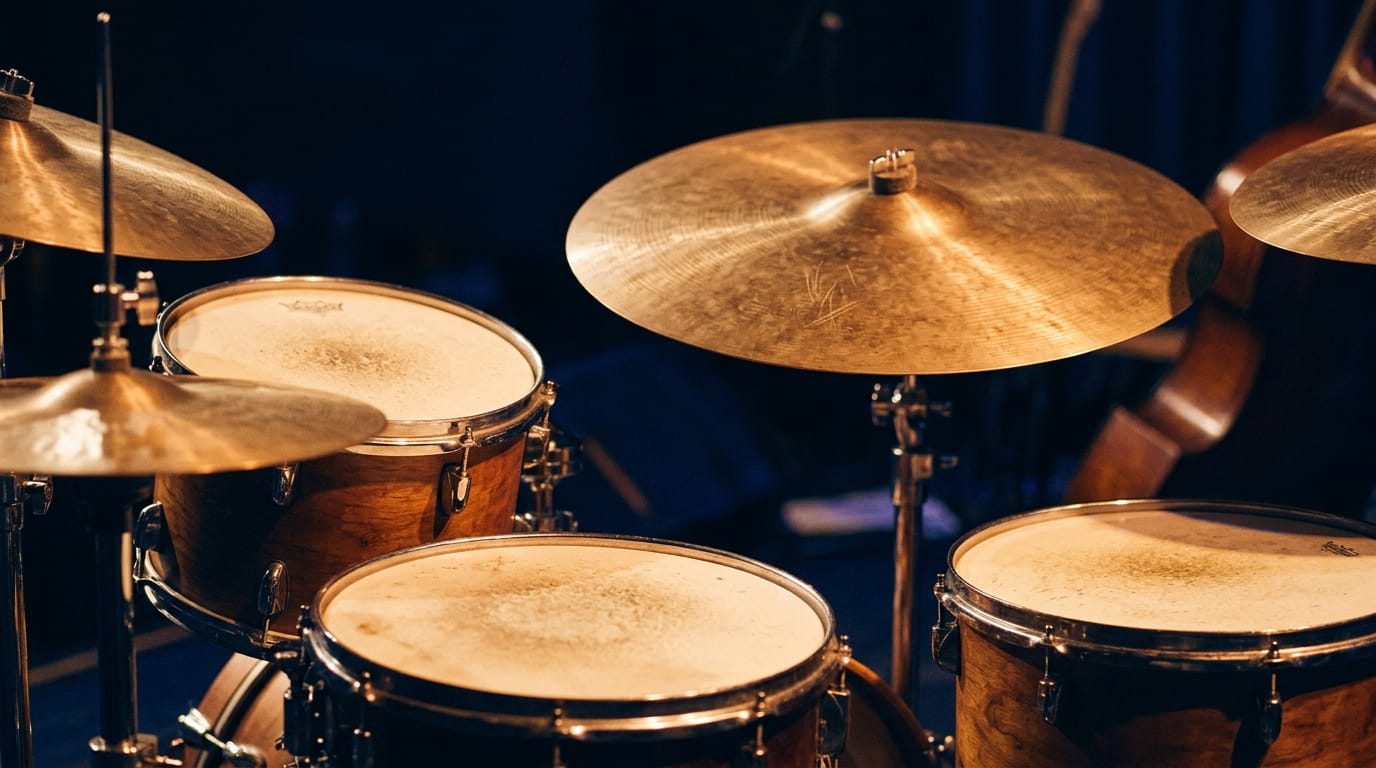
Gene Krupa’s tom-tom intro established the drum feature as a jazz convention. Before “Sing, Sing, Sing,” drums were rhythm section furniture. After it, they were a solo instrument. Louis Prima wrote the song in 1936, but Goodman’s arrangement transformed it into something else entirely: a 12-minute showcase for the entire orchestra, with Krupa’s percussion driving every section forward.
The January 16, 1938 Carnegie Hall performance of this song is credited as the moment jazz entered America’s high-culture institutions. The recording of that concert, released in 1950, runs over eight minutes and remains one of the most commercially successful live jazz recordings ever released. Benny Goodman received a Grammy Lifetime Achievement Award in 1986, per the official Benny Goodman awards page. The Carnegie Hall concert recording is available on The Famous 1938 Carnegie Hall Jazz Concert, Columbia Records.
#11. My Favorite Things, John Coltrane (1960)
[ERA: Modal] composer: Richard Rodgers / Oscar Hammerstein II | My Favorite Things, Atlantic Records, 1960
The Sound of Music opened on Broadway in 1959. Within a year, Coltrane had taken its most cheerful song and turned it into a 13-minute modal exploration that has almost nothing to do with the original except the melody and the 3/4 waltz time. He plays soprano saxophone, his first major soprano recording, over a vamp that alternates between E minor and E major, creating a harmonic ambiguity the Broadway version never imagined.
This is one of jazz’s most dramatic recontextualizations: a show tune transformed into a vehicle for extended improvisation without losing the original’s melodic identity. Coltrane’s soprano tone on this recording is bright and slightly raw, nothing like the polished sound he’d develop later. That rawness is part of what makes it work. The album My Favorite Things is one of the five albums cited by the official John Coltrane biography as attaining five-star classic status.
#12. Moanin’, Art Blakey and the Jazz Messengers (1958)
[ERA: Hard Bop] composer: Bobby Timmons | Moanin’, Blue Note Records, 1958
Bobby Timmons’s opening piano riff is a blues-church crossover phrase in F minor that sounds like it was written in a gospel choir rehearsal. That’s the point. Hard bop was a deliberate return to African American roots after cool jazz had drifted toward European concert music, and “Moanin'” is hard bop’s most direct statement of that intention. The call-and-response horn writing between Lee Morgan’s trumpet and Benny Golson’s tenor saxophone amplifies the gospel feel.
Art Blakey’s drumming on this recording is a masterclass in propulsion: he doesn’t just keep time, he pushes the soloists forward with fills that arrive exactly when the music needs them. The album Moanin’ was recorded at Rudy Van Gelder’s studio in Hackensack, New Jersey, on October 30, 1958. The Grammy Hall of Fame inducted “Moanin'” in 1998, according to the Art Blakey estate documentation. This is the entry point for anyone exploring bebop and hard bop jazz's most revolutionary styles.
#13. Maiden Voyage, Herbie Hancock (1965)
[ERA: Post-Bop / Modal] composer: Herbie Hancock | Maiden Voyage, Blue Note Records, 1965
Four suspended dominant chords cycle through “Maiden Voyage” without ever resolving to a tonic. The piece has no harmonic home. Hancock described the compositional intent in a 1965 DownBeat interview as an attempt to evoke open-water motion through harmony, the feeling of being at sea with no land in sight. Freddie Hubbard’s trumpet melody drifts above the chords like a ship on a swell.
The recording was made at Rudy Van Gelder’s studio in May 1965, when Hancock was in his mid-twenties and still a member of the Miles Davis Quintet. The suspended chord voicings he uses here, stacked fourths rather than thirds, became a defining sound of post-bop piano. Herbie Hancock has won 14 Grammy Awards over his career, including Album of the Year for River: The Joni Letters, according to his official biography. Maiden Voyage remains his most harmonically influential composition.
#14. Birdland, Weather Report (1977)
[ERA: Fusion] composer: Joe Zawinul | Heavy Weather, Columbia Records, 1977
Joe Zawinul named this piece after the New York jazz club on 52nd Street that closed in 1965, and his synthesizer voicings simulate a full big band in a way that acoustic instruments couldn’t replicate. The opening synthesizer riff is immediately recognizable, a fanfare that announces the piece before the groove locks in. Jaco Pastorius’s fretless bass and Alex Acuña’s drums create a rhythmic foundation that’s simultaneously funky and precise.
Heavy Weather became the best-selling Weather Report album and one of the best-selling jazz-fusion albums of all time. Columbia’s own press materials cited gold certification for the album. The studio version of “Birdland” was recorded in a single take, according to Wikipedia’s documentation of the song. Weather Report won one Grammy from six nominations, per their Grammy artist page. Joe Zawinul was voted Best Electric Keyboardist by DownBeat readers 28 times, according to his official biography.
#15. The Girl from Ipanema, Stan Getz / João Gilberto featuring Astrud Gilberto (1964)
[ERA: Bossa Nova / Jazz] composer: Antônio Carlos Jobim / Vinícius de Moraes | Getz/Gilberto, Verve Records, 1964
Astrud Gilberto’s English vocal on this recording was, by most accounts, an improvised decision made during the session, she wasn’t a professional singer at the time. The result became one of the most famous jazz songs ever recorded. Her voice is light, slightly detached, and perfectly suited to the bossa nova feel: intimate without being sentimental. Stan Getz’s tenor saxophone solo that follows is warm and unhurried, a model of restraint.
At the 7th Annual Grammy Awards, Getz/Gilberto won four awards including Album of the Year, the first time a jazz album received that accolade, according to Wikipedia’s documentation of João Gilberto’s career. The single “The Girl from Ipanema” won the Grammy for Record of the Year in 1965, one of only two jazz recordings to do so. The album stayed in the charts for 96 weeks. This is the most famous jazz song with lyrics in the bossa nova tradition, and one of the most recorded Brazilian songs in history.
#16. One O’Clock Jump, Count Basie Orchestra (1937)
[ERA: Swing] composer: Count Basie / Hot Lips Page | Decca Records, 1937
Count Basie and his band recorded “One O’Clock Jump” at their first Decca Records session on January 21, 1937, and it became an immediate hit. The piece is a 12-bar blues riff vehicle, but what makes it the blueprint for Kansas City swing is the saxophone soli section in the final chorus: the horns stack in parallel thirds, creating a dense, driving sound that became the template for big band writing throughout the Swing era.
The song’s riff has a genealogy that illustrates jazz’s collaborative composition culture. Joe Garland adapted elements from earlier recordings, and Basie’s version synthesized those influences into something definitive. Benny Goodman and Duke Ellington both recorded their own versions, according to NPR’s documentation of the song. Count Basie led his orchestra for almost 50 years and recorded on over 480 albums, according to his official biography. “One O’Clock Jump” remained his signature theme throughout.
#17. Spain, Chick Corea (1973)
[ERA: Fusion / Post-Bop] composer: Chick Corea | Light as a Feather, Polydor Records, 1973
Chick Corea opens “Spain” with a direct quotation from Rodrigo’s Concierto de Aranjuez, a classical guitar concerto, before the rhythm section enters and the piece transforms into a jazz vehicle. The move is audacious and it works completely. The bass ostinato in A major drives the piece at a tempo that demands precision from every player, and Corea’s piano improvisation over the changes is among the most melodically inventive of the fusion era.
The definitive studio recording appears on Light as a Feather (Polydor, 1973), with Stanley Clarke on bass and Airto Moreira on percussion. Chick Corea won 29 Grammy Awards over his career, according to Wikipedia’s documentation of his discography. “Spain” became the most performed composition of his career and one of the most covered jazz fusion pieces ever written. It sits at the intersection of classical quotation, jazz improvisation, and Latin rhythm in a way that no other piece quite replicates.
#18. God Bless the Child, Billie Holiday (1941)
[ERA: Swing / Vocal Jazz] composer: Billie Holiday / Arthur Herzog Jr. | Columbia Records, 1941
Holiday co-wrote the melody with Arthur Herzog Jr., making this one of the few definitive jazz vocal standards where the performer is also the composer. The lyric is about financial independence and the cruelty of those who only value you when you’re successful, a theme Holiday understood personally. Her phrasing on the recording is behind the beat in a way that makes every line feel like a confession rather than a performance.
“God Bless the Child” was inducted into the Grammy Hall of Fame in 1976. Holiday’s vocal approach on this track is the clearest example of her technique: she treats the melody as a suggestion, bending pitches and shifting rhythmic placement to serve the emotional content of the lyric rather than the written note. Billie Holiday won five Grammy Awards and was inducted into the Rock and Roll Hall of Fame in 2000, according to the National Women’s Hall of Fame.
#19. Footprints, Wayne Shorter (1966)
[ERA: Post-Bop / Modal] composer: Wayne Shorter | Adam’s Apple, Blue Note Records, 1966
Wayne Shorter wrote “Footprints” as a 6/4 minor blues, a time signature that gives the piece a rolling, slightly off-balance feel that standard 4/4 blues doesn’t have. The canonical version for most listeners is the Miles Davis Quintet recording on Miles Smiles (Columbia, 1967), where Ron Carter’s bass and Tony Williams’s drums create a rhythmic conversation that seems to float free of the bar line while never actually losing it.
Shorter’s use of non-functional harmony within a blues form on this piece anticipates the ECM school of the 1970s by several years. The melody itself is deceptively simple: a minor phrase that descends and then circles back, like footprints in sand. Wayne Shorter received 12 Grammy Awards over a career spanning more than six decades, according to Wikipedia’s documentation of his discography. “Footprints” is the composition most often cited as his masterwork.
#20. Black Bottom Stomp, Jelly Roll Morton and His Red Hot Peppers (1926)
[ERA: Hot Jazz / 1920s] composer: Jelly Roll Morton | Victor Records, 1926
Jelly Roll Morton was the first jazz musician to think systematically about arrangement, and “Black Bottom Stomp” is his most compositionally sophisticated recording. Seven distinct arranged sections unfold across the track, each with its own texture and instrumentation. This is not a simple riff vehicle. Morton planned every transition, every solo break, every ensemble passage. The result sounds spontaneous because the arrangement is so well constructed.
Morton described his orchestration philosophy in his famous Library of Congress recordings made in 1938, the only direct documentation of pre-swing compositional intent by a major jazz composer. Those recordings are an invaluable primary source. “Black Bottom Stomp” is one of the most important famous jazz songs from the 1920s precisely because it demonstrates that jazz composition was already sophisticated before the Swing era formalized it. The Jelly Roll Morton Library of Congress recordings won two Grammy Awards following their 2005 CD release, according to research documentation.
#21. Hotter Than That, Louis Armstrong and His Hot Five (1927)
[ERA: Hot Jazz / 1920s] composer: Lil Hardin Armstrong | OKeh Records, 1927
Armstrong’s scat vocal exchange with guitarist Lonnie Johnson on “Hotter Than That” is among the earliest documented recorded examples of scat phrasing used as a compositional device. Armstrong doesn’t just improvise syllables, he constructs a melodic conversation with Johnson’s guitar that has the logic of a written duet. The exchange lasts less than a minute but it’s one of the most concentrated demonstrations of jazz’s improvisational intelligence on record.
The trumpet playing on this track is equally remarkable. Armstrong plays a chromatic descent in the final chorus that anticipates bebop by nearly two decades, a harmonic move that wouldn’t become standard practice until Charlie Parker codified it in the mid-1940s. Lil Hardin Armstrong, Louis’s wife and the composer of this piece, was herself a significant figure in early jazz as a pianist, composer, and arranger. The Hot Five recordings are collected on The Complete Hot Five and Hot Seven Recordings, Columbia Records.
#22. In the Mood, Glenn Miller Orchestra (1939)
[ERA: Swing] composer: Joe Garland / Andy Razaf | Bluebird Records, 1939
Let’s be honest: “In the Mood” is the most commercially successful piece on this list. It reached number one on the pop chart in 1940 and remained charted for 30 weeks, documented in Billboard archives. Glenn Miller’s arrangement of Joe Garland’s riff is a masterpiece of tension and release: the saxophone soli builds, drops back, builds again, and finally explodes into the full orchestra. Every element is calculated for maximum impact on a dance floor.
The riff itself predates Miller’s arrangement. Joe Garland adapted it from Wingy Manone’s “Tar Paper Stomp” from 1930, a genealogy that illustrates how jazz composition worked in the Swing era: ideas circulated, were borrowed, were improved, and eventually crystallized into something definitive. Miller’s version is that crystallization. Glenn Miller received a Grammy Lifetime Achievement Award in 2004, according to Grammy documentation. His musical legacy includes multiple recordings in the Grammy Hall of Fame.
#23. Chameleon, Herbie Hancock (1973)
[ERA: Fusion] composer: Herbie Hancock / Paul Jackson / Harvey Mason / Bennie Maupin | Head Hunters, Columbia Records, 1973
The bass and synthesizer unison riff that opens “Chameleon” is a 16-bar phrase in B-flat minor that influenced funk, hip-hop, and electronic music as much as it influenced jazz. Head Hunters became the best-selling jazz album up to that point of its release, a position later surpassed by Kind of Blue, according to Columbia’s own marketing materials. The sample count for “Chameleon” in the Whosampled database exceeds 1,000 documented uses, making it one of the most sampled jazz recordings in history.
Hancock assembled a new band for this album, replacing the acoustic post-bop approach of his Blue Note years with electric instruments and funk rhythms. The result divided jazz critics but found a massive new audience. “Chameleon” runs over 15 minutes on the original album and never loses momentum. Herbie Hancock has won 14 Grammy Awards, including Album of the Year for River: The Joni Letters, according to his official biography.
#24. Singin’ the Blues, Bix Beiderbecke and Frankie Trumbauer (1927)
[ERA: Hot Jazz / 1920s] composer: Con Conrad / J. Russell Robinson | OKeh Records, 1927
Bix Beiderbecke’s cornet tone was described by contemporaries as “a bullet shot into a bell,” a phrase documented in Philip Evans and Larry Kiner’s biography Bix: The Leon Bix Beiderbecke Story. That tone is fully present on “Singin’ the Blues”: clear, slightly melancholy, and unlike anything else in 1920s jazz. Frankie Trumbauer’s C-melody saxophone creates a counterpoint that influenced both Lester Young and Miles Davis. Young cited Trumbauer directly in multiple published interviews as a primary influence on his approach to the tenor saxophone.
“Singin’ the Blues” was inducted into the Grammy Hall of Fame in 1977, according to Wikipedia’s documentation of Bix Beiderbecke’s Grammy Hall of Fame awards. It was also selected for the Library of Congress National Recording Registry in 2006. This is one of the most important famous old jazz songs of the 1920s, a recording that connects the Hot Jazz era directly to the cool jazz movement that would emerge 20 years later.
#25. A Night in Tunisia, Dizzy Gillespie (1946)
[ERA: Bebop] composer: Dizzy Gillespie / Frank Paparelli | Musicraft Records, 1946
The flatted-second pedal point that opens “A Night in Tunisia” was one of bebop’s first non-Western rhythmic borrowings, an Afro-Cuban bass riff that gave the piece an exotic, unsettled quality unlike anything in the swing repertoire. Gillespie composed the piece in 1943 and recorded multiple versions; the 1946 Musicraft recording is the definitive one, capturing the bebop revolution at full speed.
The interlude preceding the solos uses a tritone substitution that became a bebop harmonic cliché precisely because it was so effective here. Gillespie’s trumpet playing on this recording is technically extraordinary: fast, precise, and rhythmically complex in a way that swing trumpet simply wasn’t. Dizzy Gillespie won a Grammy Lifetime Achievement Award in 1989, according to his South Carolina African American History Calendar entry. “A Night in Tunisia” remains one of the most performed bebop compositions in the standard repertoire.
#26. Watermelon Man, Herbie Hancock (1962)
[ERA: Hard Bop] composer: Herbie Hancock | Takin’ Off, Blue Note Records, 1962
Mongo Santamaría’s 1963 cover of “Watermelon Man” reached number 10 on the Billboard Hot 100, making this one of the few jazz compositions to cross into mainstream pop chart success via a cover, according to Billboard archives. Hancock’s original on Takin’ Off is a 12-bar blues vehicle built on a two-bar call-and-response piano riff that’s unusually direct even by hard bop standards. The simplicity is the point: Hancock wanted a groove that anyone could feel immediately.
The piece launched Hancock’s career as a leader. Takin’ Off was his debut Blue Note album, released in 1962, and “Watermelon Man” was the track that got radio play. Hancock later recorded a radically different version on Head Hunters (1973), replacing the hard bop arrangement with a funk groove built on beer bottles and flute. Both versions are essential, but the original is the one that belongs on this list.
#27. Joy Spring, Clifford Brown (1954)
[ERA: Hard Bop] composer: Clifford Brown | Clifford Brown and Max Roach, EmArcy Records, 1954
Clifford Brown’s trumpet tone on “Joy Spring” is warm at the bell, with a wide vibrato that makes every note feel inhabited. This is the model for post-bebop trumpet phrasing that Lee Morgan, Freddie Hubbard, and Wynton Marsalis have all cited in published interviews. Brown plays the melody with a singing quality that bebop’s angular approach often sacrificed for speed, and his improvisation over the changes is melodically coherent in a way that makes it immediately accessible.
Brown died in a car accident in 1956 at the age of 25, leaving behind four years of recordings. DownBeat’s posthumous polls placed him among the top three jazz trumpeters of the 1950s every year through 1960. “Joy Spring” is the piece that best captures what was lost. Max Roach’s drumming on this recording is a model of supportive swing: he plays for the soloist, not for himself. The album Clifford Brown and Max Roach is one of the essential hard bop documents.
#28. Carolina Shout, James P. Johnson (1921)
[ERA: Hot Jazz / 1920s] composer: James P. Johnson | OKeh Records, 1921
Duke Ellington learned “Carolina Shout” by slowing down the piano roll and playing along with it, note by note. That’s how important this piece was to the next generation of jazz pianists. James P. Johnson’s left-hand stride pattern runs at approximately 200 beats per minute and was the technical benchmark for stride piano throughout the 1920s. The sheet music was used as a test piece in Harlem “cutting contests,” informal competitions where pianists challenged each other to play the hardest material.
“Carolina Shout” is the foundational Harlem stride piano piece, the one that defined the style’s technical demands and its relationship to ragtime and blues simultaneously. It was added to the Grammy Hall of Fame in 2020, according to Wikipedia’s documentation of James P. Johnson’s awards. This is the oldest recording on this list and one of the most important famous jazz songs from the 1920s, a piece that connects ragtime directly to the jazz piano tradition that followed.
#29. Blue Train, John Coltrane (1957)
[ERA: Hard Bop] composer: John Coltrane | Blue Train, Blue Note Records, 1957
This was Coltrane’s only Blue Note album as a leader, recorded in September 1957 at a moment when he had sole creative control over a session for the first time. The 12-bar blues head is played in unison by Lee Morgan’s trumpet and Curtis Fuller’s trombone an octave apart, a voicing density unusual for a quintet that creates a thick, almost orchestral sound. Coltrane’s tenor saxophone solo that follows is one of the most studied in jazz education.
The album Blue Train is one of five albums cited by the official John Coltrane biography as attaining five-star classic status. Curtis Fuller, who plays trombone on this session, was later named an NEA Jazz Master. Lee Morgan’s trumpet work here is a direct continuation of the Clifford Brown tradition. “Blue Train” sits at the exact hinge point between hard bop and the modal explorations Coltrane would pursue on My Favorite Things and A Love Supreme.
#30. Fly Me to the Moon, Frank Sinatra with the Count Basie Orchestra (1964)
[ERA: Vocal Jazz Standards] composer: Bart Howard | It Might as Well Be Swing, Reprise Records, 1964
Here’s the thing about this recording: it’s the version of “Fly Me to the Moon” that Apollo 10 astronauts played aboard their spacecraft in 1969, according to NASA mission logs. That fact alone gives it a cultural reach no other jazz recording can match. Quincy Jones’s arrangement for the Count Basie Orchestra is a masterpiece of swing writing: the brass punches, the rhythm section locks, and Sinatra rides the groove with the ease of someone who has been doing this for 25 years.
The song has been recorded by over 500 artists, according to ASCAP documentation, making it one of the most covered vocal jazz standards in history. Bart Howard wrote it in F major, and the harmonic simplicity is what makes it infinitely coverable. But no version matches the Sinatra/Basie combination for swing authority. Frank Sinatra was a nine-time Grammy winner who performed on more than 1,400 recordings, according to the Grammy Museum. This recording closes the list as the most famous jazz song with lyrics in the standard repertoire.
Era Distribution, How This List Covers Jazz History
The 30 songs above span 56 years of recorded jazz, from James P. Johnson’s 1921 piano roll to Weather Report’s 1977 fusion landmark. The table below shows how the list distributes across eras. Note that three vocal jazz standards also appear within their primary era categories, they are not additional entries but cross-era designations.
| Era | Years | Songs on This List | Count |
|---|---|---|---|
| Hot Jazz / 1920s | 1920-1932 | #3 West End Blues, #21 Hotter Than That, #24 Singin’ the Blues, #20 Black Bottom Stomp, #28 Carolina Shout | 5 |
| Swing Era | 1933-1944 | #8 Take the “A” Train, #10 Sing Sing Sing, #9 Body and Soul, #16 One O’Clock Jump, #22 In the Mood, #5 Strange Fruit | 6 |
| Bebop / Hard Bop | 1944-1960 | #7 Ko-Ko, #6 ‘Round Midnight, #25 A Night in Tunisia, #12 Moanin’, #27 Joy Spring, #29 Blue Train | 6 |
| Modal / Post-Bop | 1959-1968 | #1 So What, #4 A Love Supreme Pt. I, #11 My Favorite Things, #13 Maiden Voyage, #19 Footprints, #26 Watermelon Man | 6 |
| Bossa Nova / Jazz | 1958-1968 | #15 The Girl from Ipanema | 1 |
| Fusion / Contemporary | 1969-present | #14 Birdland, #17 Spain, #23 Chameleon, #2 Take Five* | 4 |
| Vocal Jazz Standards | Cross-era | #5 Strange Fruit, #18 God Bless the Child, #30 Fly Me to the Moon | 3 (cross-listed) |
*”Take Five” (1959) is classified here under Cool Jazz / Post-Bop but shares characteristics with the fusion era’s interest in odd meters and studio precision.
The five Hot Jazz entries fully address the famous jazz songs 1920s and famous 1920s jazz songs search categories. The famous jazz blues songs category is covered by “Strange Fruit,” “Body and Soul,” “One O’Clock Jump,” “Moanin’,” and “Blue Train,” all of which operate on blues harmonic structures. Famous jazz trumpet songs are represented by “West End Blues,” “Ko-Ko,” “A Night in Tunisia,” “Joy Spring,” and “Take the ‘A’ Train.”
Three songs were deliberately excluded despite their fame. “Hello, Dolly!” and “What a Wonderful World” are pop crossovers rather than jazz compositions in the structural sense, Armstrong’s performances are extraordinary, but the songs themselves belong to the Broadway and pop traditions. “Rhapsody in Blue” is a concert hall composition, not a jazz performance tradition piece. Each of these exclusions is defensible, and each will generate disagreement, which is exactly what a good list should do.
Quick-Reference Table, All 30 Famous Jazz Songs at a Glance
For quick reference, the full famous jazz songs list appears below. This is the best jazz songs all time summary, covering the best known jazz songs from every major era.
| Rank | Song Title | Year (Recording) | Definitive Recording Artist | Composer | Album |
|---|---|---|---|---|---|
| 1 | So What | 1959 | Miles Davis | Miles Davis | Kind of Blue |
| 2 | Take Five | 1959 | Dave Brubeck Quartet | Paul Desmond | Time Out |
| 3 | West End Blues | 1928 | Louis Armstrong and His Hot Five | Joe “King” Oliver | OKeh single |
| 4 | A Love Supreme, Pt. I: Acknowledgement | 1964 | John Coltrane Quartet | John Coltrane | A Love Supreme |
| 5 | Strange Fruit | 1939 | Billie Holiday | Abel Meeropol | Commodore single |
| 6 | ‘Round Midnight | 1957 | Thelonious Monk with John Coltrane | Thelonious Monk | Thelonious Monk with John Coltrane |
| 7 | Ko-Ko | 1945 | Charlie Parker | Charlie Parker | Savoy single |
| 8 | Take the “A” Train | 1941 | Duke Ellington Orchestra | Billy Strayhorn | Victor single |
| 9 | Body and Soul | 1939 | Coleman Hawkins | Johnny Green | Victor single |
| 10 | Sing, Sing, Sing (With a Swing) | 1937 | Benny Goodman Orchestra | Louis Prima | Victor / Carnegie Hall recording |
| 11 | My Favorite Things | 1960 | John Coltrane | Rodgers / Hammerstein II | My Favorite Things |
| 12 | Moanin’ | 1958 | Art Blakey and the Jazz Messengers | Bobby Timmons | Moanin’ |
| 13 | Maiden Voyage | 1965 | Herbie Hancock | Herbie Hancock | Maiden Voyage |
| 14 | Birdland | 1977 | Weather Report | Joe Zawinul | Heavy Weather |
| 15 | The Girl from Ipanema | 1964 | Stan Getz / João Gilberto feat. Astrud Gilberto | Jobim / de Moraes | Getz/Gilberto |
| 16 | One O’Clock Jump | 1937 | Count Basie Orchestra | Count Basie / Hot Lips Page | Decca single |
| 17 | Spain | 1973 | Chick Corea / Return to Forever | Chick Corea | Light as a Feather |
| 18 | God Bless the Child | 1941 | Billie Holiday | Holiday / Arthur Herzog Jr. | Columbia single |
| 19 | Footprints | 1966 | Wayne Shorter / Miles Davis Quintet | Wayne Shorter | Adam’s Apple / Miles Smiles |
| 20 | Black Bottom Stomp | 1926 | Jelly Roll Morton and His Red Hot Peppers | Jelly Roll Morton | Victor single |
| 21 | Hotter Than That | 1927 | Louis Armstrong and His Hot Five | Lil Hardin Armstrong | OKeh single |
| 22 | In the Mood | 1939 | Glenn Miller Orchestra | Joe Garland / Andy Razaf | Bluebird single |
| 23 | Chameleon | 1973 | Herbie Hancock | Hancock / Jackson / Mason / Maupin | Head Hunters |
| 24 | Singin’ the Blues | 1927 | Bix Beiderbecke and Frankie Trumbauer | Con Conrad / J. Russell Robinson | OKeh single |
| 25 | A Night in Tunisia | 1946 | Dizzy Gillespie | Gillespie / Frank Paparelli | Musicraft single |
| 26 | Watermelon Man | 1962 | Herbie Hancock | Herbie Hancock | Takin’ Off |
| 27 | Joy Spring | 1954 | Clifford Brown and Max Roach | Clifford Brown | Clifford Brown and Max Roach |
| 28 | Carolina Shout | 1921 | James P. Johnson | James P. Johnson | OKeh piano roll / single |
| 29 | Blue Train | 1957 | John Coltrane | John Coltrane | Blue Train |
| 30 | Fly Me to the Moon | 1964 | Frank Sinatra with Count Basie Orchestra | Bart Howard | It Might as Well Be Swing |
Honourable Mentions, Five Songs That Almost Made the List
Thirty slots can’t contain a century of great music. These five recordings came closest to displacing entries on the main list and deserve recognition in any serious survey of the best jazz songs ever recorded.
- Giant Steps, John Coltrane (1960): The title track from Coltrane’s Atlantic album of the same name introduced a harmonic system so advanced that it took other musicians years to understand it, the “Coltrane changes” cycle through three key centers a major third apart, and the tempo is unforgiving, but its influence is felt in every entry on this list that came after it.
- Autumn Leaves, Bill Evans Trio (1959): The version on Portrait in Jazz (Riverside) is the definitive recording of the most-covered jazz standard after “‘Round Midnight,” with Scott LaFaro’s bass playing a countermelody so independent it functions as a second lead voice.
- Minnie the Moocher, Cab Calloway (1931): The call-and-response between Calloway and his audience on the original Brunswick recording established the jazz vocalist as entertainer and bandleader simultaneously, and the “hi-de-ho” hook is the most recognizable vocal phrase in Swing era jazz.
- Lush Life, Billy Strayhorn (1948): Strayhorn wrote this at seventeen and didn’t record it until a decade later, the harmonic sophistication of the verse, which moves through a series of chromatic descents, is unlike anything else in the vocal jazz repertoire.
- Freddie Freeloader, Miles Davis (1959): The only blues on Kind of Blue, and the track that proves modal jazz didn’t abandon the blues, it just reframed it. Wynton Kelly’s piano solo is the most swinging 12 bars on the album.
Frequently Asked Questions About Famous Jazz Songs
What is the most recorded jazz song of all time?
“Body and Soul,” composed by Johnny Green in 1930, is cited by multiple discographers as the most recorded song in jazz history, with documented versions by virtually every major jazz musician across every era. “‘Round Midnight” by Thelonious Monk is the most recorded composition by a single jazz musician, with over 1,200 documented versions cited in jazz discography databases. Both claims have strong supporting evidence, and the answer depends on whether you count all versions or only jazz-specific recordings.
What is the best-selling jazz song of all time?
“Take Five” by the Dave Brubeck Quartet holds the documented distinction of being the first jazz single to sell one million copies, a fact cited by Jazz24 in their 2019 listener poll. Kind of Blue, the album containing “So What,” is the best-selling jazz album in history, with Columbia Records citing multi-platinum RIAA certification and estimated U.S. sales exceeding five million copies. For individual song streaming, “Fly Me to the Moon” in the Sinatra/Basie version consistently ranks among the most-streamed jazz recordings globally.
What famous jazz song has the most cover versions?
“The Girl from Ipanema” is described by some sources as the second-most recorded song in history across all genres, with hundreds of documented versions. In the jazz-specific repertoire, “Body and Soul” and “‘Round Midnight” compete for the most-covered title. “Autumn Leaves,” “All the Things You Are,” and “Stella by Starlight” also have documented cover counts in the hundreds. The honest answer is that any of these songs could claim the title depending on how “cover version” is defined and which discography database is consulted.
What is the most famous jazz song used in a film?
“Take the ‘A’ Train” was used in the 1961 film Paris Blues, according to the National Museum of American History’s documentation of the song. “‘Round Midnight” gave its name to Bertrand Tavernier’s 1986 film starring Dexter Gordon, bringing bebop to a mainstream cinema audience. “Fly Me to the Moon” has appeared in dozens of films and television productions. For sheer cultural penetration via film, “Sing, Sing, Sing”, used in countless period films and commercials set in the Swing era, may have the broadest reach of any jazz song in visual media.
What is a good famous jazz song for someone new to the genre?
“Take Five” is the standard recommendation for new listeners: the 5/4 time signature is unusual enough to be interesting, the melody is immediately memorable, and the recording is clean and accessible. “So What” works equally well because the modal structure creates space rather than complexity. For vocal jazz, “The Girl from Ipanema” or “God Bless the Child” offer immediate emotional entry points. Our guide to the best jazz albums for beginners covers the full listening path from these entry points into deeper jazz territory.
Where This List Goes From Here
The 30 famous jazz songs ranked above represent the strongest defensible case for a cross-era canon, but jazz keeps moving. Esperanza Spalding, Kamasi Washington, and Ambrose Akinmusire are building bodies of work that will eventually belong on lists like this one. The criteria that placed “So What” at number one, cultural impact, critical consensus, recording quality, and documented influence, will apply equally to whatever comes next. The best jazz songs of all time aren’t a closed archive. They’re a conversation that’s still in progress, and the most interesting entries may not have been recorded yet. For the vocalists who have shaped this tradition from the beginning, the greatest jazz singers of all time profiles offer the full story behind the voices on this list.