What to Wear to a Jazz Club: The Complete Style Guide
A jazz club outfit sits somewhere between smart casual and cocktail chic, polished enough to respect the room, relaxed enough to let you sink into a set and forget you’re wearing anything at all. Whether you’re heading to a basement room in the West Village or a panoramic-view concert hall above Columbus Circle, knowing what to wear takes the guesswork out of the night and lets you focus on the music.
Table of Contents
- Understanding Jazz Club Dress Codes, The Spectrum Explained
- The Three Tiers of Jazz Venue
- Why Jazz Clubs Have a Dress Aesthetic (Even When They Don’t Have a Policy)
- Jazz Club Outfit Guide for Men
- The Smart Casual Standard (Works at 90% of Clubs)
- Dressing Up for Upscale Rooms (Dizzy’s Club Tier)
- What Men Should Avoid
- Jazz Club Outfit Guide for Women
- The Elegant Casual Sweet Spot
- Cocktail Chic and the Little Black Dress
- What to Wear to a Jazz Club, Female Casual
- What Women Should Avoid
- Venue-by-Venue Jazz Club Dress Code Breakdown, Real NYC Jazz Clubs
- Village Vanguard
- Blue Note Jazz Club
- Dizzy’s Club at Jazz at Lincoln Center
- Seasonal Jazz Club Dressing, Practical Adjustments
- Fall and Winter
- Spring and Summer
- What NOT to Wear to a Jazz Club, The Short List
- The Jazz Aesthetic, Dressing the Part Beyond the Dress Code
- Frequently Asked Questions
- Is there a dress code at jazz clubs?
- Can you wear jeans to a jazz club?
- What is “smart casual” at a jazz club?
- What should I wear to a jazz club for a date night?
- What should I wear to a jazz club in NYC specifically?
Dress codes at jazz venues vary more than most people expect. A $15 cover at a neighborhood room means come as you are; a $50 ticket with a dinner minimum means dress the part. This guide covers the full spectrum, from genuinely casual rooms to the most formal jazz spaces in the country, so you’ll walk in confident at any tier. There are no hard rules here, but there are definitely smart choices.
Understanding Jazz Club Dress Codes, The Spectrum Explained
Most jazz venues fall into one of three broad tiers, and once you know which tier you’re walking into, the outfit question answers itself. The tier also tends to track with ticket price, neighborhood, and the caliber of touring artists the room books.
The Three Tiers of Jazz Venue
Casual neighborhood clubs enforce nothing. Jeans, sneakers, flannels, all fine. Smart casual mid-tier clubs, the most common category, ask that you skip athletic wear and lean toward collared shirts and dark denim. Upscale rooms expect cocktail attire and sometimes state it explicitly on their ticketing pages. This guide focuses on the middle and upper tiers, because that’s where most first-timers get stuck.
Why Jazz Clubs Have a Dress Aesthetic (Even When They Don’t Have a Policy)
Jazz has always had a relationship with visual presentation. From the Harlem ballrooms of the 1920s to the 52nd Street clubs of the bebop era, dressing well was part of showing up. Formal dress codes faded after the 1970s, but the aesthetic never fully left. You can read more about that era in our coverage of the jazz singers who shaped the Jazz Age. The point isn’t to cosplay a past decade, it’s to understand why the room still carries a certain expectation, even when nobody’s checking at the door.
Jazz Club Outfit Guide for Men
Men have it relatively straightforward at jazz clubs. The formula is simple, it works across most venues, and it requires almost no wardrobe investment beyond what you probably already own.
The Smart Casual Standard (Works at 90% of Clubs)
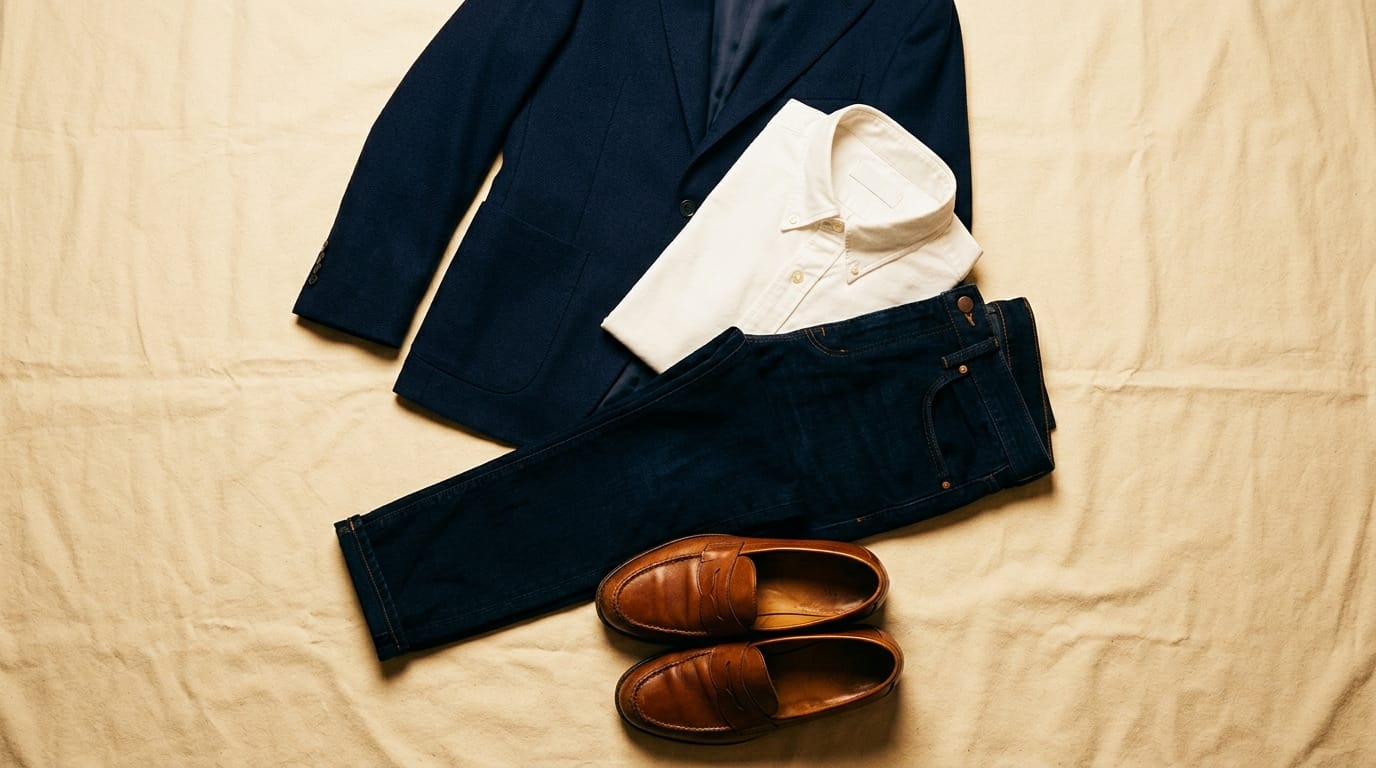
The essential jazz club outfit for men: dark jeans or chinos, a collared shirt (Oxford cloth button-down, linen, or light flannel), and leather shoes or clean Chelsea boots. A blazer is optional but instantly elevates the look, and no tie is required. Colors that read well in low-light jazz club environments include navy, charcoal, olive, burgundy, and warm neutrals. Avoid light-wash or distressed denim; it reads as underdressed even in casual rooms.
For shoes, suede loafers or leather Chelsea boots are the most versatile options. They’re comfortable enough for a two-hour set and sharp enough to hold up at a mid-tier room. The OCBD shirt is the workhorse of this formula, casual enough to breathe, structured enough to signal that you made an effort.
Dressing Up for Upscale Rooms (Dizzy’s Club Tier)
At the highest-tier venues, step up to a sport coat or suit jacket with dress trousers. Oxford or monk-strap shoes work best. An open-collar dress shirt reads well without a tie, and a pocket square is appropriate without being overdone. Think “nice restaurant in the same building”, because at Dizzy’s Club at Jazz at Lincoln Center, that’s often exactly where guests are coming from.
What Men Should Avoid
Athleisure is the main offender: joggers, hoodies worn as outerwear, track pants, and athletic sneakers of any kind. Even fashionable running shoes read as underdressed at mid-tier and above. Graphic tees, baseball caps, and cargo shorts round out the list. A useful test: if your shoes have a logo on the side and grip for running, leave them at home.
Jazz Club Outfit Guide for Women
Women have more range to work with, which is both a freedom and a source of uncertainty. The core principle is simple: jazz clubs reward “put-together” over “dressed up.” Effort matters more than formality.
The Elegant Casual Sweet Spot
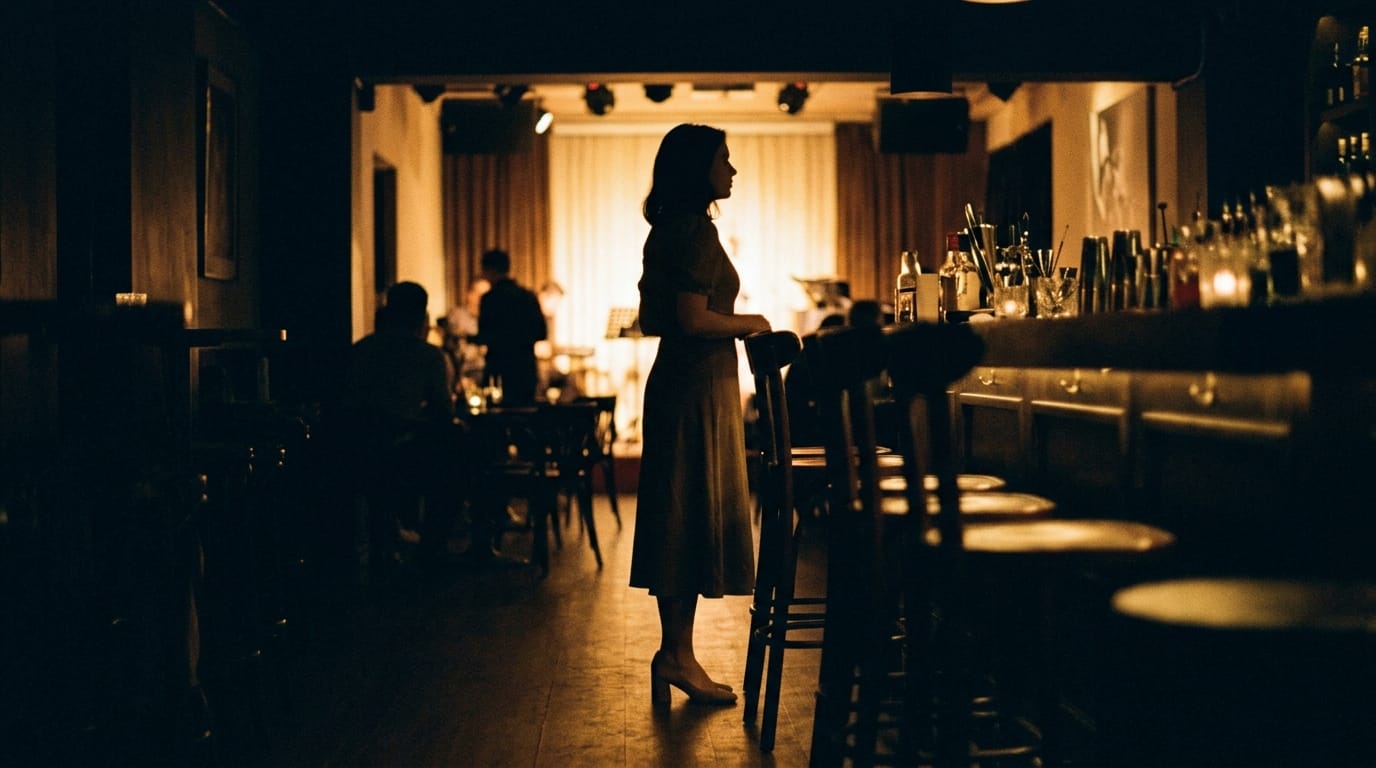
At smart casual venues, the most reliable options are a midi or wrap dress, wide-leg trousers with a silk or satin blouse, dark jeans with a blazer and heeled boots, or a solid-color jumpsuit. This is the women’s equivalent of the men’s blazer-and-dark-jeans formula, it works at almost every room in the country. The goal is “I thought about this” rather than “I tried very hard.”
Cocktail Chic and the Little Black Dress
For upscale venues, the little black dress remains reliably appropriate. Cocktail length (knee to midi) is the right call; a full-length gown is reserved for Lincoln Center-tier events with formal programming. Accessories should stay clean: a small clutch, simple earrings, block heels or strappy sandals. Stilettos are valid, but check the floor, many jazz clubs have uneven surfaces or tight spacing between tables. Sequins and metallic fabrics work beautifully at upscale venues; at casual rooms they’re slightly overdressed but never wrong.
What to Wear to a Jazz Club, Female Casual
Let’s be honest: a nice pair of dark jeans and a nice top is genuinely fine at most jazz clubs. The line to stay on the right side of is “casual chic” versus “casual comfortable.” Dark jeans with a silk blouse and clean flats clears that bar easily. Jeans with a hoodie and sneakers doesn’t, even at a neighborhood room where nobody’s enforcing anything.
What Women Should Avoid
Athleisure, leggings worn as pants, sneakers with athletic soles, is the main thing to skip. Overly beachy looks (sundresses with flip-flops) read as underdressed at any tier above a bar. At the other extreme, anything so formal it reads as costume, a ballgown, full red-carpet glam, will make you uncomfortable during a two-hour seated set. Comfort matters as much as appearance.
Venue-by-Venue Jazz Club Dress Code Breakdown, Real NYC Jazz Clubs
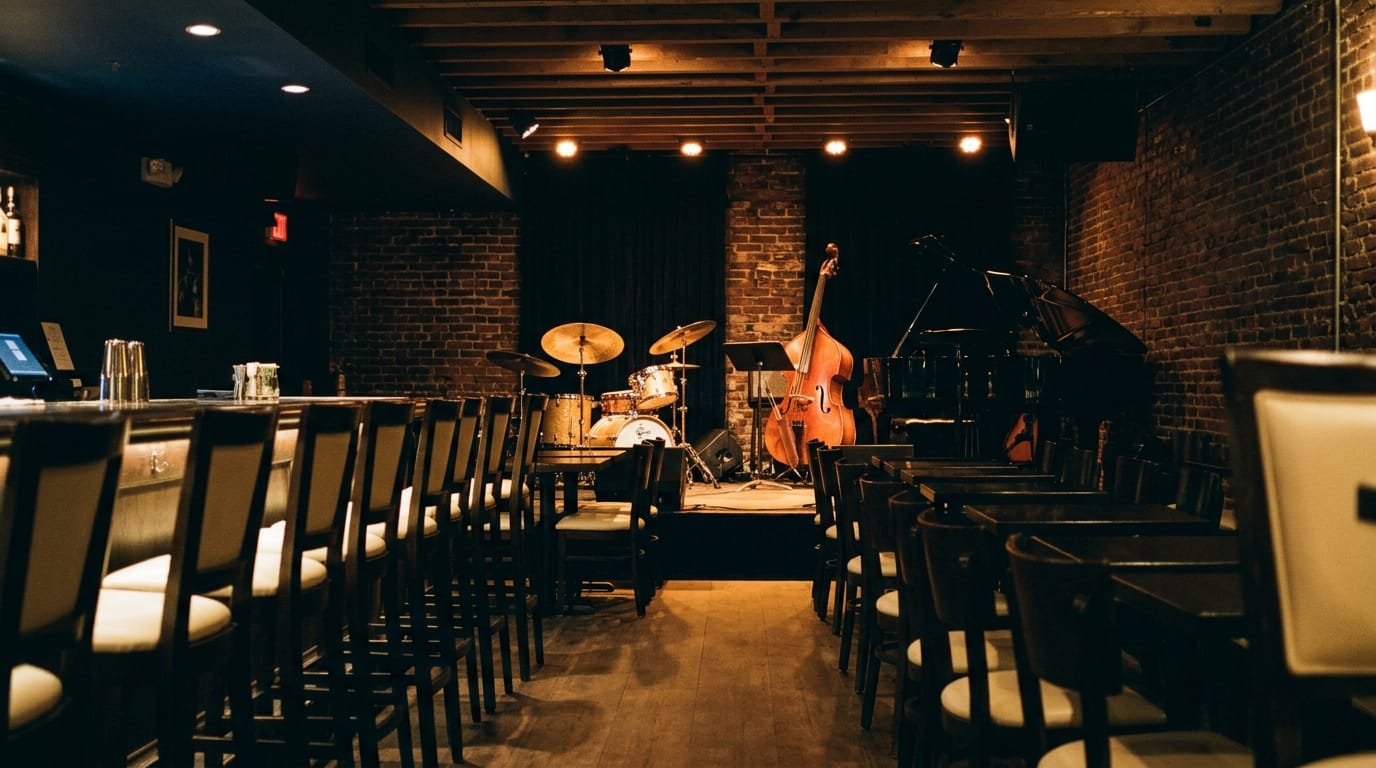
New York City’s jazz rooms are the clearest case study in how venue tier dictates dress expectations. Three clubs, three very different standards, and all three within a few miles of each other.
| Venue | Neighborhood | Dress Code | What Works | What to Avoid |
|---|---|---|---|---|
| Village Vanguard | West Village | None enforced | Dark jeans, clean casual, whatever you’d wear to a nice dinner | Active athleisure, beachwear |
| Blue Note Jazz Club | Greenwich Village | Smart casual | Blazer + dark jeans, midi dress, chinos | Gym shoes, tank tops, athletic wear |
| Dizzy’s Club (Jazz at Lincoln Center) | Columbus Circle | Dressy / cocktail attire | Sport coat, cocktail dress, dress trousers | Casual denim, sneakers of any kind |
Village Vanguard
The Village Vanguard, open since 1935, is the oldest continuously operated jazz club in the world. You enter by walking down fifteen steps into a basement room that hasn’t changed much since Max Gordon opened it. The informality is part of the identity. That said, “anything goes” doesn’t mean “come in your workout clothes”, the room self-polices through atmosphere. When the Bill Charlap Trio is playing, the audience tends to dress accordingly, without anyone asking them to.
Blue Note Jazz Club
Blue Note has operated in Greenwich Village since 1981, hosting internationally touring artists in a room with a two-drink minimum and table seating. Smart casual is the practical standard: you’re sitting at a table for two hours, often close to other guests, and the room has a restaurant-quality feel. A blazer and dark jeans for men, a wrap dress or structured top for women, both land exactly right. Athletic wear stands out in the wrong way here.
Dizzy’s Club at Jazz at Lincoln Center
Dizzy’s Club — named after trumpeter Dizzy Gillespie — sits inside Jazz at Lincoln Center’s Frederick P. Rose Hall, with panoramic views of the Manhattan skyline and Central Park. This is the highest-tier jazz room in New York, and the dress expectation reflects it. Most guests arrive from dinner elsewhere in the building or from nearby Columbus Circle restaurants. Dress as you would for a formal dinner in that neighborhood: cocktail attire for women, sport coat and dress trousers for men. The room earns it.
Seasonal Jazz Club Dressing, Practical Adjustments
The season changes what you wear to a jazz club more than most style guides acknowledge. Here’s the thing: jazz clubs are small, warm, and often packed, which creates its own set of practical challenges regardless of what’s happening outside.
Fall and Winter
Layering is the strategy. A coat you can check is essential, you won’t want it on your lap for a full set. Fabrics like velvet, wool, and corduroy work beautifully in winter jazz contexts and read as intentional rather than accidental. Chelsea boots and leather lace-ups are the right footwear. Bring a compact tote or clutch for coat-check scenarios; a large bag becomes a problem in tight seating arrangements.
Spring and Summer
Linen and cotton blends keep men comfortable without sacrificing the collared-shirt standard. For women, lighter fabrics work well, but summer sequins and satin can overheat in a packed room, breathable alternatives that still read as dressed are worth seeking out. Sandals are fine in summer, but block heels and dressy flats beat flip-flops at any tier. One consistent tip regardless of season: jazz clubs often run aggressive air conditioning, so a light layer is worth bringing even in July.
What NOT to Wear to a Jazz Club, The Short List
This isn’t a judgmental list, it’s a practical one. Jazz clubs are intimate spaces, and comfort and atmosphere matter for everyone in the room, not just you.
- Athletic sneakers or running shoes
- Joggers, sweatpants, or gym shorts
- Hoodies worn as a primary layer or outerwear
- Baseball caps (low ceilings plus caps block sightlines for people seated behind you, a practical reason, not just a fashion one)
- Flip-flops or slides
- Graphic slogan tees
- Anything with offensive or distracting imagery
The test: would you wear it to a sit-down restaurant? If yes, you’re almost certainly fine for a jazz club at the same price point. If you’d feel underdressed at the restaurant, you’ll feel underdressed at the club.
The Jazz Aesthetic, Dressing the Part Beyond the Dress Code
Jazz has always had a visual culture, not just a sonic one. Billie Holiday’s gardenias, Miles Davis’s Italian suits, Thelonious Monk’s porkpie hat, musicians used clothing as an extension of their artistic identity. As All About Jazz has noted in its coverage of performers like Sun Ra, jazz artists treat visual presentation as a deliberate artistic statement, not an afterthought.
The invitation to audiences is the same. The best jazz club outfit isn’t the most expensive one, it’s the one that feels intentional. You don’t need to dress like it’s 1959. You just need to show up with the same care that the musicians on stage do. That spirit, more than any specific garment, is what the room responds to. For a deeper look at the musicians who shaped that visual tradition, the greatest jazz singers of all time and their stage presence offer a compelling starting point.
Frequently Asked Questions
Is there a dress code at jazz clubs?
Most jazz clubs don’t enforce a strict dress code, but smart casual is the unwritten standard at mid-tier and above venues. Upscale rooms like Dizzy’s Club at Jazz at Lincoln Center expect cocktail attire, and some state this explicitly on their ticketing pages.
Can you wear jeans to a jazz club?
Dark, clean jeans are appropriate at the majority of jazz clubs, including the Blue Note. Avoid distressed, light-wash, or ripped denim at any venue above the neighborhood bar tier. At Dizzy’s Club, skip denim entirely and opt for dress trousers.
What is “smart casual” at a jazz club?
In the jazz club context, smart casual means no athletic wear, a collared shirt or structured top, leather shoes or clean boots, and optionally a blazer. It’s the dress code equivalent of “nice but not formal”, the standard you’d apply to a mid-range restaurant.
What should I wear to a jazz club for a date night?
A wrap dress or midi dress works well for women; dark jeans, a blazer, and leather shoes work for men. The shared goal is to look like you made an effort without looking like you’re attending a gala. Both outfits hold up across most venue tiers, which makes them reliable date-night choices.
What should I wear to a jazz club in NYC specifically?
It depends entirely on the venue. The Village Vanguard is genuinely come-as-you-are; the Blue Note requires smart casual; Dizzy’s Club calls for cocktail attire. When in doubt, use the cover charge as your guide, higher price, higher standard. Check the venue’s ticketing page before you go, since some rooms state their expectations directly.
Jazz clubs reward people who show up with intention, in their listening and in how they dress. Pick the outfit that fits the room, skip the athletic wear, and let the music do the rest. If you’re still building your knowledge of the venues worth dressing up for, our guide to the different types of jazz and where each style lives today is a good place to start planning your next night out.