20 Popular Jazz Artists Today: The Modern Voices Defining the Genre
These are 20 of the most popular jazz artists working today: musicians and bands who released new music or toured between 2024 and 2026 and whose audiences reach well beyond the jazz club. Jon Batiste, Kamasi Washington and Samara Joy are the biggest names, all three with Grammy wins at the 2026 ceremony, and the list also covers today’s leading singers, the London scene around Ezra Collective, and instrumentalists such as Brad Mehldau and Hiromi. Each entry gives the facts behind the pick and a record to start with.
Table of Contents
- The Crossover Stars
- 1. Jon Batiste
- 2. Kamasi Washington
- 3. Robert Glasper
- 4. Thundercat
- Popular Jazz Singers Today
- 5. Samara Joy
- 6. Cécile McLorin Salvant
- 7. Gregory Porter
- 8. Esperanza Spalding
- 9. Norah Jones
- The London Scene
- 10. Ezra Collective
- 11. Nubya Garcia
- 12. Shabaka Hutchings
- 13. Yussef Dayes
- Instrumentalists and Bandleaders
- 14. Brad Mehldau
- 15. Hiromi
- 16. Joshua Redman
- 17. Makaya McCraven
- 18. Lakecia Benjamin
- 19. Ambrose Akinmusire
- 20. Wynton Marsalis
- More Artists Worth Hearing
- Frequently Asked Questions
- Who are the most popular jazz singers today?
- What are the most popular jazz bands today?
- Who are the most popular male jazz artists today?
- Why aren’t Miles Davis or John Coltrane on this list?
Popularity here is not a poll: we looked at chart placings, festival and arena dates, and Grammy and Mercury Prize recognition, and included only living artists with a release or tour in 2024, 2025 or 2026. For the musicians who built the music, see our ranking of the greatest jazz artists of all time. The 20 are grouped by where they sit in the scene, not ranked against each other.
The Crossover Stars
1. Jon Batiste
Batiste (born 1986) comes from a New Orleans family of musicians and studied jazz at Juilliard. He led the house band on The Late Show with Stephen Colbert from 2015 to 2022, his album We Are won Album of the Year at the 2022 Grammys, and his score for Pixar’s Soul, written with Trent Reznor and Atticus Ross, won an Academy Award. Beethoven Blues (Verve, 2024) reworks Beethoven at the piano, and Big Money (Verve, 2025) won the 2026 Grammy for Best Americana Album.
Start with: We Are (Verve, 2021).
2. Kamasi Washington
The Los Angeles tenor saxophonist (born 1981) plays spiritual jazz on a large scale. The Epic (Brainfeeder, 2015) is a triple album of almost three hours, recorded with his collective the West Coast Get Down and expanded with a 32-piece orchestra and a 20-voice choir. He played on Kendrick Lamar’s To Pimp a Butterfly the same year, and his writing and production credits on Lamar’s GNX (2024) won him two Grammys in 2026: Record of the Year for “Luther” and Best Rap Song for “tv off”. His latest album, Fearless Movement (Young, 2024), features André 3000 and George Clinton.
Start with: The Epic.
3. Robert Glasper
Glasper (born 1978) is a pianist and producer who mixes jazz with R&B and hip-hop. Black Radio (Blue Note, 2012), with guests such as Erykah Badu, reached No. 15 on the Billboard 200 and won the Grammy for Best R&B Album; Black Radio III won the same award in 2023. He also played keyboards on To Pimp a Butterfly. Since 2018 he has held annual October residencies at New York’s Blue Note club, and Keys to the City Volume One, drawn from those nights with guests including Norah Jones, was nominated for Best Alternative Jazz Album at the 2026 Grammys.
Start with: Black Radio.
4. Thundercat
Bassist and singer Stephen Bruner (born 1984) joined the thrash band Suicidal Tendencies at 16, and his earliest studio work included Kamasi Washington’s records. He won a Grammy in 2016 for his part in Lamar’s “These Walls” and another for It Is What It Is (Brainfeeder, 2020), named Best Progressive R&B Album. His records mix funk, soul, R&B and jazz fusion. Distracted (Brainfeeder, April 2026), his first album in six years, features Tame Impala, Lil Yachty and A$AP Rocky.
Start with: Drunk (Brainfeeder, 2017).
Popular Jazz Singers Today
All five singers here have released new records or toured since 2024. Our guide to modern jazz singers covers more of the current generation.
5. Samara Joy
Joy (born 1999) grew up in the Bronx and won the Sarah Vaughan International Jazz Vocal Competition in 2019. Her second album, Linger Awhile (Verve, 2022), reached No. 1 on Billboard’s Jazz Albums chart, and in 2023 she won the Grammy for Best New Artist, as Esperanza Spalding had in 2011. Portrait (Verve, 2024), standards and songbook material recorded with her seven-piece touring band, won Best Jazz Vocal Album in 2026, her sixth Grammy in four years.
Start with: Linger Awhile.
6. Cécile McLorin Salvant
Salvant (born 1989 in Miami to a Haitian father and a French mother) won the Thelonious Monk International Jazz Competition at 21, then the Grammy for Best Jazz Vocal Album three times, in 2016, 2018 and 2019, for albums on Mack Avenue. She received a MacArthur Fellowship in 2020. Her Nonesuch albums include Mélusine (2023), sung largely in French and Haitian Creole, Oh Snap (2025) and her first orchestral record, With Every Breath I Take (2026), with the Metropole Orkest.
Start with: Dreams and Daggers (Mack Avenue, 2017), recorded mostly live at the Village Vanguard.
7. Gregory Porter
The baritone (born 1971) won Best Jazz Vocal Album twice, in 2014 for Liquid Spirit (Blue Note, 2013) and in 2017 for Take Me to the Alley. Liquid Spirit reached the UK top 10, which very few jazz albums do. His 2025 UK tour included Manchester’s Co-op Live arena, and his 2026 to 2027 dates include several nights at London’s Royal Albert Hall. His most recent album is Christmas Wish (Blue Note/Decca, 2023).
Start with: Liquid Spirit.
8. Esperanza Spalding
Spalding (born 1984) is a bassist, singer and composer from Portland, Oregon. Berklee hired her to teach at 20, and her third album, Chamber Music Society (Heads Up, 2010), led to the 2011 Grammy for Best New Artist. She has five Grammys, three of them for Best Jazz Vocal Album: Radio Music Society (2013), 12 Little Spells (2020) and Songwrights Apothecary Lab (2022). Milton + Esperanza (Concord, 2024), made with the Brazilian singer Milton Nascimento, was nominated in the same category in 2025.
Start with: Radio Music Society (Heads Up, 2012).
9. Norah Jones
Jones (born 1979) made her debut on Blue Note with Come Away with Me (2002), which has sold more than 27 million copies and won her five Grammys in 2003, including Album of the Year and Best New Artist. The record blended jazz with country, blues, folk and pop. Visions (Blue Note, 2024) won the 2025 Grammy for Best Traditional Pop Vocal Album, her tenth.
Start with: Come Away with Me.
The London Scene
Ezra Collective’s members met at Tomorrow’s Warriors, the London youth programme run by Gary Crosby and Janine Irons, and Nubya Garcia came through it too.
10. Ezra Collective
Drummer Femi Koleoso, his brother TJ on bass, keyboardist Joe Armon-Jones, trumpeter Ife Ogunjobi and tenor saxophonist James Mollison mix jazz with Afrobeat, Afro-Cuban rhythm, hip-hop and dance music. Where I’m Meant to Be (Partisan, 2022) won the 2023 Mercury Prize, the first win for a jazz act in the prize’s 31-year history, and in 2025 they became the first jazz act to win Group of the Year at the BRIT Awards. Dance, No One’s Watching (2024) was followed by Here Because of Hope in September 2026.
Start with: Where I’m Meant to Be.
11. Nubya Garcia
The tenor saxophonist (born 1991) grew up in Camden. Her debut Source (Concord Jazz, 2020) was shortlisted for the 2021 Mercury Prize, and that August she led her band at the BBC Proms in the Royal Albert Hall. Odyssey (Concord Jazz, 2024), produced with Kwes, adds orchestral arrangements and guests including Esperanza Spalding.
Start with: Source.
12. Shabaka Hutchings
Born in London in 1984 and raised largely in Barbados, Shabaka led Sons of Kemet, a quartet of saxophone, tuba and two drummers whose Your Queen Is a Reptile (Impulse!, 2018) was nominated for the Mercury Prize. Sons of Kemet ended in 2022, and at the end of 2023 he put the saxophone aside to concentrate on flutes such as the Japanese shakuhachi. Perceive Its Beauty, Acknowledge Its Grace (Impulse!, 2024) features André 3000, Laraaji and Floating Points. On Of the Earth (2026), a solo record on his own label, he plays saxophone again.
Start with: Your Queen Is a Reptile.
13. Yussef Dayes
The South London drummer (born 1992) first recorded with keyboardist Kamaal Williams as Yussef Kamaal (Black Focus, Brownswood, 2016), then made What Kinda Music (Blue Note, 2020) with singer and guitarist Tom Misch. His solo debut, Black Classical Music (Brownswood/Nonesuch, 2023), won Best Album at the 2024 Ivor Novello Awards; a live album recorded in Malibu followed in 2024.
Start with: Black Classical Music.
Instrumentalists and Bandleaders
14. Brad Mehldau
Mehldau (born 1970) made his name in the late 1990s with the Art of the Trio albums on Warner Bros., which put songs by Radiohead and Nick Drake next to standards. Finding Gabriel won the Grammy for Best Jazz Instrumental Album in 2020, and he keeps reaching into other repertoire: Ride into the Sun (Nonesuch, 2025), built on songs by Elliott Smith and played with a chamber orchestra, was nominated for Best Alternative Jazz Album in 2026. See also our guide to the greatest jazz pianists.
Start with: The Art of the Trio Volume One (Warner Bros., 1997).
15. Hiromi
Hiromi Uehara (born 1979 in Hamamatsu, Japan) was 17 when Chick Corea, after a chance meeting in Tokyo, invited her to play at his concert. She studied at Berklee with Ahmad Jamal as a mentor and released her debut, Another Mind (Telarc), in 2003. As a member of the Stanley Clarke Band she shared the 2011 Grammy for Best Contemporary Jazz Album. Her band Sonicwonder released OUT THERE (Telarc) in 2025, and in autumn 2026 she is reviving her Trio Project with drummer Simon Phillips.
Start with: Voice (Telarc, 2011) by the Trio Project.
16. Joshua Redman
The tenor saxophonist (born 1969), son of saxophonist Dewey Redman, won the Thelonious Monk International Jazz Saxophone Competition in 1991, the year he graduated from Harvard. His quartet with Brad Mehldau, Christian McBride and Brian Blade, which made MoodSwing in 1994, reunited for RoundAgain (Nonesuch, 2020). Where Are We (Blue Note, 2023), with singer Gabrielle Cavassa, was his first album with vocals, and Words Fall Short (Blue Note, 2025) introduced a new quartet with pianist Paul Cornish, bassist Philip Norris and drummer Nazir Ebo.
Start with: Joshua Redman (Warner Bros., 1993).
17. Makaya McCraven
The Chicago-based drummer and producer (born 1983 in Paris) records improvised sessions, often in front of an audience, then cuts, layers and overdubs the best moments into finished tracks. Universal Beings (International Anthem, 2018) was recorded with musicians in Chicago, New York, London and Los Angeles, and We’re New Again (XL, 2020) reworks Gil Scott-Heron’s I’m New Here. Off the Record (2025) collects four new EPs. See also our guide to jazz drummers.
Start with: Universal Beings.
18. Lakecia Benjamin
The alto saxophonist grew up in Washington Heights, Manhattan, playing salsa and merengue, and toured with Missy Elliott and Alicia Keys. Pursuance: The Coltranes (Ropeadope, 2020) is a tribute to John and Alice Coltrane, and Phoenix (Whirlwind, 2023) brought her first three Grammy nominations. She was nominated again in 2026, for Best Jazz Performance, with “Noble Rise” featuring Immanuel Wilkins and Mark Whitfield. She also appears in our guide to jazz saxophone players.
Start with: Phoenix.
19. Ambrose Akinmusire
The Oakland trumpeter (born 1982) won the Thelonious Monk International Jazz Competition in 2007 and debuted on Blue Note with When the Heart Emerges Glistening (2011). On Nonesuch, Owl Song (2023) is a trio with guitarist Bill Frisell and drummer Herlin Riley, and Honey from a Winter Stone (2025), with the Mivos Quartet and vocalist Kokayi, was nominated for Best Alternative Jazz Album in 2026. A duo album with guitarist Mary Halvorson followed in 2026. He also features in our guide to jazz trumpet players from Louis Armstrong on.
Start with: Owl Song.
20. Wynton Marsalis
Marsalis (born 1961 in New Orleans) has won nine Grammys. In 1983 he won in jazz and classical categories in the same year, which no other musician has done, and his oratorio Blood on the Fields became the first jazz composition to win the Pulitzer Prize for Music in 1997. He is the founding artistic director of Jazz at Lincoln Center and leads its orchestra, and in January 2026 he announced that he will step down as artistic director in July 2027, WRTI reported.
Start with: Black Codes (From the Underground) (Columbia, 1985).
More Artists Worth Hearing
- Kokoroko: a London septet led by Sheila Maurice-Grey and Onome Edgeworth that blends funk with West African highlife; Tuff Times Never Last (2025) followed their debut Could We Be More (Brownswood, 2022).
- Snarky Puppy: the fusion band bassist Michael League founded in Texas in 2004 has won five Grammys, four for Best Contemporary Instrumental Album.
- Arooj Aftab: the Pakistani American singer won the 2022 Grammy for Best Global Music Performance with “Mohabbat”, the first Grammy for a Pakistani artist; Night Reign (Verve, 2024) was nominated for Best Alternative Jazz Album.
- Chief Xian aTunde Adjuah: the New Orleans trumpeter formerly known as Christian Scott coined the term stretch music and has six Grammy nominations; on Bark Out Thunder Roar Out Lightning (Ropeadope, 2023) he plays instruments of his own design instead of trumpet.
Frequently Asked Questions
Who are the most popular jazz singers today?
On this list: Samara Joy, Cécile McLorin Salvant, Gregory Porter, Esperanza Spalding and Norah Jones. Joy has won six Grammys since 2023, Salvant, Porter and Spalding have all won Best Jazz Vocal Album, and Jones’s debut has sold more than 27 million copies.
What are the most popular jazz bands today?
Ezra Collective has the most mainstream recognition: it won the Mercury Prize in 2023 and Group of the Year at the 2025 BRIT Awards, both firsts for a jazz act. Snarky Puppy has won five Grammys since 2014, and Kokoroko, from the same London scene as Ezra Collective, released its second album in 2025.
Who are the most popular male jazz artists today?
Jon Batiste, Kamasi Washington and Robert Glasper reach the widest audiences; all three have won Grammys, and Washington and Glasper both played on Kendrick Lamar’s To Pimp a Butterfly. Gregory Porter is the leading male singer here, and Brad Mehldau, Joshua Redman and Wynton Marsalis lead the instrumental mainstream.
Why aren’t Miles Davis or John Coltrane on this list?
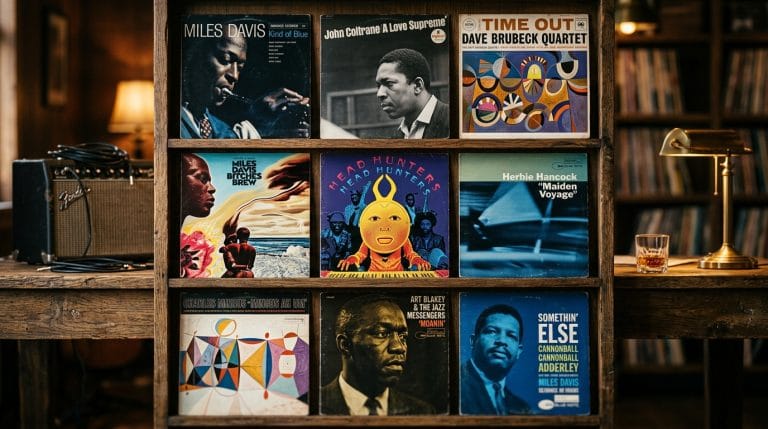
The list only covers living artists who released music or toured between 2024 and 2026. Miles Davis died in 1991 and John Coltrane in 1967. Their influence runs through the list: Lakecia Benjamin’s Pursuance: The Coltranes is a tribute to John and Alice Coltrane, and Robert Glasper’s Everything’s Beautiful (2016) reworks Miles Davis recordings.