What to Wear to a Jazz Club: A Practical Guide for First-Timers
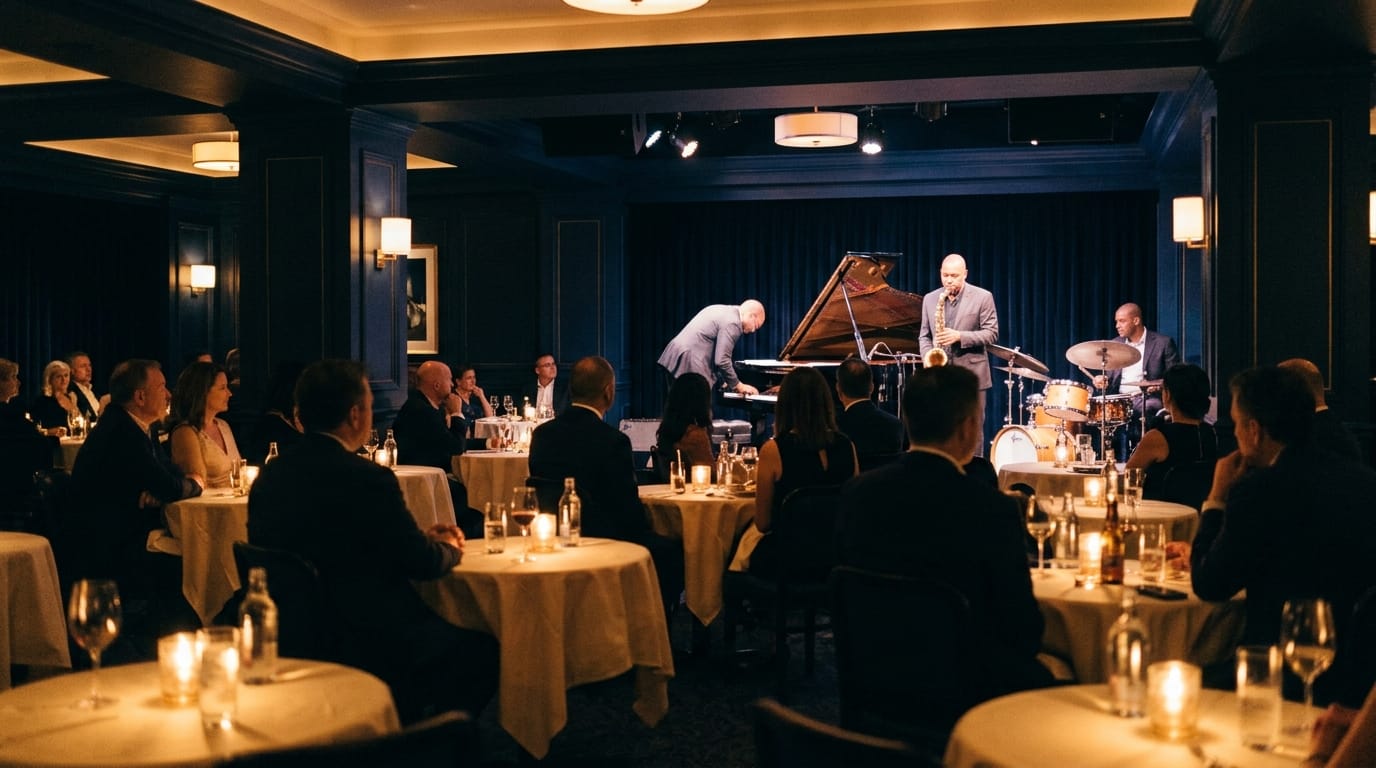
A jazz club is a live music venue where smart-casual attire is the widely accepted standard, meaning collared shirts and neat trousers for men, and dresses or tailored separates for women, though specific venues range from jeans-acceptable to jacket-required. Most US and UK jazz clubs don’t require black tie, and you won’t need a tuxedo. What you do need is a sense of the specific room you’re walking into, because a basement speakeasy in Greenwich Village and a supper club on the Upper East Side are two entirely different propositions. This guide breaks down what to wear to a jazz club by venue type, gender presentation, season, and city, so you walk in looking like you belong.
Table of Contents
- Does Your Jazz Club Actually Have a Dress Code?
- What to Wear by Venue Type
- Major Institutional Jazz Clubs (Blue Note, Village Vanguard, Birdland)
- Speakeasy-Style and Neighborhood Clubs (Smalls, Mezzrow, Ronnie Scott’s Late Night)
- Hotel Jazz Lounges (Café Carlyle, Bemelmans Bar)
- Jazz Festivals (Newport, Monterey, Chicago Jazz Festival)
- What to Wear to a Jazz Club, Men’s Outfit Guide
- The Smart-Casual Baseline (Most Venues)
- Premium Venues, Step It Up
- What Men Should Avoid
- What to Wear to a Jazz Club, Women’s Outfit Guide
- Premium Venues, Cocktail Direction
- Winter and Seasonal Considerations for Women
- What to Wear to a Jazz Club in NYC, City-Specific Notes
- Practical Considerations Nobody Mentions
- Temperature, Jazz Clubs Are Cold (Until They’re Not)
- Seating Type and Comfort
- Photography Etiquette and What You’re Carrying
- What NOT to Wear to a Jazz Club
- FAQ, Specific Questions First-Timers Ask
- Can I wear jeans to a jazz club?
- Are sneakers OK at a jazz club?
- Should women wear heels to a jazz club?
- What do you wear to a jazz club in summer?
- Is there a dress code for jazz concerts vs. jazz clubs?
- The Cultural Context Behind Jazz Club Attire
- How to Research the Dress Code for Your Specific Venue
Does Your Jazz Club Actually Have a Dress Code?
The majority of jazz clubs in the US and UK operate a smart-casual standard, not a formal one. No posted dress code is itself a signal, it usually means the venue trusts guests to read the room, and the room is almost always smarter than a bar but less formal than a wedding. That said, three distinct tiers exist, and they map to real venues you’ll recognize.
Tier 1, Flagship institutional clubs: Blue Note NYC, Birdland, and the Village Vanguard. These venues lean dressy-smart. Birdland’s website describes a business-casual-or-better expectation, and the audience at Blue Note skews international and celebratory, birthdays, anniversaries, first dates. A blazer is never wrong here.
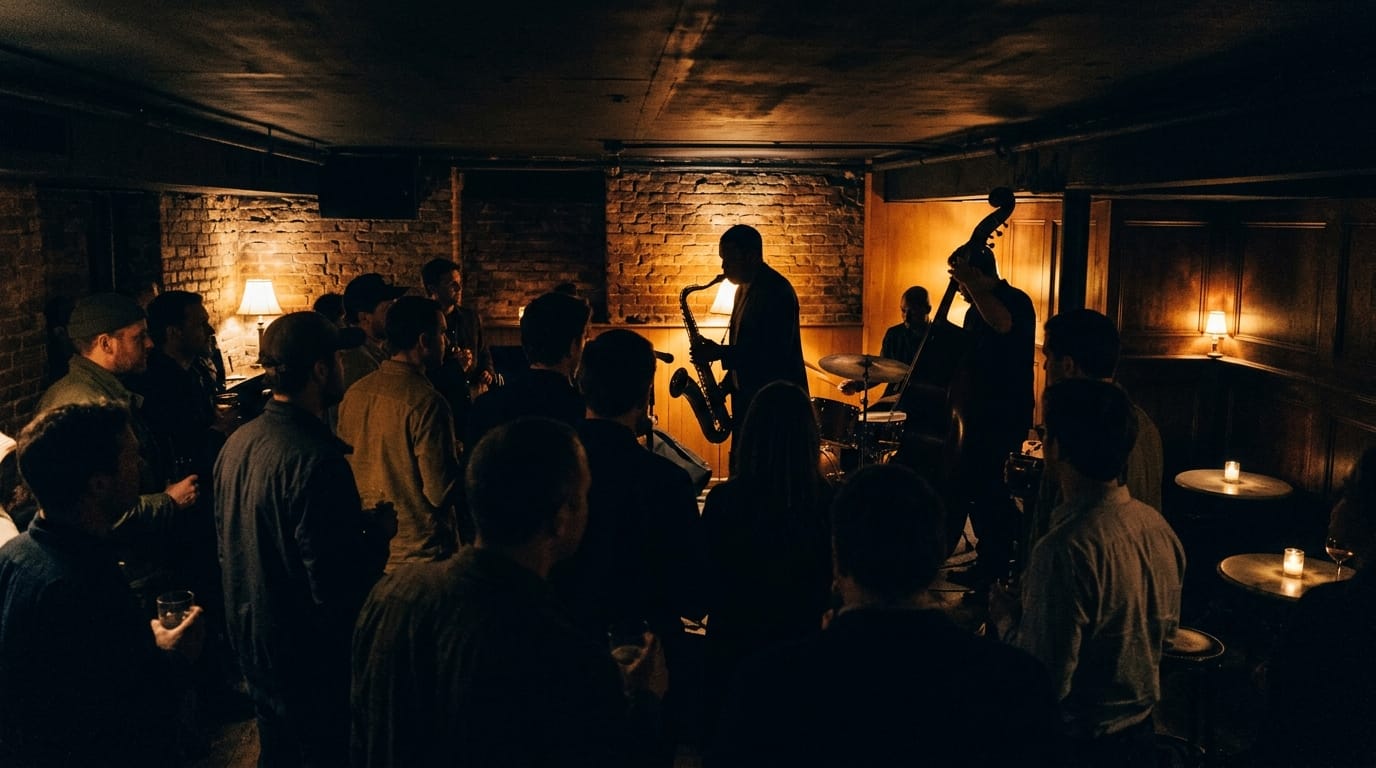
Tier 2, Speakeasy and neighborhood clubs: Smalls Jazz Club and Mezzrow, both in Greenwich Village. These rooms are deliberately casual-cool. Regulars are working musicians and serious listeners who care far more about what’s happening on the bandstand than what you’re wearing. A clean leather jacket and dark jeans fit perfectly.
Tier 3, Hotel lounges: Café Carlyle and Bemelmans Bar. These operate closer to fine-dining standards. Dress as you would for a good restaurant in the same neighborhood, which, on the Upper East Side, means cocktail-adjacent at minimum.
One practical tip that beats any dress code page: check the venue’s Instagram feed before you go. What the audience wears in tagged photos is the most accurate real-world signal available. For a broader look at the venues themselves, the eJazzNews guide to New York City’s best jazz clubs covers the full space of rooms across the five boroughs.
What to Wear by Venue Type
This is where the real differentiation lives. “Smart-casual” covers a wide range, and the right outfit at Smalls would feel underdressed at Café Carlyle. Here’s how to calibrate by room type.
Major Institutional Jazz Clubs (Blue Note, Village Vanguard, Birdland)
Blue Note NYC has operated as a Greenwich Village institution since 1981, with table service, a two-drink minimum, and tickets that typically run from around $25 to well above $75 depending on the artist. The audience is mixed, tourists, jazz devotees, couples celebrating something. Smart-casual is the floor; a blazer always reads correctly here, and you won’t feel overdressed in dress trousers.
The Village Vanguard, open since 1935, is the oldest continuously operated jazz club in the world, a 123-seat basement room that’s intimate and unpretentious despite its history. Clean, neat clothing reads correctly here. Dark jeans paired with a blazer are acceptable; the room rewards presence over polish.
Birdland sits in a larger Broadway-adjacent space and draws a slightly more dressed-up crowd than the Vanguard. The original Birdland opened in December 1949 on 52nd Street; the current room carries that legacy with a slightly more theatrical energy. Lean toward the smarter end of your wardrobe here.
Speakeasy-Style and Neighborhood Clubs (Smalls, Mezzrow, Ronnie Scott’s Late Night)
Smalls Jazz Club, established in 1994, built its reputation as a hotbed for New York jazz talent. The format is cash bar, no table service, benches and standing room, and the $25 cover gets you serious music from serious players. Overthinking your outfit here makes you stand out more than underdressing. Dark jeans and a clean shirt is the standard. A leather jacket works. A tie does not.
Mezzrow opened in 2014 under the same ownership as Smalls, inspired by the legendary piano bar Bradley’s. It seats around 30 people beneath a West Village brownstone and functions primarily as a piano room. The vibe is comfortable and stylish-casual, think of it as the most intimate room you’ll ever hear jazz in, and dress accordingly.
Ronnie Scott’s in London, operating in Soho since 1959, splits into two modes: the main room runs smarter, with a dressed-up crowd and dinner service; the late sessions (post-midnight) are considerably more relaxed. International travelers should note this distinction and pack accordingly.
Hotel Jazz Lounges (Café Carlyle, Bemelmans Bar)
Café Carlyle, which opened in 1955 inside the Carlyle Hotel on the Upper East Side, is one of the last genuine supper clubs in New York. The room is set against Marcel Vertès murals and operates with full dinner service. Women in cocktail dresses, men in blazers and dress trousers, this is the one room on this list where heels are not just appropriate but expected. The dress code mirrors the hotel’s restaurant, which is to say it’s the most formal context on this list.
Bemelmans Bar, completed in 1947 and adorned with Ludwig Bemelmans’ whimsical murals, is technically a bar, but the nightly piano and the room’s visual grandeur make it feel like 1955 in the best possible way. Smart-casual tilting toward cocktail is the right call. You can get away with slightly less formality than Café Carlyle, but this isn’t a jeans room.
Jazz Festivals (Newport, Monterey, Chicago Jazz Festival)
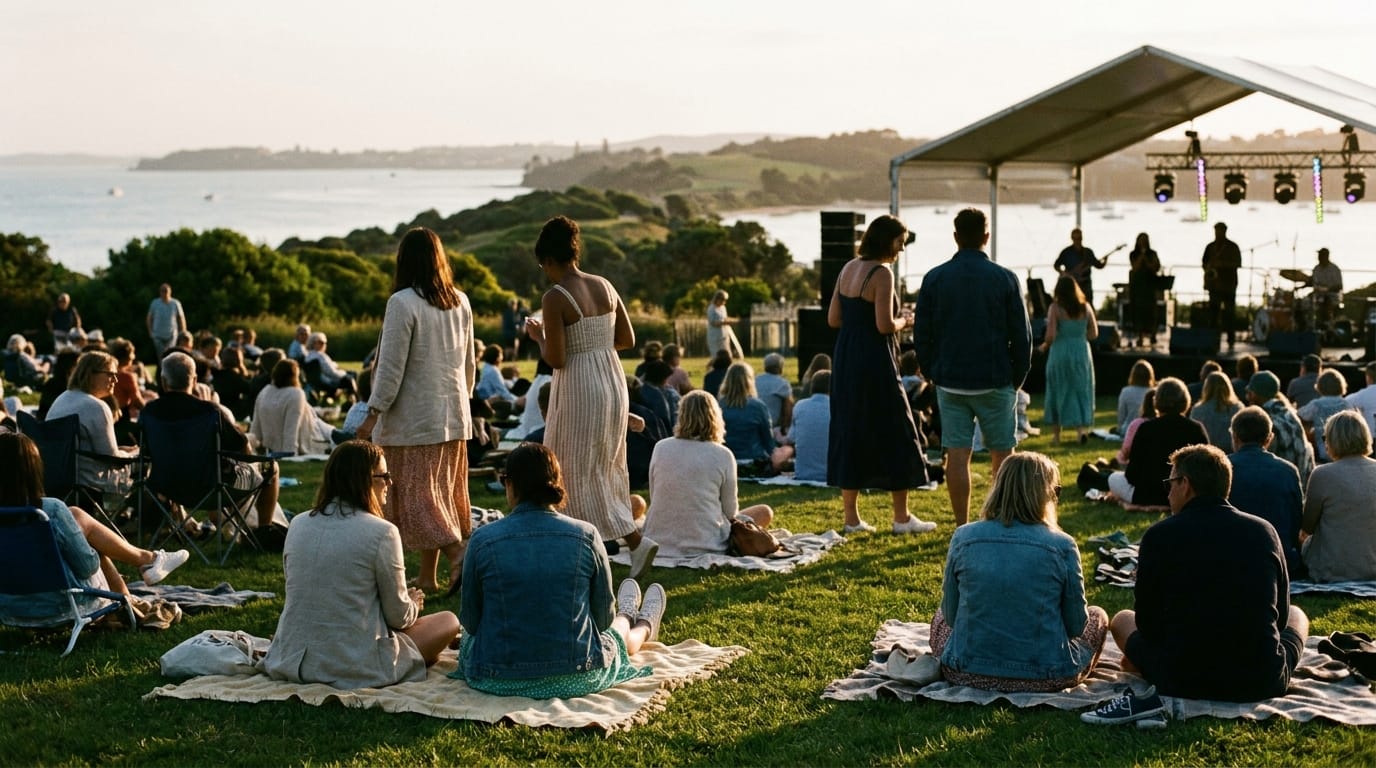
Festival attire is its own category entirely, and the outfits what to wear to a jazz club conversation shifts significantly outdoors. The Newport Jazz Festival takes place at Fort Adams State Park in Newport, Rhode Island, a coastal outdoor venue where the grass and gravel demand sensible footwear. Rhode Island coastal wind means layers are infrastructure, not fashion. Linen, denim, and comfortable shoes are the standard.
The Monterey Jazz Festival, running since 1958 on the California coast, calls for elevated casual, sundresses, light blazers, comfortable flats. The weather is mild but the evenings cool quickly. The Chicago Jazz Festival, a free Labor Day weekend tradition since 1979 (now held in Millennium Park), is street casual: come as you are, dress for the weather, and bring a blanket if you’re staying for the evening sets.
| Venue Type | Example Venues | Formality Level | Men’s Baseline | Women’s Baseline |
|---|---|---|---|---|
| Flagship institutional | Blue Note, Birdland | Smart-casual to dressy | Blazer + collared shirt + leather shoes | Dress or tailored separates + low heel |
| Speakeasy/neighborhood | Smalls, Mezzrow | Casual-deliberate | Dark jeans + clean shirt + leather shoes | Dark jeans + blouse or sleek top |
| Hotel lounge | Café Carlyle, Bemelmans Bar | Cocktail-adjacent | Blazer + dress trousers + dress shoes | Cocktail dress or elevated separates |
| Outdoor festival | Newport, Monterey, Chicago | Relaxed casual | Chinos/jeans + layers + clean sneakers OK | Sundress + layers + comfortable footwear |
What to Wear to a Jazz Club, Men’s Outfit Guide
For men wondering what to wear to a jazz club, the good news is that one combination covers roughly 80% of venues without any second-guessing. Get this baseline right and you’re set for most rooms in New York, London, or Chicago.
The Smart-Casual Baseline (Most Venues)
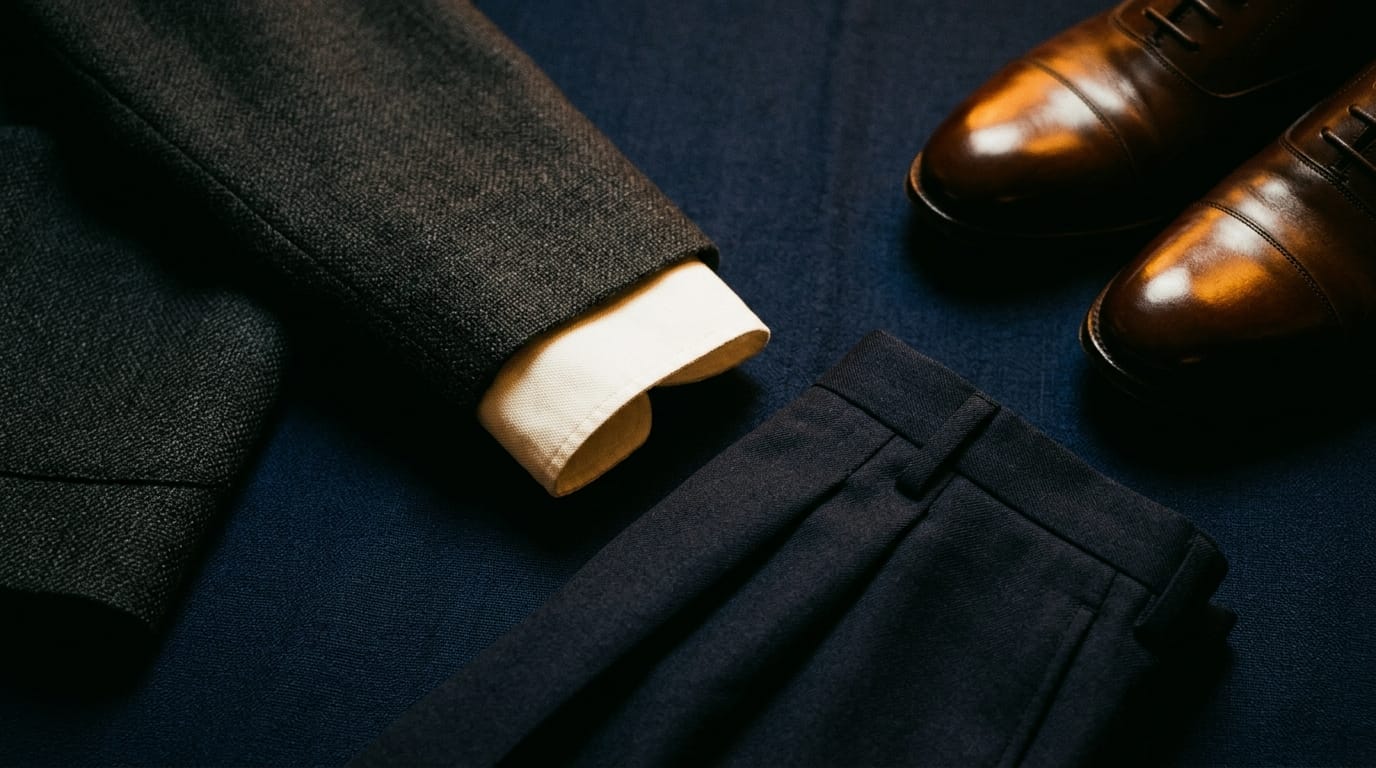
A blazer over a collared shirt, Oxford cloth button-down, linen, or a simple OCBD, paired with tailored chinos or dark trousers and leather loafers or Oxford shoes. This combination works at Blue Note, the Village Vanguard, Smalls, and Ronnie Scott’s main room without modification. It’s the universal answer to “what should I wear to a jazz club” for men.
Denim is acceptable at Tier 2 venues, but the rules are specific: dark wash only, no distressing, no visible wear. Paired with a blazer, dark jeans read as smart-casual at Smalls or the Vanguard. Don’t push that logic to Birdland or Café Carlyle, those rooms expect trousers.
Premium Venues, Step It Up
For Café Carlyle, Bemelmans Bar, or a special-occasion night at Blue Note, move to a two-piece suit or blazer with dress trousers and a dress shirt. Leather Oxford or Derby shoes are the correct footwear. A tie is optional; a pocket square adds to the room’s visual texture without tipping into overdressed territory.
On sneakers: clean, minimal white leather sneakers are acceptable at Tier 2 venues only. Never at Tier 1 flagship rooms or hotel lounges. The distinction isn’t about brand, it’s about whether the shoe reads as athletic or as footwear.
What Men Should Avoid
Athletic shoes, gym shorts, baseball caps worn forward, graphic tees, and hoodies are out at every venue on this list. These aren’t arbitrary rules, they signal a context mismatch that the room will notice even if nobody says anything. Keep bags minimal; a slim card-holder or an interior blazer pocket handles everything you need in a table-service venue.
What to Wear to a Jazz Club, Women’s Outfit Guide
Women have more range here than men, which is both an advantage and a source of genuine uncertainty. The smart-casual baseline covers most rooms, and the cocktail direction covers the rest. Here’s how to navigate both.
Premium Venues, Cocktail Direction
For Café Carlyle or Bemelmans Bar, move toward a cocktail dress (knee to midi length), a tailored jumpsuit, or an evening blouse with dress trousers. These are seated rooms with flat floors, so heels are more practical here than anywhere else on this list. Avoid very short skirts (above mid-thigh) and overtly revealing tops, these read as nightclub attire and feel out of context with the listening culture of a jazz room.
Winter and Seasonal Considerations for Women
For women thinking about what to wear to a jazz club in winter, the layering strategy matters as much as the outfit itself. An elegant wrap or pashmina handles the temperature swings inside most clubs (more on that below). A structured wool or camel coat is the right outerwear for Tier 1 and Tier 2 venues. Ankle boots or knee-high boots in leather or suede are fully appropriate at both tiers through fall and winter, they’re smarter than heels on icy sidewalks and look deliberate rather than casual.
What to Wear to a Jazz Club in NYC, City-Specific Notes
New York’s jazz clubs cluster in three geographic zones: Greenwich Village (Smalls, Mezzrow, Blue Note, Village Vanguard), Midtown (Birdland), and the Upper East Side (Café Carlyle, Bemelmans Bar). Your outfit choice should factor in how you’re getting there, because the subway-to-club transition is real.
Block heels beat stilettos on the cobblestones near the West Village. A structured tote or small crossbody handles essentials without the bulk of a backpack, which becomes genuinely impractical in narrow aisles and tight table-service rooms. If you’re taking the subway, you want to look polished but move freely, that’s a practical constraint, not a fashion one.
NYC winters create a specific problem: you walk from 20°F outside to an 80°F packed basement room in about 90 seconds. Layering isn’t optional here, it’s infrastructure. A blazer for men or a wrap for women solves both the cold walk and the overheated room in one garment. For a full breakdown of the venues themselves, the complete eJazzNews guide to jazz club outfits covers additional style angles worth reading before your visit.
Always cross-reference with the venue’s own website for any current stated guidelines. Birdland and Café Carlyle both maintain publicly accessible information about what to expect as a guest, and those pages are updated more reliably than third-party sources.
Practical Considerations Nobody Mentions
Most style guides stop at the outfit. Here’s what they skip, and what actually affects your evening.
Temperature, Jazz Clubs Are Cold (Until They’re Not)
Most jazz clubs run aggressive air conditioning because performers under stage lighting generate significant heat. The first 20 minutes of an empty room feel cold; a full room swings the other direction fast. The practical solution is the same for men and women: always bring a layer. A blazer or a wrap is both the correct stylistic choice and the correct thermal choice. Don’t check it at the door.
Seating Type and Comfort
Table-service venues like Blue Note and Birdland seat you for 60 to 90 minutes. Comfort matters more than you’d expect, restrictive waistbands and very high heels become genuine issues by the second set. Bar seating at Bemelmans or late-night speakeasies means stools, which makes skirt length and posture more relevant. Standing room at Smalls late sessions makes flat, comfortable shoes a practical priority rather than a style compromise.
Photography Etiquette and What You’re Carrying
Most jazz clubs prohibit flash photography and discourage visible cameras during sets. A large camera bag is impractical and disruptive in a room where the person behind you paid to hear music, not stare at your gear. For women, a small crossbody or clutch keeps essentials accessible without taking up table space. For men, a slim card-holder or interior blazer pocket handles everything. This also answers the backpack question before it becomes a problem: leave it at home.
What NOT to Wear to a Jazz Club
Let’s be honest, most of this is common sense, but first-timers genuinely ask. Here’s the short list:
- Athletic wear: gym shoes, basketball shorts, workout leggings, zip-up hoodies. These signal the wrong context at every venue on this list.
- Beach or resort casual: flip-flops, board shorts, sundresses without a layer at flagship venues. Fine for the Newport lawn; wrong for a basement club.
- Very loud graphic prints: these compete visually with stage lighting and feel out of context in a listening room where the music is the point.
- Costumes or themed outfits: unless the event is specifically themed (some venues host Prohibition-era nights, check the listing first).
- Strong fragrance: not technically clothing, but packed intimate venues mean scent travels. Heavy perfume or cologne is a genuine audience complaint at close-quarters clubs like Mezzrow.
- Oversized backpacks: impractical in narrow aisles and table-service venues, and they mark you as someone who didn’t think about the room.
FAQ, Specific Questions First-Timers Ask
Can I wear jeans to a jazz club?
Dark wash, unripped jeans are acceptable at Tier 2 venues like Smalls and Mezzrow, and at outdoor jazz festivals. Pair them with a blazer or a polished top to keep the overall look intentional. Avoid jeans at Tier 1 flagship rooms (Blue Note, Birdland) and hotel lounges (Café Carlyle, Bemelmans Bar), where trousers are the correct choice.
Are sneakers OK at a jazz club?
At speakeasy-style and neighborhood clubs, clean minimalist leather sneakers are acceptable, think simple, low-profile footwear rather than athletic trainers. At flagship venues and hotel lounges, leather shoes or dressy boots are the correct choice. Athletic sneakers, regardless of brand, are not appropriate at any jazz club with table service.
Should women wear heels to a jazz club?
Heels are appropriate but not required. Block heels and kitten heels are more practical than stilettos given the cobblestone navigation, subway transit, and 90-minute seated sets that characterize most club visits. Flat dressy shoes and ankle boots are equally appropriate at Tier 1 and Tier 2 venues. Save the stilettos for Café Carlyle, where the floors are flat and you won’t be walking far.
What do you wear to a jazz club in summer?
Linen, breathable cotton, and lighter fabrics maintain the smart-casual standard in heat. The air conditioning inside most clubs means having a light layer is still wise, a linen blazer for men or a light wrap for women handles the transition between a hot street and a cold room without adding bulk.
Is there a dress code for jazz concerts vs. jazz clubs?
A seated jazz concert at a formal hall, Lincoln Center, Carnegie Hall, leans more formal than a club visit, with more traditional audience attire expectations. Jazz club sets are live and immersive; the room is close, the music is loud, and the atmosphere is social. What to wear to a jazz show at a concert hall tilts toward business formal; what to wear to a jazz club tilts toward smart-casual. Know which room you’re in before you get dressed.
The Cultural Context Behind Jazz Club Attire
Here’s the thing most style guides skip entirely: “dressing for jazz” has meaning beyond fashion. During the Harlem Renaissance and the bebop era, Black American musicians and their audiences used formal dress as a deliberate statement of dignity and cultural seriousness, in venues that often treated them unequally and in a society that frequently denied them basic respect. The expectation of dressing up for jazz has roots in that history.
Ted Gioia’s The History of Jazz documents how the music’s social context shaped its presentation, and writers like Nat Hentoff captured in their DownBeat reporting how the clubs of 52nd Street and Harlem operated as spaces where Black excellence was on display in every dimension, including dress. Understanding that context doesn’t obligate you to wear a suit. But it does add meaning to the choice, and it explains why the culture still values presentation in a way that, say, a rock club doesn’t. For more on how jazz venues developed their cultural identity, the history of jazz in the 1920s provides essential background on the era that set these norms.
How to Research the Dress Code for Your Specific Venue
No guide covers every club in every city, so here’s a three-step method that works anywhere. First, check the venue’s official website for any stated dress code or “What to Expect” page, Birdland and Café Carlyle both publish this information directly. Second, search the venue’s name on Instagram and filter by recent tagged posts; what the audience actually wears in photos is more reliable than any written policy. Third, if you’re still uncertain, call or email the box office. Most venues will answer this question plainly and quickly, and asking shows the kind of consideration that the culture genuinely appreciates.
The right outfit for a jazz club isn’t about following rules, it’s about reading the room before you walk into it. Get that right, and the music takes care of the rest. Whether you’re heading to a basement in the West Village or a supper club on the Upper East Side, smart-casual preparation means you spend the evening listening instead of worrying about whether you fit in.