What Is Jazz Dance? History, Styles, and the Moves That Define It
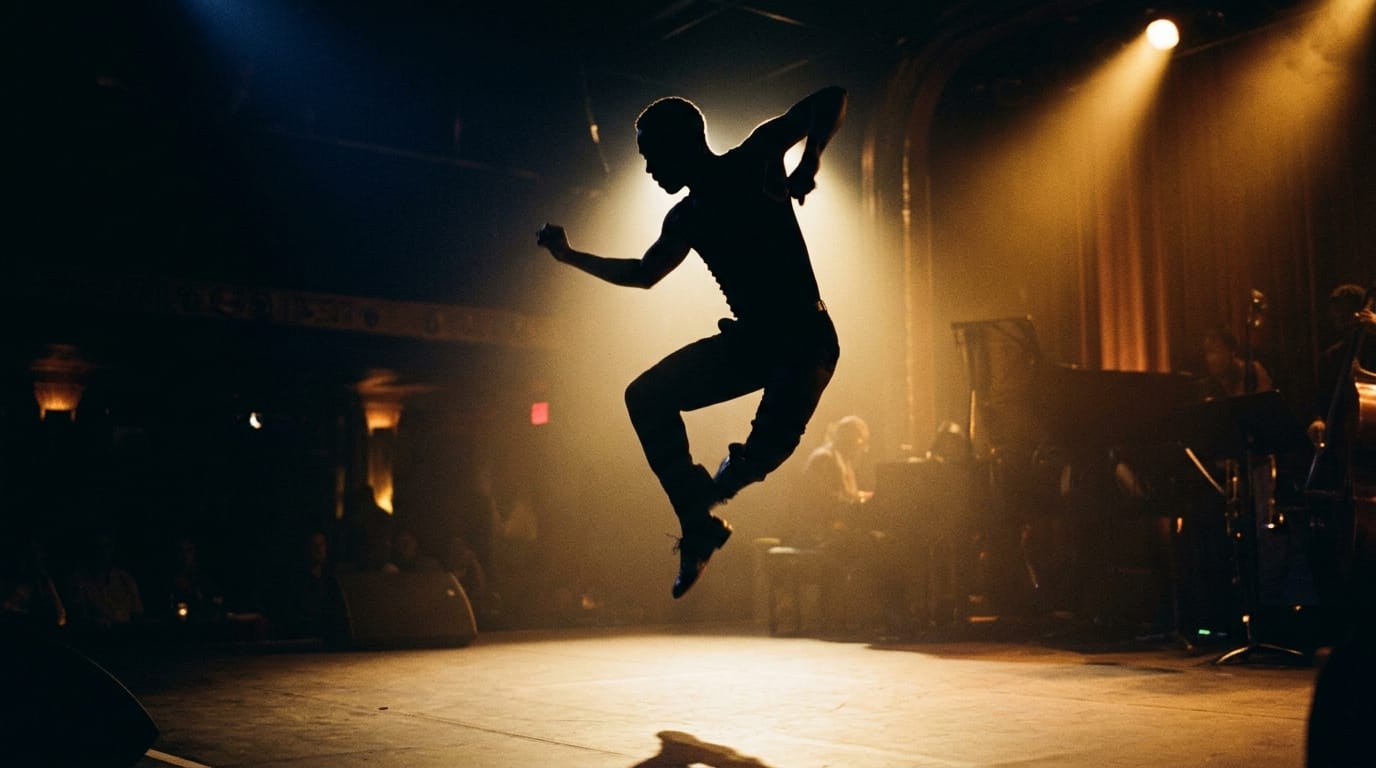
Jazz dance is a performance and social dance form rooted in African American vernacular traditions, characterized by syncopated rhythms, improvisation, body isolations, and high-energy athleticism. It originated in the early 20th century American South and in New York’s Harlem, drawing directly from West African communal movement practices carried through generations of African American culture. Today, jazz dance is one of the most widely taught concert dance forms in the United States, and its vocabulary runs through Broadway, commercial music video, and competitive dance at every level.
Table of Contents
- What Is Jazz Dance? A Clear Definition
- The Jazz Dance Definition in Plain Language
- How Jazz Dance Differs from Other Dance Forms
- The Origins of Jazz Dance, Where and When It Began
- West African and African American Vernacular Roots
- New Orleans and the Birth of a Dance Culture
- Harlem and the Swing Era, Jazz Dance Goes National
- Defining Characteristics of Jazz Dance
- Syncopation and Rhythm, The Music-Movement Contract
- Isolations, The Signature Physical Grammar
- The “Get-Down” Aesthetic, Groundedness vs. Ballet’s Elevation
- Improvisation and Performance Presence
- High-Energy Athleticism, Leaps, Turns, and Kicks
- The History of Jazz Dance, A Timeline
- Key Figures Who Shaped Jazz Dance
- Katherine Dunham (1909-2006), The Scholarly Foundation
- Jack Cole (1911-1974), The Architect of Theatrical Jazz
- Bob Fosse (1927-1987), The Popularizer
- Jerome Robbins (1918-1998), Jazz Dance Meets Classical Ambition
- Gus Giordano (1923-2008), The Educator
- Types of Jazz Dance, A Style Guide
- Classic/Theatrical Jazz Dance
- Modern Jazz Dance
- Contemporary Jazz Dance
- Jazz Funk Dance, Definition and Origins
- Vernacular Jazz, The Social Dance Foundation
- Jazz Dance Moves, Vocabulary, Steps, and Beginner Foundations
- Core Jazz Dance Vocabulary, Terms Every Dancer Should Know
- Jazz Dance Moves for Beginners, Where to Start
- A Beginner Jazz Dance Combination, Step by Step
- Jazz Dance’s Cultural Impact, Then and Now
- Jazz Dance and the Harlem Renaissance
- Jazz Dance on Broadway and in Hollywood
- Jazz Dance’s Lineage Into Contemporary Commercial Dance
- Common Misconceptions About Jazz Dance
- Myth 1, “Bob Fosse Invented Jazz Dance”
- Myth 2, “Jazz Dance Has to Be Done to Jazz Music”
- Myth 3, “Jazz Dance and Hip-Hop Dance Are the Same Thing”
- FAQ, Common Questions About Jazz Dance
- How Do You Describe Jazz Dance?
- Is Jazz Dance Good for Beginners?
- Is Jazz Dance Like Hip-Hop?
- What Is Jazz Funk Dance?
- What Are the Most Important Jazz Dance Terms to Know?
- Further Listening, The Music Behind the Moves
- Conclusion, Why Jazz Dance Still Matters
What Is Jazz Dance? A Clear Definition
The term “jazz dance” covers two distinct but deeply related practices. The first is the social and vernacular form: people dancing to live jazz music in ballrooms, clubs, and community spaces, improvising freely within a shared movement vocabulary. The second is the theatrical and concert form that choreographers codified across the 20th century for stage, film, and studio training. Both share the same roots, but they diverged significantly in purpose and technique.
The Jazz Dance Definition in Plain Language
At its core, the jazz dance definition comes directly from jazz music’s own qualities: swing feel, call-and-response structure, and improvisation. A jazz dancer doesn’t simply move to music, they converse with it, landing ahead of the beat or behind it, accenting unexpected counts, letting the body respond the way a horn player responds to a rhythm section. Dictionary definitions, including those in Merriam-Webster and Britannica, tend to describe jazz dance narrowly as dance performed to jazz music. That’s accurate as far as it goes, but it misses the deeper story: a movement language with its own grammar, history, and cultural weight.
How Jazz Dance Differs from Other Dance Forms
Jazz dance shares technique with ballet and contemporary dance, but its aesthetic priorities are fundamentally different. Where ballet reaches upward and values vertical line, jazz dance grounds itself, bends the knees, and moves toward the earth. Where hip-hop emerged from street culture in the South Bronx in the early 1970s, jazz dance codified in ballrooms and on Broadway stages from the 1920s onward. The comparison table below maps the key distinctions.
| Form | Origin | Music | Technique Emphasis | Improvisation Role | Typical Footwear |
|---|---|---|---|---|---|
| Jazz Dance | African American vernacular, early 20th century USA | Jazz, swing, R&B, pop | Isolations, syncopation, athleticism | High (social); Low-Medium (theatrical) | Jazz oxfords (split-sole) |
| Ballet | European court dance, 15th-17th century | Classical orchestral | Turnout, elevation, line | Very low | Pointe shoes, ballet slippers |
| Hip-Hop Dance | African American/Latino street culture, South Bronx, 1970s | Hip-hop, rap, R&B | Popping, locking, breaking, groove | High | Sneakers |
| Contemporary Dance | Fusion of modern, ballet, and postmodern, mid-20th century | Wide range, often non-jazz | Floor work, release technique, weight | Medium | Bare feet or contemporary shoes |
The Origins of Jazz Dance, Where and When It Began
Jazz dance didn’t appear fully formed. It accumulated over centuries, drawing from West African ritual movement, Caribbean dance traditions, and the specific social conditions of African American life in the United States. Understanding where it came from is inseparable from understanding what it is.
West African and African American Vernacular Roots
The foundational movement vocabulary of jazz dance, polyrhythmic body isolations, call-and-response structure, and a bent-knee “get-down” aesthetic, traces directly to West African communal dance traditions. Lynne Fauley Emery’s scholarly work Black Dance: From 1619 to Today (1972) documents this lineage in detail, establishing that the African aesthetic principle of moving toward the earth, rather than away from it, was carried into American vernacular dance through generations of enslaved and free African Americans. This stands in direct contrast to the upright, vertical aspiration of European ballet and folk dance traditions.
One of the earliest documented forms is the Ring Shout, a ritual dance practice originating in West Africa and documented in African American communities in the American South as early as 1845, with roots reaching back to the 18th century. Participants moved in a counterclockwise circle, combining rhythmic footwork, clapping, and call-and-response singing, a structure that would echo through jazz dance for the next century and a half.
New Orleans and the Birth of a Dance Culture
Congo Square in New Orleans is among the most documented pre-Civil War sites of African American public dancing in the United States. Smithsonian Folkways Magazine has described its Sunday gatherings as a foundational hub for the African and Afro-Caribbean musical traditions that fed into jazz. New Orleans’s unique Creole culture blended French quadrilles, African rhythms, and Caribbean movement into something that existed nowhere else on earth.
When jazz music began its northward migration during the Great Migration (roughly 1910-1930), the dance traveled with it. African American communities carried their movement vocabulary from New Orleans and the Deep South into Chicago, Detroit, and New York, where it would collide with new urban energy and transform into something even more dynamic.
Harlem and the Swing Era, Jazz Dance Goes National
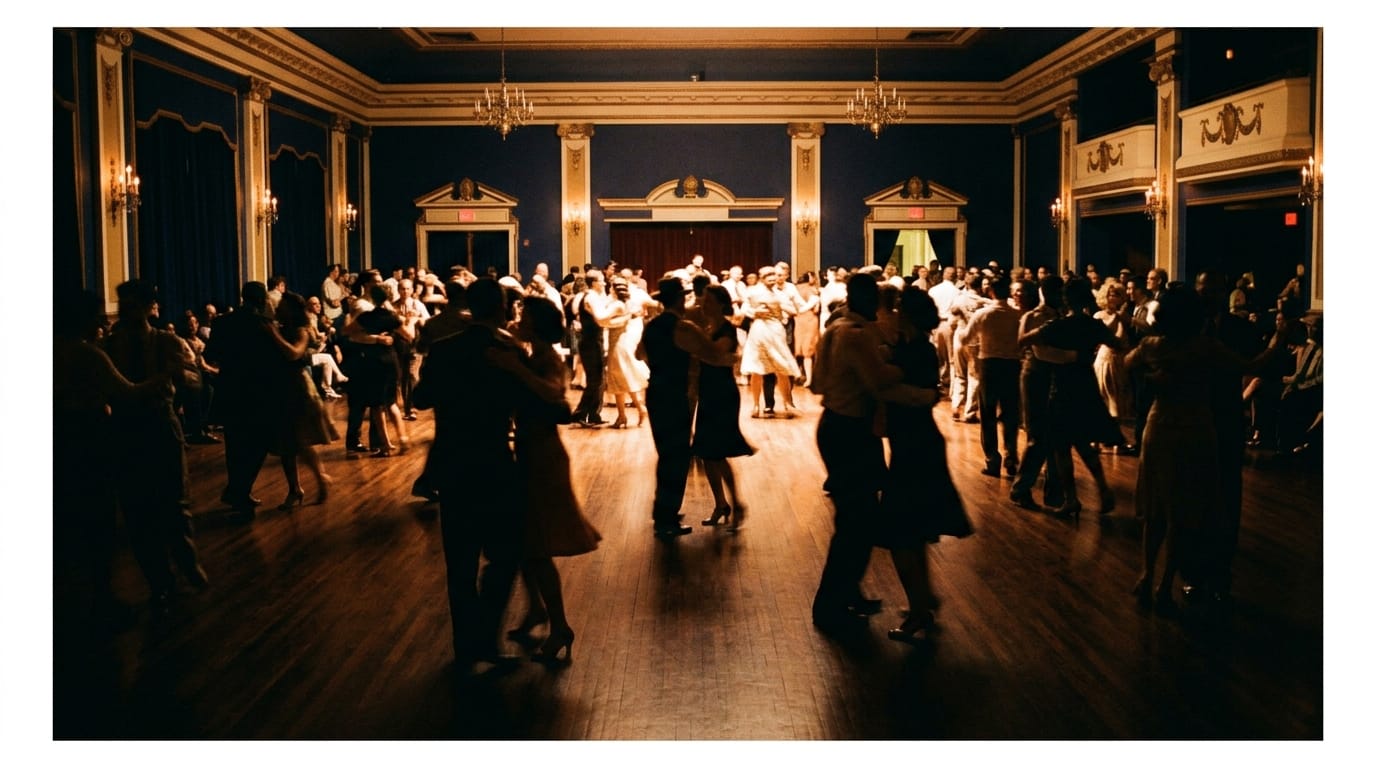
The Savoy Ballroom, which opened on March 12, 1926, between 140th and 141st Streets on Lenox Avenue in Harlem, became the primary incubator for social jazz dance in America. Notably, the Savoy was one of the city’s first major dance halls to completely disregard Jim Crow practices, welcoming dancers of all races. Its “home team” dancers, including Frankie Manning (1914-2009) and Norma Miller (1919-2019), competed in Harvest Moon Ball competitions, with results reported in the Amsterdam News. Manning is considered one of the founders of the Lindy Hop, and his memoir Ambassador of Lindy Hop (2007) documents the creative explosion that happened on that dance floor in real time.
The Cotton Club, located on 142nd Street and Lenox Avenue from roughly 1923 to 1935 (sources vary on the exact opening and closing years), served a different function: it was a showcase stage where Black performers created the art for segregated white audiences. Duke Ellington, Cab Calloway, and their orchestras provided the music; Black dancers and choreographers provided the movement. The swing era, roughly 1935 to 1946, represents jazz dance’s peak as a social form, with the Lindy Hop, Charleston, and related dances practiced by millions of Americans across the country.
Defining Characteristics of Jazz Dance
Jazz dance has a specific physical grammar. It isn’t simply energetic dancing to upbeat music. It’s a technique with identifiable principles, each traceable to the African American vernacular tradition from which the form grew.
Syncopation and Rhythm, The Music-Movement Contract
Jazz dance is inseparable from jazz music’s rhythmic structure. Syncopation, placing accents on unexpected beats rather than the downbeat, is the engine of both the music and the movement. Jazz dancers don’t simply land on the count; they play with it, arriving slightly ahead of the beat or settling into it a fraction late, creating rhythmic counterpoint between body and music. This is fundamentally different from ballet, where movement is typically organized on the count and aligned with the musical phrase. In jazz dance, the relationship between dancer and music is a conversation, not a lockstep.
Isolations, The Signature Physical Grammar
Body isolation is the ability to move one part of the body, head, shoulders, ribcage, hips, knees, independently of the others. It’s the most immediately recognizable technical demand of jazz dance, and it derives directly from West African and Caribbean dance traditions. Katherine Dunham’s documented field research in the Caribbean in the mid-1930s, supported by a Rosenwald Fellowship, established the scholarly connection between African diasporic movement and the isolation-based technique she would later codify. Isolation is a primary jazz dance term and sits at the center of any serious jazz dance vocabulary. A dancer who can’t isolate the ribcage from the hips hasn’t yet learned to speak the language.
The “Get-Down” Aesthetic, Groundedness vs. Ballet’s Elevation
Jazz dance favors a low center of gravity. Knees bend, the pelvis drops, and the body moves toward the floor rather than away from it. This “get-down” quality reflects the African aesthetic principle documented by dance scholars: the earth is not something to escape but something to engage. In practical terms, this means the jazz dancer’s plié functions differently from the ballet dancer’s, it’s not a preparation for elevation but a statement of groundedness in itself. Let’s be honest: this aesthetic difference is also a cultural one, and erasing it by treating jazz dance as simply a looser form of ballet misses the point entirely.
Improvisation and Performance Presence
Social jazz dance historically demanded improvisation. Dancers at the Savoy invented new steps in real time, responding to the band, to their partners, and to the competitive energy of the room. As jazz dance moved to the stage, improvisation became structured, choreographers like Jack Cole developed movement that looked organic and spontaneous but was precisely planned. The performance “presence” expectation remained: jazz dance asks the dancer to address the audience directly, to use facial expression and showmanship as technical tools. This distinguishes it sharply from ballet’s fourth-wall tradition, where the dancer inhabits a fictional world and the audience observes from outside it.
High-Energy Athleticism, Leaps, Turns, and Kicks
Jazz dance demands serious physical capability. Core jazz dance moves include jumps and leaps (the stag leap, split leap, and barrel roll), turns (chainé turns, pencil turns, and the pirouette adapted from ballet), and kicks (the fan kick and ball change kick). Foundational jazz dance steps, the jazz square, chassé, pas de bourrée, and pivot step, form the connective tissue between these larger movements. This section introduces the vocabulary; the dedicated moves section below expands each term with precise definitions for dancers at every level.
The History of Jazz Dance, A Timeline
Jazz dance history spans more than a century of American cultural life. The timeline below traces the form from its documented origins through its current institutional presence in U.S. dance education.
- Pre-1865, Congo Square, New Orleans: documented public African American vernacular dancing; enslaved people maintain West African movement traditions on their day of rest.
- 1840s-1870s, The Ring Shout is documented in African American communities across the South from at least 1845; its counterclockwise circle, call-and-response structure, and rhythmic footwork form an early template for jazz movement.
- 1890s-1910s, The Cakewalk becomes the first Black social dance to cross into the white American mainstream, appearing in vaudeville and social events nationwide.
- 1921, Shuffle Along, written by Eubie Blake and Noble Sissle, opens on Broadway at the 63rd Street Music Hall. It runs for 504 performances and launches Florence Mills’s career; Paul Robeson joins the production’s vocal quartet mid-run. It is the first major Broadway production to feature Black jazz choreography at scale.
- 1923, The Cotton Club opens at 142nd Street and Lenox Avenue in Harlem, establishing a high-profile showcase for Black performance talent.
- 1926, The Savoy Ballroom opens in Harlem. The Lindy Hop develops on its dance floor over the following decade, becoming the defining social jazz dance of the swing era.
- 1930s-1940s, Katherine Dunham conducts field research in the Caribbean and begins developing the Dunham Technique, the first formally documented pedagogy merging African diasporic movement with concert dance training. She founds her school in New York in 1944.
- 1940s, Jack Cole establishes the framework of theatrical jazz dance on Broadway and in Hollywood, combining Dunham-influenced isolations with East Indian classical movement and tap.
- 1954, The Pajama Game opens on Broadway, an early major choreographic credit for Bob Fosse. It wins the Tony Award for Best Musical in 1955.
- 1957, West Side Story opens on Broadway, choreographed by Jerome Robbins. Jazz technique applied to dramatic narrative at the highest theatrical level reaches mainstream audiences.
- 1963, Gus Giordano founds what would become Giordano Dance Chicago, one of the first jazz dance companies to tour the Soviet Union (1974).
- 1975, Chicago opens on Broadway, directed and choreographed by Fosse. His signature style, turned-in knees, rolled shoulders, derby hats, reaches peak theatrical visibility.
- 1990s-2000s, Jazz funk emerges as hip-hop rhythms and street dance aesthetics merge with jazz technique in music video and commercial choreography.
- Present, Jazz dance is standard curriculum in U.S. dance conservatories and studios. Vernacular jazz forms including the Lindy Hop are experiencing a documented global revival through the international swing dance community.
Key Figures Who Shaped Jazz Dance
Jazz dance was built by specific people making specific choices. Five figures stand out not because they’re the only ones who mattered, but because their documented contributions changed the direction of the form.
Katherine Dunham (1909-2006), The Scholarly Foundation
Katherine Dunham was a choreographer, anthropologist, and educator whose work provided the intellectual and technical scaffold on which all subsequent jazz dance pedagogy is built. Born in Chicago in 1909, she conducted field research in Haiti, Jamaica, and Trinidad in the mid-1930s, funded by a Rosenwald Fellowship, documenting the African diasporic movement traditions that would become the basis of her technique. According to the Library of Congress, Dunham is best known for incorporating African American, Caribbean, African, and South American movement styles and themes into her ballets. She founded her school in New York in 1944, later renamed the Katherine Dunham School of Arts and Research, training dancers including Eartha Kitt. Alvin Ailey, though formally trained under Lester Horton, cited Dunham’s work among his foundational influences.
The Dunham Technique was the first formally documented pedagogy merging African diasporic movement with concert dance training. Her published works, including Island Possessed (1969), and the scholarship of Joanna Dee Das in Katherine Dunham: Dance and the African Diaspora (2017) provide verifiable documentation of her methods and influence. The Kennedy Center describes her as “the dancer, choreographer, and scholar who revolutionized American dance by going to the anthropological roots of black dance and ritual.” She received a Kennedy Center Honors Award among numerous honorary doctorates and distinctions.
Jack Cole (1911-1974), The Architect of Theatrical Jazz
Jack Cole is documented as “the Father of Theatrical Jazz Dance” for his role in codifying the form for stage and screen. He studied with Ruth St. Denis and Ted Shawn, then developed his own approach by combining Dunham-influenced isolations with East Indian classical dance and tap. His Hollywood work brought jazz technique to mass audiences: he choreographed for Marilyn Monroe in Gentlemen Prefer Blondes (1953) and for Rita Hayworth across multiple productions. On Broadway, his credits included Kismet (1953) and A Funny Thing Happened on the Way to the Forum (1962), among others.
Cole’s significance is that he translated vernacular jazz movement into a repeatable theatrical language. Glenn Loney’s biography Unsung Genius: The Passion of Dancer-Choreographer Jack Cole (1984) documents this process in detail. Without Cole’s codification work, the Broadway jazz dance tradition that Fosse and Robbins would later build on simply wouldn’t exist in the form it took.
Bob Fosse (1927-1987), The Popularizer
Here’s the thing about Bob Fosse: he’s the most famous name in jazz dance, and he didn’t invent it. What he did was take the theatrical jazz vocabulary that Cole had built, the isolations, the grounded quality, the performance presence, and push it into a highly specific, instantly recognizable personal style. Turned-in knees and toes, rolled shoulders, derby hats, white gloves, and a sexual frankness that Broadway hadn’t seen before. His documented credits include The Pajama Game (1954), Damn Yankees (1955), Chicago (1975), and the film All That Jazz (1979).
Fosse received numerous accolades across his career, including an Academy Award, a BAFTA Award, three Primetime Emmy Awards, and nine Tony Awards. In 1973, he became the first director in history to win an Oscar, Tony, and Emmy in a single year. His impact on mainstream audiences was enormous. His impact on jazz dance’s origin story is frequently overstated, a misconception addressed directly in the Common Misconceptions section below.
Jerome Robbins (1918-1998), Jazz Dance Meets Classical Ambition
West Side Story (1957 on Broadway; 1961 as a film) is the documented turning point where jazz dance vocabulary was applied to dramatic narrative at the highest theatrical level. Jerome Robbins, born in New York City in 1918, brought a background in classical ballet, he had been a principal dancer with Ballet Theatre (now American Ballet Theatre) in the early 1940s before joining New York City Ballet in the late 1940s as a choreographer and Associate Artistic Director, to a form that had been primarily vernacular and commercial. The result was a fusion that influenced what would later be called modern jazz dance and contemporary jazz dance. Robbins received multiple Tony Awards and two Academy Awards across his career.
Gus Giordano (1923-2008), The Educator
Gus Giordano is known in the dance world as the “Godfather of Jazz Dance.” He founded what became Giordano Dance Chicago in 1963, one of the first jazz dance companies to tour the Soviet Union (1974). His book Anthology of American Jazz Dance, first published in the mid-1970s, codified jazz dance vocabulary in print at scale for the first time, and it remains a reference text in dance education. Giordano received the Dance Educators of America Award in 1984 for his contribution to jazz dance. His studio trained generations of professional jazz dancers, and his company continues to perform today.
Types of Jazz Dance, A Style Guide
Jazz dance isn’t one thing. It’s a family of related styles that share a common technical and cultural ancestry but diverge significantly in music, aesthetic, and context. Understanding the types of jazz dance helps clarify why a Broadway show, a music video, and a swing dance competition can all legitimately claim the same lineage.
Classic/Theatrical Jazz Dance
This is the Broadway-rooted form: upbeat, show-tune-aligned, built on eight-count phrasing that maps directly to musical phrases. It’s what Cole codified and Fosse refined. Theatrical jazz dance prioritizes narrative intention and character work, the dancer isn’t just executing technique, they’re telling a story or inhabiting a role. It remains the dominant form in musical theater training programs across the United States.
Modern Jazz Dance
Post-1960s, jazz technique began absorbing principles from modern dance, specifically the Graham and Horton techniques, which emphasize breath, weight, and floor work. The result is a more fluid, less percussive style than classic theatrical jazz. Matt Mattox (1921-2013), who studied with Jack Cole and became one of the most sought-after jazz dancers in Hollywood, developed what he called “freestyle jazz” technique, a documented contribution to this strand of the form. Modern jazz dance is more likely to use contemporary music and to incorporate release-based movement alongside the traditional isolation vocabulary.
Contemporary Jazz Dance
The current dominant form in U.S. dance studios and competitions, contemporary jazz incorporates elements of lyrical dance, contemporary technique, and commercial styles. Its music range extends well beyond jazz to pop, electronic, and film scores. It’s the style most students encounter when they enroll in a jazz class at a local studio today, and it’s the form that feeds directly into commercial dance careers in television, film, and live performance.
Jazz Funk Dance, Definition and Origins
What is jazz funk dance? It’s a hybrid style that emerged in the 1990s as hip-hop rhythms, street dance aesthetics, and jazz technique merged in music video and commercial choreography. Jazz funk dance style distinguishes itself through heavy groove emphasis, influences from popping and locking, street-casual costuming, and music drawn from the R&B and hip-hop catalog. Janet Jackson’s Rhythm Nation world tour in 1990, a run of roughly 120 dates that opened at the Miami Arena, provided one of the earliest and most publicly documented examples of jazz-funk hybrid choreography at commercial scale. Today, jazz funk is the dominant style in professional music video work.
Vernacular Jazz, The Social Dance Foundation
The Lindy Hop, Charleston, Balboa, and Collegiate Shag are the original social jazz dances, partner-based, improvisation-heavy, and inseparable from live swing music. The Lindy Hop, born in Harlem’s African American communities around 1928, is documented as the foundational social jazz dance form. All of these styles are currently experiencing a documented global revival through the international swing dance community, with events and competitions held on every continent.
| Style | Era | Music | Key Characteristic | Improvisation Level |
|---|---|---|---|---|
| Vernacular/Social | 1920s-1940s | Live jazz/swing | Partner-based, social | High |
| Theatrical/Broadway | 1940s-present | Show tunes, jazz standards | Narrative, character-driven | Low |
| Modern Jazz | 1960s-present | Jazz, contemporary | Fluid, Graham-influenced | Medium |
| Contemporary Jazz | 1990s-present | Pop, film score, jazz | Lyrical quality, studio/competition focus | Low-Medium |
| Jazz Funk | 1990s-present | R&B, hip-hop | Street aesthetic, groove-heavy | Medium |
Jazz Dance Moves, Vocabulary, Steps, and Beginner Foundations
Jazz dance has a precise technical vocabulary. Learning the terms isn’t just academic, each word names a specific physical action with a specific function in the movement language. Whether you’re a beginner stepping into your first class or a curious observer trying to understand what you’re watching, this glossary gives you the tools to engage with the form on its own terms.
Core Jazz Dance Vocabulary, Terms Every Dancer Should Know
The following jazz dance terms appear in virtually every curriculum from beginner through professional level. These are the building blocks of jazz dance vocabulary.
- Jazz Square: a four-step box pattern, cross, back, side, forward. The foundational beginner step and one of the most universally recognized jazz dance moves.
- Chassé: a slide-together-slide traveling step. Derived from French ballet but used rhythmically in jazz, often to cover ground between larger movements.
- Pas de Bourrée: a three-step weight transfer adapted from ballet into jazz as a transitional linking step. Pronounced “pah duh boo-RAY.”
- Ball Change: a rapid two-step weight shift, ball of the foot, then flat. Used to change rhythmic direction and set up the next phrase.
- Pivot Turn: a two-step turn on the balls of the feet. One of the earliest turns taught in beginner jazz dance classes.
- Chainé Turns: rapid consecutive half-turns traveling across the floor. Requires spotting (fixing the gaze on a point) to maintain direction and prevent dizziness.
- Fan Kick: a sweeping kick in an arc pattern. The high-kick variation is a signature aerial jazz move in theatrical contexts.
- Body Roll: a sequential wave through the spine, chest, ribcage, hips, executed as a pure isolation sequence. One of the most direct expressions of the African diasporic movement tradition in jazz technique.
- Stag Leap: a jump with one leg bent and one extended. A signature aerial jazz move that requires both strength and air time.
- Jazz Hands: spread fingers, energized wrists, arms extended. Communicates performance energy and audience address. A culturally recognized jazz signature that has crossed into popular culture far beyond the dance studio.
Jazz Dance Moves for Beginners, Where to Start
Is jazz dance good for beginners? Yes, without qualification. Jazz dance is considered one of the most accessible theatrical dance forms for new students. The physical prerequisites are low, no prior training is required, though flexibility in the hips and ankles develops quickly with consistent practice. The combination most beginners learn first typically runs: ball change, chassé, jazz square, pivot turn. That sequence introduces weight shifting, traveling movement, spatial pattern, and turning, the four fundamental movement categories, in a single short phrase.
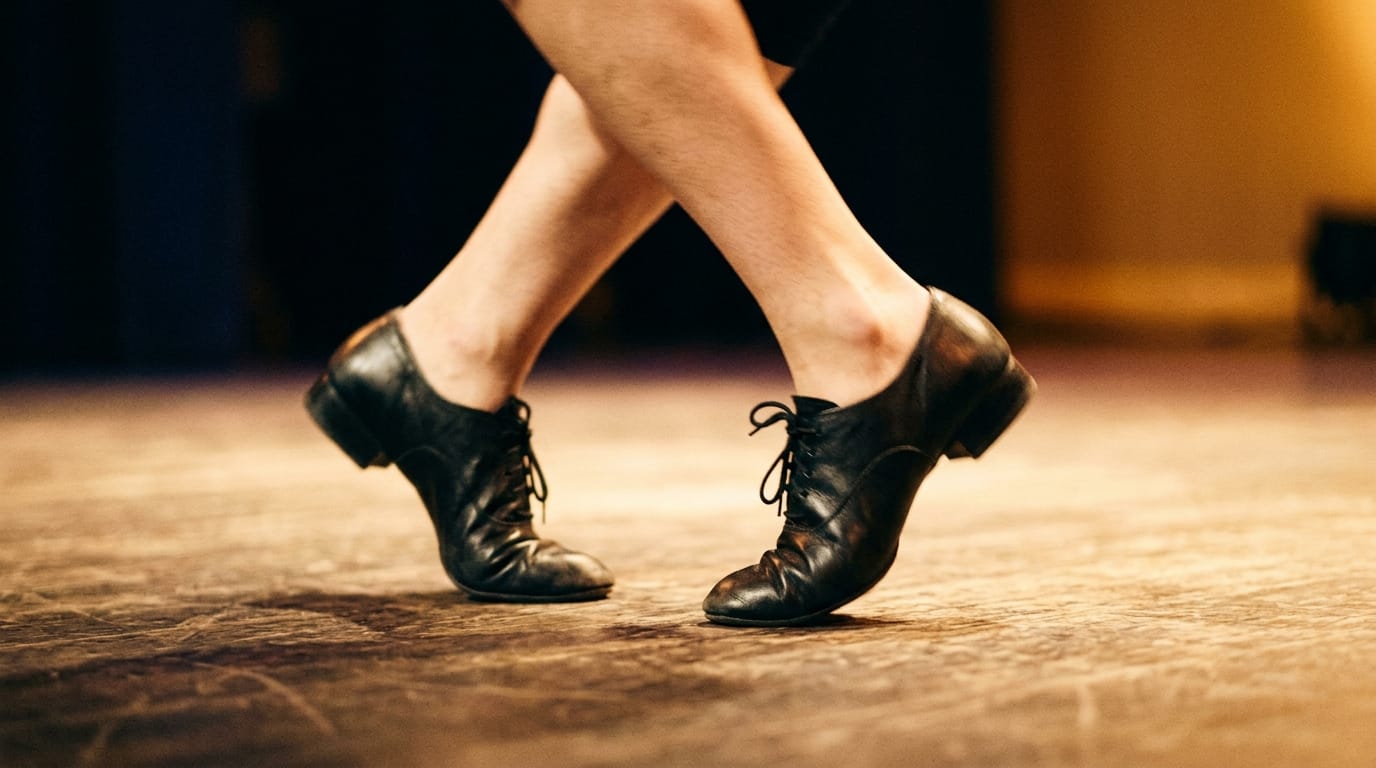
Footwear matters. Jazz oxfords, split-sole leather shoes, are the standard for jazz dance class. The split sole (a gap in the leather between ball and heel) allows the foot to articulate fully through the arch, which is essential for executing chassés, ball changes, and turns with proper technique. Bare feet or sneakers don’t provide the same floor feedback. A beginner class typically structures as follows: warm-up with isolations, across-the-floor combinations, a center combination, and cool-down stretching.
A Beginner Jazz Dance Combination, Step by Step
Here’s a simple 8-count beginner combination that puts the core vocabulary in context. On counts 1 and 2: ball change (shift weight to the ball of the right foot, then transfer back to the left flat). On counts 3-and-4: chassé to the right (step right, close left, step right). On counts 5 through 8: jazz square (cross right foot over left on 5, step back on left on 6, step right to the side on 7, step forward on left on 8). This combination is illustrative, it shows how the vocabulary connects in practice. In-person instruction from a trained teacher is the only way to develop correct technique, alignment, and musicality. For those looking to explore further, the jazz education section at eJazzNews covers the music that underlies these movement traditions in depth.
Jazz Dance’s Cultural Impact, Then and Now
Jazz dance didn’t stay in Harlem. It moved through Broadway, Hollywood, television, and the global commercial entertainment industry, leaving its technical and aesthetic fingerprints on virtually every form of popular performance that followed.
Jazz Dance and the Harlem Renaissance
During the Harlem Renaissance (roughly 1920-1935), jazz dance was both artistic expression and cultural assertion. Black artists claimed public space and national attention through the dance, performing for audiences that had never seen this movement vocabulary before. The Cotton Club paradox, Black performers creating the art form for segregated white audiences, is a documented tension that scholars have analyzed extensively. The club operated at 142nd Street and Lenox Avenue from roughly 1923 to 1935, featuring performers including Duke Ellington and Cab Calloway, before closing after the Harlem Riot of 1935 and briefly reopening in Midtown. The cultural power of what happened on those stages was real, even as the social conditions surrounding it were unjust.
Jazz Dance on Broadway and in Hollywood
Broadway served as the primary mechanism of mainstream dissemination. The line runs from Shuffle Along in 1921, which ran for 504 performances and helped launch Florence Mills’s career, through West Side Story in 1957, Chicago in 1975, and into the present day, where productions like Hamilton incorporate vernacular jazz vocabulary alongside hip-hop. Hollywood amplified the reach further: jazz dance sequences in films of the 1940s and 1960s are primary documents of the style at peak form, reaching audiences that would never set foot in a Harlem ballroom or a Broadway theater.
Jazz Dance’s Lineage Into Contemporary Commercial Dance
The direct line from jazz technique to music video choreography is one of the clearest lineages in American popular culture. Paula Abdul, who studied jazz dance formally before her career as a recording artist, brought jazz vocabulary into the music video format in the late 1980s. Janet Jackson’s choreographic teams on the Rhythm Nation world tour in 1990 demonstrated jazz-funk hybrid movement to stadium audiences. Beyoncé’s choreographic collaborators, across productions from her self-titled 2013 album through Renaissance (2022), draw consistently on jazz isolation technique, syncopated phrasing, and the performance presence tradition that runs back to the Savoy Ballroom. Contemporary jazz dance and jazz funk in competitive dance represent jazz’s current institutional home, with organizations including Dance/USA and the American Dance Therapy Association documenting the form’s ongoing vitality. For a broader look at how jazz music itself shaped American popular culture, the history of the Jazz Age and its cultural reach provides essential context.
Common Misconceptions About Jazz Dance
Jazz dance attracts a specific set of myths, partly because it’s so widely taught, partly because its most famous practitioner (Fosse) is so visually distinctive, and partly because the form has changed so much over a century that people conflate its different phases. Three misconceptions come up repeatedly.
Myth 1, “Bob Fosse Invented Jazz Dance”
Reality: Fosse popularized one highly specific, stylized strand of theatrical jazz dance. Jazz dance as a form predates Fosse by at least four decades. His own documented influences were Jack Cole and the African American vernacular tradition that Cole himself drew from. Fosse was born in 1927; the Savoy Ballroom opened in 1926; Shuffle Along ran on Broadway in 1921; Congo Square was active before the Civil War. The risk of the Fosse-as-origin myth is that it erases the African American choreographers, social dancers, and scholars, Dunham, Manning, Miller, and generations of unnamed Savoy dancers, who actually built the form. Fosse was a brilliant stylist and a transformative theatrical director. He was not an origin point.
Myth 2, “Jazz Dance Has to Be Done to Jazz Music”
Reality: the jazz dance definition in its theatrical and contemporary form long ago decoupled from jazz music as a strict requirement. Contemporary jazz dance classes regularly use pop, R&B, electronic, and film scores. The connection between jazz dance and jazz music is historical and technical, the movement language was shaped by jazz music’s rhythmic qualities, but it isn’t a real-time requirement in modern practice. A contemporary jazz class set to a Beyoncé track is still jazz dance. The technique, the isolations, the syncopated phrasing, and the performance presence are all there. The music has simply moved on, as music tends to do.
Myth 3, “Jazz Dance and Hip-Hop Dance Are the Same Thing”
They share African American vernacular roots and some movement vocabulary overlap, both are isolation-heavy and rhythmically sophisticated, but they are distinct forms with different histories, aesthetics, and training traditions. Jazz dance codified in concert and theatrical spaces from the 1940s onward. Hip-hop emerged from street culture in the South Bronx from the early 1970s, with Afrika Bambaataa founding the Zulu Nation in 1973 as a documented organizational anchor for the culture. The jazz vs hip-hop dance distinction matters not to create hierarchy but to honor the specific conditions that produced each form. Collapsing them into one thing does justice to neither.
FAQ, Common Questions About Jazz Dance
How Do You Describe Jazz Dance?
Jazz dance is a performance and social dance form defined by syncopated rhythm, body isolations, improvisation, and high-energy athleticism. It originated in African American communities in the early 20th century and evolved through Broadway, Hollywood, and the concert stage into the most widely taught dance style in American studios. Its movement vocabulary, the jazz square, the chassé, the body roll, the stag leap, derives from West African communal dance traditions carried through generations of African American cultural life.
Is Jazz Dance Good for Beginners?
Yes. Jazz dance is considered one of the most accessible theatrical dance forms for beginners. Basic steps, the jazz square, ball change, and chassé, require no prior training, and most beginner jazz dance curricula build technique progressively over weeks and months. Strong jazz training also builds transferable skills for ballet, musical theater, and commercial dance. The physical demands scale with the dancer’s level, making jazz dance genuinely suitable from the first class onward.
Is Jazz Dance Like Hip-Hop?
They share African American vernacular roots and both use isolations and rhythmic complexity, but they are distinct forms. Jazz dance developed in the ballroom and on the Broadway stage from the 1920s onward. Hip-hop emerged from street culture in New York in the early 1970s. Jazz vs hip-hop dance training, music, and aesthetic goals differ significantly, even as contemporary jazz funk draws on hip-hop’s rhythmic vocabulary. Treating them as interchangeable flattens the specific history of both.
What Is Jazz Funk Dance?
Jazz funk dance is a hybrid style that emerged in the 1990s, combining jazz dance technique, isolations, turns, leaps, with the rhythmic groove and street aesthetic of funk, R&B, and hip-hop music. It is the dominant style in music video choreography and commercial dance today. Jazz funk dance style distinguishes itself through heavy groove emphasis, influences from popping and locking, and music drawn from the contemporary R&B and hip-hop catalog rather than jazz standards or show tunes.
What Are the Most Important Jazz Dance Terms to Know?
The core jazz dance vocabulary includes: isolation, syncopation, jazz square, ball change, chassé, pas de bourrée, pivot turn, fan kick, chainé turns, body roll, and jazz hands. These terms appear in virtually every jazz dance curriculum at the beginner through professional level. Understanding what each term names, and what physical action it describes, is the first step toward reading and speaking the movement language of jazz dance.
Further Listening, The Music Behind the Moves
Jazz dance didn’t develop in silence. The music shaped the movement, and listening to the right recordings gives you a direct line to the rhythmic intelligence that built the form. This is eJazzNews’s specific territory, and these recommendations connect the dance history above to the music that made it possible.
For swing-era social jazz dance context: The Count Basie Orchestra’s The Complete Decca Recordings (a 1992 compilation of sessions recorded between 1937 and 1939) captures the big band sound that drove the Savoy Ballroom’s dance floor at its peak. Benny Goodman’s Carnegie Hall Jazz Concert, recorded live on January 16, 1938, documents the moment swing music entered the concert hall, with select members of Count Basie’s and Duke Ellington’s bands sitting in as guests during the concert’s celebrated “Honeysuckle Rose” jam session.
For theatrical jazz dance context: The original cast recording of West Side Story, released in 1957, and the original Broadway cast recording of Chicago (1975) are primary documents of the theatrical jazz tradition at its most ambitious. Both are widely available and reward close listening alongside the choreographic history described above.
For contemporary and funk jazz context: James Brown’s Live at the Apollo (1963) and Prince’s Sign ‘O’ the Times (1987) represent the rhythmic vocabulary that jazz funk choreographers drew from as the style developed in the 1990s. The groove is in the music before it’s in the movement. For deeper context on the jazz music that underlies these dance traditions, the guide to the best jazz albums of all time covers the essential recordings across every era.
Conclusion, Why Jazz Dance Still Matters
Jazz dance is not a historical artifact. It’s a living, evolving form that runs through Broadway productions, competitive dance studios, commercial music videos, and social dance floors on every continent. Understanding what is jazz dance means understanding that its history is inseparable from African American cultural innovation, from Congo Square to the Savoy Ballroom to the stages where Dunham, Cole, Fosse, and Robbins built the theatrical tradition that still shapes how Americans perform and watch dance.
The moves in a beginner jazz class today, the isolations, the syncopated counts, the jazz square, carry the rhythmic intelligence of West African dance traditions, the competitive energy of the Savoy Ballroom, and the theatrical precision of a Broadway stage. That’s a remarkable amount of history to hold in a single eight-count combination. For anyone learning to dance, or anyone trying to understand American performance culture, the Jazz Age that gave jazz dance its name and its first national audience is where the story begins, and the form it produced is still very much in motion.