Is Jazz Dead? An Honest Look at the State of the Music in 2026
No, jazz is not dead, but it is commercially small. In Nielsen Music’s 2017 U.S. year-end report, jazz accounted for 1.0 percent of all music consumption, the same share as classical music, and it stopped being America’s popular music in the 1960s. That commercial loss is what most “jazz is dead” arguments are really about. As an art form, with new albums, Grammy-winning young artists, festivals and conservatory programs, jazz in 2026 is very much alive.
Table of Contents
- Is Jazz Dying? The Numbers Behind the Question
- Sales and Streaming Share
- Jazz Radio Has Shrunk
- What Musicians Earn
- Why “Dying” Is the Wrong Conclusion
- Market Share Is Not Artistic Health
- The Schools Keep Training Players
- The Artists Making the Case
- Jazz Has Been Declared Dead Before
- Who Said “Jazz Is Not Dead, It Just Smells Funny”?
- What the Music Says in 2026
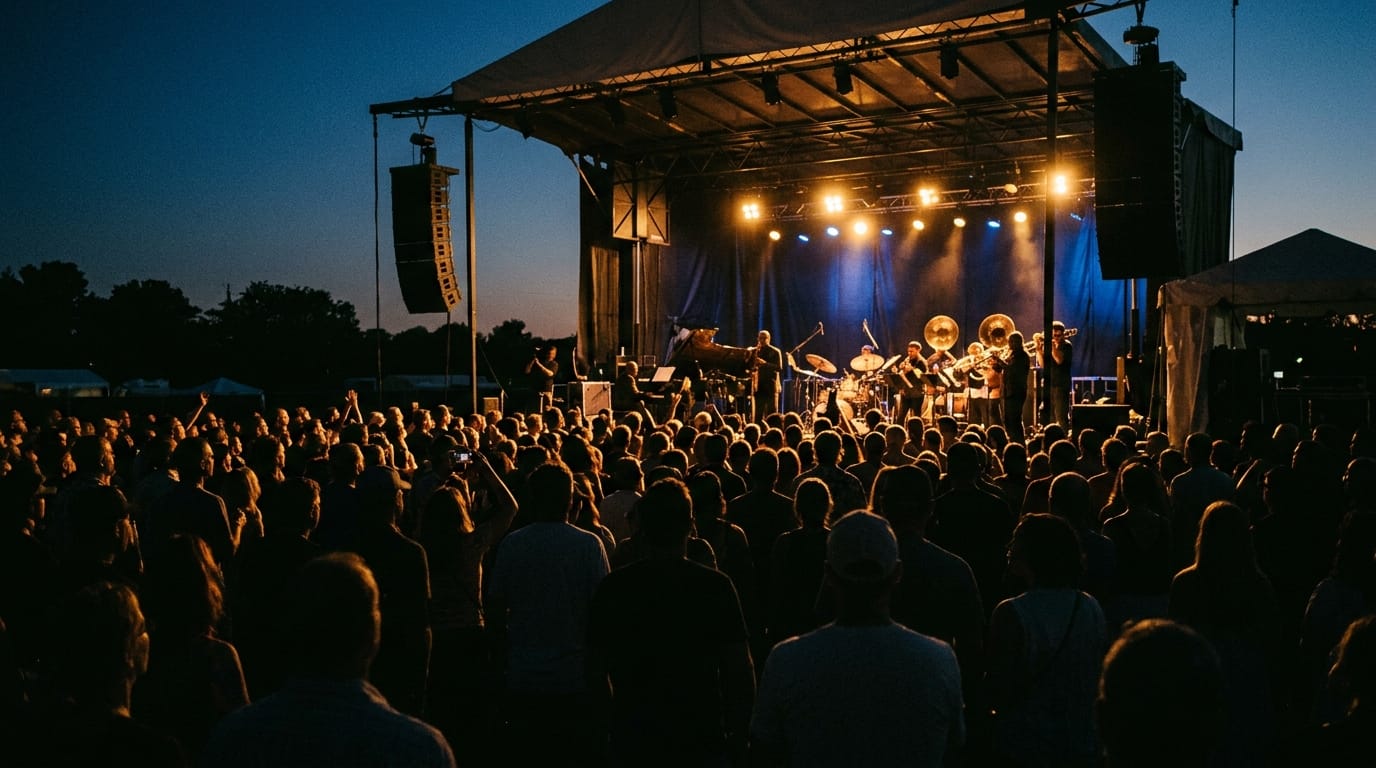
- Festivals Still Draw Crowds
- The Jazz Is Dead Record Label
- The Other Jazz Is Dead: A Grateful Dead Tribute Band
- Recent Records to Judge for Yourself
- What Actually Died
- The Verdict
- Frequently Asked Questions
- Is jazz a dead genre?
- Is jazz still popular?
- Who said “jazz is not dead, it just smells funny”?
- What is the Jazz Is Dead label?
- Why did the jazz era end?
Is Jazz Dying? The Numbers Behind the Question
Sales and Streaming Share
Jazz’s slice of the American record market has shrunk. When the National Endowment for the Arts studied the working lives of jazz musicians around 2000 (published in 2003 as Changing the Beat), jazz made up about 4 percent of annual US recording sales, and the report noted that even that figure was somewhat inflated by pop artists filed under jazz. Nielsen’s 2017 report put jazz at 2.1 percent of album sales, 0.7 percent of on-demand audio streams and 1.0 percent of total consumption once streams were counted. That same year R&B/hip-hop, at 24.5 percent, became the largest genre in the US for the first time.
Streaming is where jazz is weakest. In the same report, 41 percent of jazz audio consumption still came from physical albums, against 21 percent for the industry as a whole, and only 32 percent came from on-demand audio streams, against 54 percent overall.
Critical breakthroughs and market share are different things. Kamasi Washington’s The Epic (Brainfeeder, 2015), a triple album of almost three hours with a 32-piece orchestra and a 20-voice choir, got Pitchfork’s Best New Music tag, with a review that said the album made good on the promise of its title. Two years later, Nielsen put jazz at 1.0 percent of US consumption. The best-selling jazz records are also old ones: in August 2026 the RIAA certified Vince Guaraldi’s A Charlie Brown Christmas (1965) six times platinum, making it the best-selling jazz album in the US by certification, ahead of Miles Davis’s Kind of Blue (1959) at five times platinum.
Jazz Radio Has Shrunk
Dedicated jazz radio has thinned out. In Pittsburgh, Duquesne University sold WDUQ, long the city’s main jazz outlet, in 2011; on July 1 of that year the new owners cut much of the weekday jazz, moving full-time jazz to an HD Radio subchannel, and the station has since become all news and talk. In the New York area, WBGO in Newark has been the only jazz station since 2008, when its smooth-jazz competitor changed format. WBGO, a public station that joined NPR and went to 24-hour broadcasting in 1980, also streams its mostly jazz programming online.
What Musicians Earn
The income problem is older than streaming. The NEA’s Changing the Beat study surveyed jazz musicians in Detroit, New Orleans, New York and San Francisco. In its respondent-driven sample, almost two-thirds of the San Francisco-area musicians earned less than $7,000 from jazz work in 2000, and more than half of the whole sample had no retirement plan or no health coverage. Of the musicians who received grants, more than 90 percent got $5,000 or less. Jazz, as the report put it, does not sell many tickets or CDs. That is a real structural problem, and acknowledging it does not concede the argument.
Why “Dying” Is the Wrong Conclusion
Market Share Is Not Artistic Health
The death argument merges two separate questions. Is jazz commercially dominant? No, and it has not been for about sixty years. Is it a living, changing art form? Yes. Classical music had exactly the same 1.0 percent share in Nielsen’s 2017 report, and nobody writes obituaries for Beethoven. Rock lost its top position that same year when R&B/hip-hop passed it, and nobody concluded that rock had died. Sooner or later every dominant genre becomes a tradition.
The Schools Keep Training Players
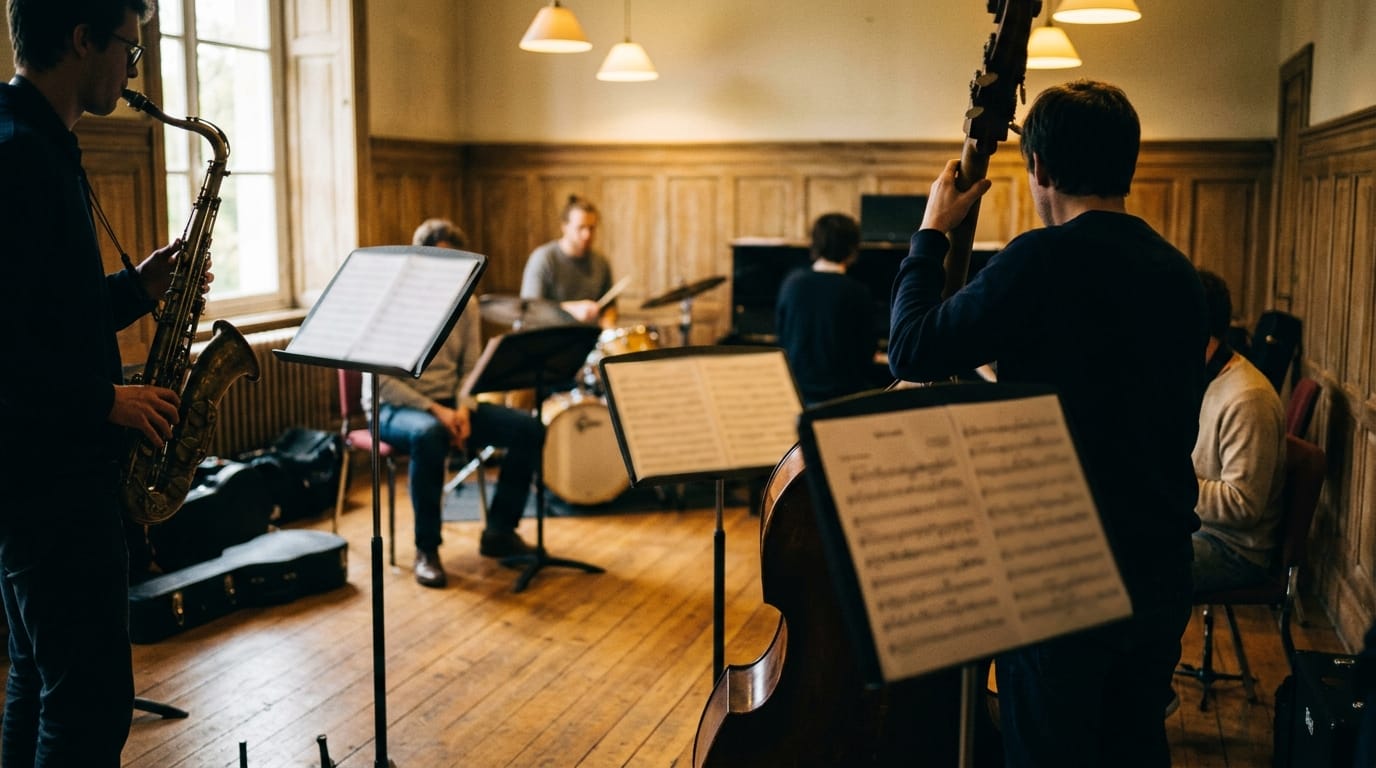
The training pipeline is now institutional. Berklee College of Music, the largest independent college of contemporary music in the world and known for the study of jazz, had 8,369 students in fall 2024. Juilliard set up its jazz performance program in 2001, and Wynton Marsalis directs its Jazz Studies program. Manhattan School of Music offers jazz performance degrees up to the doctorate. Several of the artists below came through this system: Esperanza Spalding is a Berklee graduate, and Kamasi Washington studied ethnomusicology at UCLA.
The Artists Making the Case
Kamasi Washington released Fearless Movement, his fifth studio album, on the Young label in May 2024, with guests including André 3000 and George Clinton. A jazz saxophonist sharing a festival bill with pop and hip-hop stars is not a sign of a dead genre.
Esperanza Spalding became the first jazz musician to win the Grammy for Best New Artist in 2011, beating Justin Bieber and Drake; her 2021 album Songwrights Apothecary Lab later won Best Jazz Vocal Album. Twelve years after Spalding, jazz singer Samara Joy won Best New Artist in 2023, and she now has six Grammys. Cécile McLorin Salvant has won Best Jazz Vocal Album three times from six nominations, and in 2026 Nonesuch released With Every Breath I Take, her first orchestral album, with the Metropole Orkest conducted by Jules Buckley.
Chief Xian aTunde Adjuah, the trumpeter formerly known as Christian Scott, has six Grammy nominations and coined the term “stretch music” for his mix of jazz with trap, West African percussion and New Orleans Afro-Native American traditions. Joey Alexander, born in Bali in 2003, became the first Indonesian musician nominated for a Grammy, at the 2016 ceremony, and released Celestial Keeper on Mack Avenue in 2026. Jazzmeia Horn won the Sarah Vaughan International Jazz Vocal Competition in 2013 and the Thelonious Monk competition in 2015, and has two Grammy nominations. For more of the players working now, see our list of popular jazz artists today and our profiles of modern jazz singers.
Jazz Has Been Declared Dead Before
Jazz is more than a century old on record. The Original Dixieland Jass Band recorded “Livery Stable Blues” for Victor on February 26, 1917, widely acknowledged as the first commercially released jazz recording. Nearly every generation since has heard its own version of jazz described as the end of the music.
In the late 1960s rock and soul took over pop radio. Miles Davis answered with Bitches Brew (Columbia, 1970), which got a mixed first reception; critic Bob Rusch dismissed it as commercial. It became Davis’s first gold album in 1976, went platinum in 2003, and is now treated as a founding record of jazz fusion. In the 1980s Wynton Marsalis championed straight-ahead acoustic jazz (he once likened Davis’s turn to rock to a general betraying his country), and at 22 he won Grammys in both jazz and classical categories in the same year, 1983, then did it again in 1984. In the 1990s hip-hop went back to jazz records: A Tribe Called Quest’s The Low End Theory (Jive, 1991) was built on jazz samples and brought in Ron Carter on bass, and Us3’s “Cantaloop (Flip Fantasia)”, based on Herbie Hancock’s “Cantaloupe Island”, made the Billboard top 10 for Blue Note.
| Era | The claim | What happened |
|---|---|---|
| Late 1960s | Rock killed jazz | Fusion arrived, alongside free jazz and post-bop |
| 1970s | Fusion betrayed the tradition | Bitches Brew went gold in 1976 and platinum in 2003 |
| 1980s | Jazz was irrelevant to young listeners | Wynton Marsalis, 22, won jazz and classical Grammys in 1983, and again in 1984 |
| 1990s | Jazz belonged to the past | Jazz rap: The Low End Theory, and Us3 in the Hot 100 top 10 on Blue Note |
| 2010s-2020s | Streaming finished jazz off | Esperanza Spalding (2011) and Samara Joy (2023) won Best New Artist |
Each of those obituaries was premature, and the current one rests on the same mistake. Our guide to jazz styles and subgenres traces how often the music has reinvented itself since New Orleans.
Who Said “Jazz Is Not Dead, It Just Smells Funny”?
Frank Zappa. He says it on stage in “Be-Bop Tango (Of the Old Jazzmen’s Church)”, recorded live in December 1973 and released on Roxy & Elsewhere (DiscReet) on September 10, 1974. The line is often quoted as “jazz isn’t dead, it just smells funny.” It was a stage joke, not an analysis, and it says more about Zappa’s humor than about the health of the music.
What the Music Says in 2026
Festivals Still Draw Crowds
The Montreal International Jazz Festival, founded in 1980, holds the 2004 Guinness World Record as the world’s largest jazz festival. It presents roughly 3,000 artists from some 30 countries in more than 650 concerts, about 450 of them free and outdoors, and draws more than 2 million visitors. The Newport Jazz Festival, started in 1954, set its 2026 edition for July 31 to August 2 at Fort Adams State Park in Newport, Rhode Island; its 2024 bill included André 3000, Kamasi Washington, Robert Glasper, Laufey and Brittany Howard. The Monterey Jazz Festival has been held since October 1958. A festival crowd is not a record-buying market, but it is an audience.
The Jazz Is Dead Record Label
Many searches for “jazz is dead” are about a record label. Jazz Is Dead was founded in 2017 by producer Adrian Younge, A Tribe Called Quest co-founder Ali Shaheed Muhammad, Andrew Lojero and Adam Block. It started as a concert series, and the name grew out of Younge’s frustration with ticket sales for one of his own shows. The first album came out in March 2020, and the numbered series reached JID027 in 2026. The guests are jazz, soul, Brazilian and Afrobeat musicians whose records have been sampled for decades, among them Roy Ayers, Marcos Valle, Azymuth, Gary Bartz, Doug Carn, Lonnie Liston Smith and Tony Allen. Roy Ayers, who made the label’s second album in 2020, died in March 2025. The name is ironic; the catalog argues against it.
The Other Jazz Is Dead: A Grateful Dead Tribute Band
Jazz Is Dead is also the name of an instrumental band that plays Grateful Dead songs with a jazz approach. It formed in 1998 with Billy Cobham, T Lavitz, Jimmy Herring and Alphonso Johnson, reunited in 2015 for the Dead’s 50th anniversary and released Grateful Jazz that year, and played 25th-anniversary shows in 2023.
Recent Records to Judge for Yourself
Cécile McLorin Salvant’s Ghost Song (Nonesuch, 2022), recorded with pianists Aaron Diehl and Sullivan Fortner, was nominated for Best Jazz Vocal Album. It sets seven originals next to Kate Bush’s “Wuthering Heights”, Sting’s “Until”, “Optimistic Voices” from The Wizard of Oz and the traditional ballad “The Unquiet Grave”. Kamasi Washington’s Fearless Movement (Young, 2024) mixes jazz with funk and rap. Chief Xian aTunde Adjuah’s Axiom (Ropeadope, 2020), recorded live over five nights at the Blue Note in New York in March 2020, just before the city’s venues closed for the pandemic, was nominated for Best Contemporary Instrumental Album. For the records this generation builds on, see our ranking of the greatest jazz albums.
What Actually Died
Jazz’s run as America’s popular music, from the swing bands of the 1930s into the early 1960s, is over and is not coming back. That era made Louis Armstrong, Duke Ellington and Ella Fitzgerald household names and put jazz on jukeboxes and dance floors. The masters of later generations are leaving too: Sonny Rollins (1930-2026) died in May 2026, and 2025 took Roy Ayers, Sheila Jordan and Jack DeJohnette. Losing a generation of elders is not the same as losing the music.
Jazz now sits where classical music sits: institutionally supported, taught in conservatories, artistically active and commercially small. That is a stable position, not a terminal one.
The Verdict
Jazz is not dead. Jazz as America’s pop music has been gone for roughly sixty years, and confusing those two statements has produced six decades of premature obituaries. The phrase usually stands for real concerns about money, radio and support for musicians, and those deserve straight answers. The music itself is still being written, recorded and performed. To hear where it stands, put on Ghost Song or Fearless Movement and decide for yourself.
Frequently Asked Questions
Is jazz a dead genre?
No. Jazz is commercially small, about 1 percent of US music consumption in Nielsen’s 2017 year-end report, the same share as classical music, but it is still recorded, performed and taught. Berklee, Juilliard and Manhattan School of Music all train jazz musicians, and jazz artists Esperanza Spalding (2011) and Samara Joy (2023) have both won the Grammy for Best New Artist.
Is jazz still popular?
Not as pop music, but it has a steady audience. In August 2026 Vince Guaraldi’s A Charlie Brown Christmas was certified six times platinum by the RIAA, the highest certification for any jazz album, and the Montreal International Jazz Festival draws more than 2 million visitors to its concerts.
Who said “jazz is not dead, it just smells funny”?
Frank Zappa. He says it on stage in “Be-Bop Tango (Of the Old Jazzmen’s Church)” on the live album Roxy & Elsewhere, released in 1974. It is often misquoted as “jazz isn’t dead, it just smells funny.”
What is the Jazz Is Dead label?
Jazz Is Dead is a Los Angeles label and concert series founded in 2017 by Adrian Younge, Ali Shaheed Muhammad, Andrew Lojero and Adam Block. Since 2020 it has released a numbered album series recorded with musicians such as Roy Ayers, Marcos Valle, Gary Bartz and Tony Allen. The name is ironic: the project celebrates jazz rather than burying it.
Why did the jazz era end?
Jazz lost its place as America’s popular music during the 1960s, when rock and soul took over the radio and the youth market. The music itself kept developing through fusion, free jazz, post-bop and jazz rap.