Acid Jazz: How UK DJs Built a Genre From Funk Samples and Jazz Loops
- A precise definition of acid jazz and why the name was deliberately provocative
- How London DJs and a small independent label built a genre from the ground up in the late 1980s
- The defining rhythmic, harmonic, and instrumental characteristics that separate acid jazz from traditional jazz
- The key bands and artists who shaped the genre’s commercial peak between 1990 and 1994
- An essential album list covering the genre’s most important recordings
- How acid jazz declined, what it left behind, and why a new generation found it through a video game
Acid jazz is a music genre that emerged from the UK club scene in the late 1980s, fusing jazz harmony and improvisation with funk grooves, soul vocals, and hip-hop production techniques. It peaked commercially between roughly 1990 and 1994, driven by London-based acts including Jamiroquai, The Brand New Heavies, Incognito, and US3. The genre grew directly out of rare groove DJ culture, where selectors like Gilles Peterson and Norman Jay were spinning obscure 1960s and 1970s funk and soul records in small London clubs, and the musicians who heard those sets decided to make new music that felt the same way.
Table of Contents
- What Is Acid Jazz? A Working Definition
- The Textbook Definition
- Why Is It Called Acid Jazz?
- Acid Jazz vs. Jazz: A Quick Comparison
- The Origin Story: London Clubs, Rare Grooves, and the Late 1980s
- The Cultural Moment, Why the Late 1980s?
- The Founding Figures, DJs Before Bands
- The Label as Genre-Maker, Acid Jazz Records (1987-Present)
- Timeline, Key Moments in the Genre’s Formation
- Defining Characteristics of Acid Jazz Music
- Rhythmic Feel, The Locked Groove
- Harmony and Chord Movement
- Improvisation Philosophy
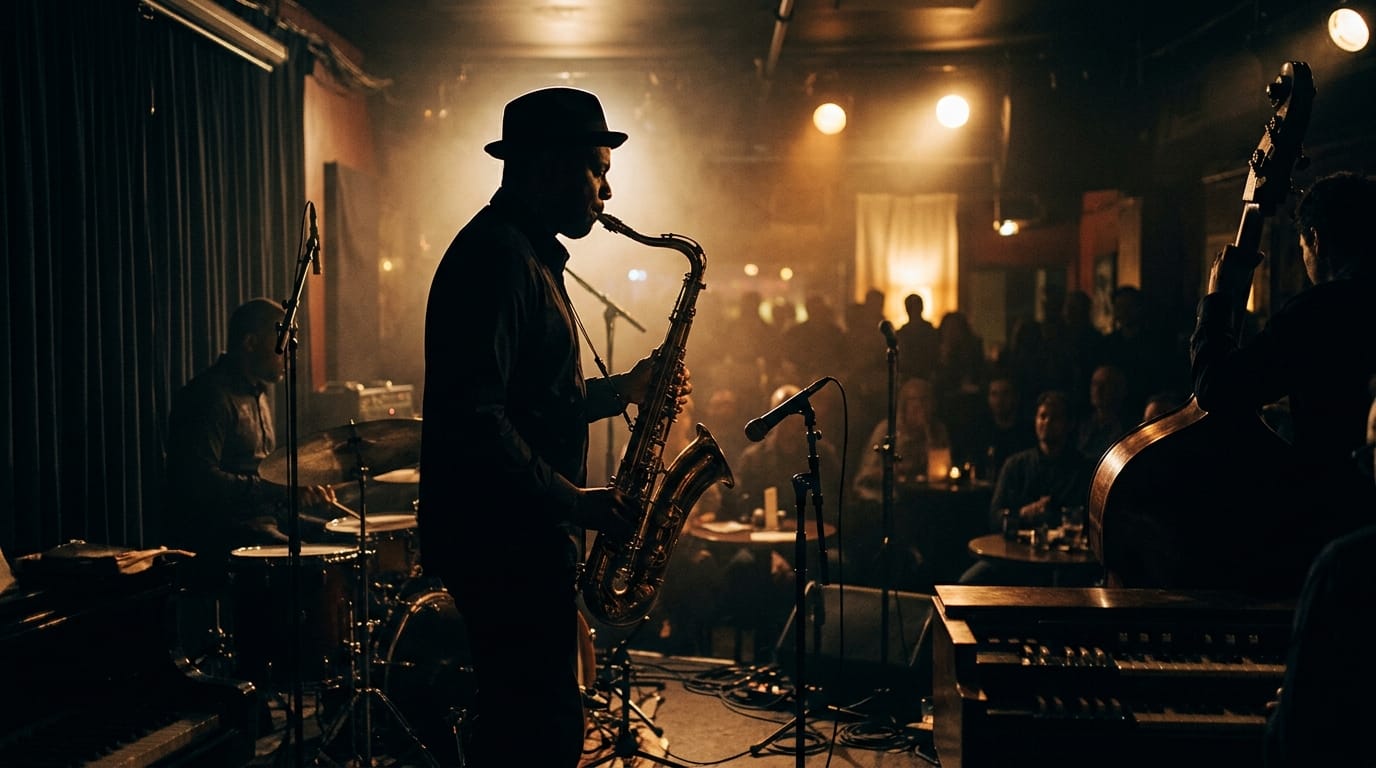
- Performance Context, The Club, Not the Concert Hall
- Vocal Style
- Key Instruments in Acid Jazz
- The Core Lineup
- The Rhodes Electric Piano
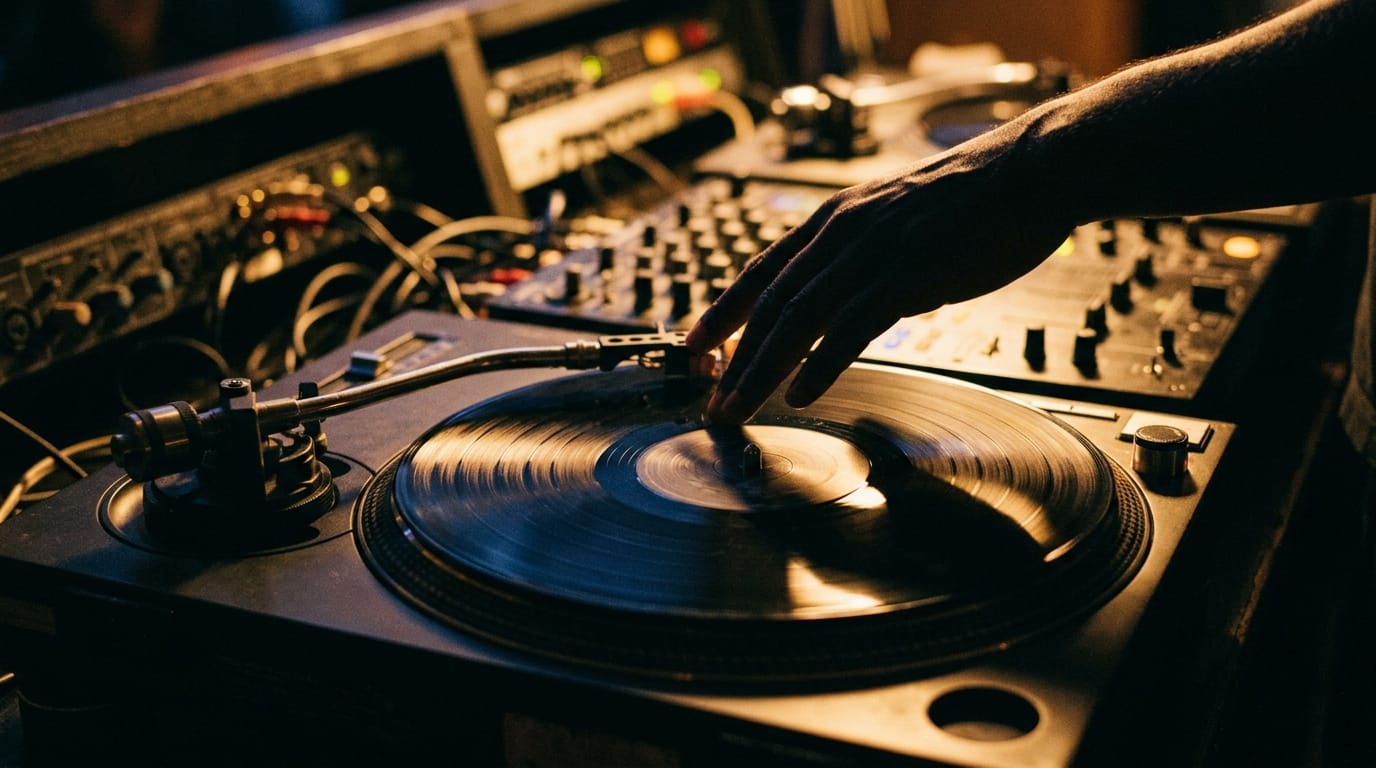
- Turntables and Samplers as Instruments
- Subgenres and Variants of Acid Jazz
- Rare Groove, The Immediate Ancestor
- Nu-Jazz and Future Jazz
- Jazz-Funk, The American Parallel
- Jazz Rap, The American Cousin
- Blue-Eyed Soul and Britfunk
- The Defining Bands and Artists of Acid Jazz
- The James Taylor Quartet
- Galliano
- The Brand New Heavies
- Incognito
- Jamiroquai
- US3
- Digable Planets
- Guru, Jazzmatazz
- Essential Acid Jazz Albums
- A Theory Primer, The Music Behind the Groove
- Modal Foundations
- Chord Voicings and Extended Harmony
- Rhythmic Theory, The Pocket
- The Decline, the Aftermath, and the Continuing Influence
- What Killed the Peak (1995-1998)
- What Survived and What Evolved
- Acid Jazz in Popular Culture, The Persona 5 Connection
- Modern Artists Carrying the Tradition
- FAQ, Acid Jazz Questions Answered
- What is acid jazz?
- Who are the most famous acid jazz artists?
- What is the difference between acid jazz and regular jazz?
- Is the Persona 5 soundtrack acid jazz?
- What are the best acid jazz songs for new listeners?
- Where to Go Next, Building Your Acid Jazz Library
What Is Acid Jazz? A Working Definition
Acid jazz sits at the intersection of jazz, funk, soul, and hip-hop, and it prioritizes the dancefloor over the concert hall. That distinction matters more than any list of harmonic techniques.
The Textbook Definition
Acid jazz (also known as club jazz, groove jazz, or occasionally psychedelic jazz) is a genre built on a locked funk groove, extended jazz harmonies, and a performance philosophy borrowed partly from soul revues and partly from DJ culture. Where traditional jazz asks you to listen, acid jazz asks you to move. Critics have noted that the genre’s connections to jazz are sometimes tenuous: as one All About Jazz review put it, acid jazz evolved from the R&B funk pioneered in the 1960s and has little that is actually acidic about it. That honest assessment doesn’t diminish the genre; it clarifies it. Acid jazz is a recontextualization of Black American music filtered through British club culture, producing something genuinely new in the process.
Why Is It Called Acid Jazz?
The name came from Gilles Peterson and Chris Bangs, who coined it in the late 1980s as a deliberate riff on acid house, the electronic dance genre dominating UK clubs at the time. Jazz was considered unhip, even embarrassing, in that context. Pairing it with “acid” was a rebrand, a provocation, a way of saying that jazz could be as raw and club-ready as anything coming out of Chicago or Detroit. The name stuck institutionally when Peterson and Eddie Piller founded Acid Jazz Records in 1987, giving the genre a physical home and a catalog identity. The label’s name became the genre’s name, which is a rare thing in music history.
Acid Jazz vs. Jazz: A Quick Comparison
The table below captures the structural differences between traditional jazz and acid jazz at a glance.
| Feature | Traditional Jazz | Acid Jazz |
|---|---|---|
| Tempo/Feel | Variable, often rubato (freely interpreted) | Locked groove, danceable |
| Rhythmic foundation | Swing, bebop | Funk, hip-hop drum patterns |
| Improvisation role | Central | Present but subordinate to groove |
| Audience context | Concert hall, listening club | Dance club, DJ set |
| Era of peak activity | 1920s-1960s (various subgenres) | Late 1980s-mid-1990s |
| Sample use | Rare | Foundational |
The Origin Story: London Clubs, Rare Grooves, and the Late 1980s
Acid jazz didn’t begin in a recording studio. It began in a DJ booth, in a small London club, on a Sunday afternoon, with a crate of obscure 45s and an audience that wanted to dance to something smarter than what the charts were offering.
The Cultural Moment, Why the Late 1980s?
Britain in 1987 to 1990 was a country in cultural ferment. Acid house had exploded out of Chicago via Ibiza and was reshaping the UK club scene entirely. At the same time, a parallel movement called rare groove was pulling in a different direction: DJs digging through warehouses and import shops for original pressings of 1960s and 1970s American funk, soul, and jazz records. The Deptford-to-Soho club circuit became the geography of this scene. Venues like The Wag Club on Wardour Street and Dingwalls in Camden Market hosted the nights where rare groove and nascent acid jazz overlapped. Margaret Thatcher’s Britain gave young people plenty of reasons to seek out music that felt communal, physical, and rooted in something real.
The class and race dynamics of the moment are worth naming directly. Black American music, specifically the funk and soul of James Brown, Sly Stone, and the Blue Note catalog, was being excavated and celebrated by a predominantly young, multiracial British audience. That act of cultural transmission, respectful but also transformative, is what acid jazz is built on.
The Founding Figures, DJs Before Bands
The genre’s first movers were selectors, not bandleaders. Gilles Peterson was broadcasting on pirate radio and DJing across London, building a following for jazz-funk and rare groove before the term acid jazz existed. He co-founded Acid Jazz Records with Eddie Piller and later launched Talkin’ Loud Records as a major-label-distributed imprint that would break Incognito and Jamiroquai to wider audiences. Norman Jay, Deptford-rooted and later awarded an MBE for services to music, was a central figure in the rare groove scene that fed directly into acid jazz. Patrick Forge, who spent much of the late 1980s and early 1990s DJing alongside Peterson, helped shape the sonic vocabulary of the scene through his residencies and compilations. Chris Bangs, who worked alongside Peterson and collaborated with figures including Pete Tong and Paul Oakenfold, is credited alongside Peterson with originating the term itself.
Here’s the thing that separates acid jazz from almost every other jazz subgenre: it was named and institutionalized by DJs, not by musicians or critics. The bands came second.
The Label as Genre-Maker, Acid Jazz Records (1987-Present)
Acid Jazz Records was founded in 1987 by Gilles Peterson and Eddie Piller, making it one of the few cases in popular music where a label’s founding date is also the genre’s founding date. Peterson departed relatively early to launch Talkin’ Loud Records (founded 1990, distributed through Phonogram/PolyGram), which became the major-label parallel track that broke Incognito and Jamiroquai to mass audiences. Piller continued to steer Acid Jazz Records, and the label has remained active for nearly four decades. As the label’s own About page notes, it has rolled on along its idiosyncratic and fiercely independent path since Piller set it up. The label’s current roster includes Soul Revivers, the James Taylor Quartet, and Matt Berry Trio, proof that the institution outlasted the genre’s commercial peak by decades.

Timeline, Key Moments in the Genre’s Formation
- 1987: Acid Jazz Records founded by Eddie Piller and Gilles Peterson in East London
- 1988: The James Taylor Quartet releases early material on the label, establishing the Hammond-driven live-band template
- 1990: The Brand New Heavies release their self-titled debut album; Talkin’ Loud Records founded by Peterson and Norman Jay
- 1991: Incognito’s Inside Life reaches the UK mainstream; “Always There” becomes a chart hit
- 1992: Galliano’s A Joyful Noise unto the Creator released on Talkin’ Loud; Incognito’s Tribes Vibes and Scribes follows
- 1993: US3’s “Cantaloop (Flip Fantasia)” breaks internationally; Jamiroquai’s Emergency on Planet Earth debuts at number one on the UK Albums Chart; Digable Planets’ Reachin’ and Guru’s Jazzmatazz Vol. 1 prove the transatlantic reach of the movement
- 1994-1995: Genre reaches commercial peak; mainstream dilution accelerates
- 1996: Jamiroquai’s Travelling Without Moving goes multi-platinum; acid jazz fully absorbed into pop
Defining Characteristics of Acid Jazz Music
Acid jazz has a sound you can identify within four bars. The locked groove, the Rhodes shimmer, the horn stab on the upbeat. Understanding why those elements work together requires looking at each one separately.
Rhythmic Feel, The Locked Groove
The defining rhythmic characteristic of acid jazz is a tight, repetitive groove derived from funk drumming and hip-hop drum machine patterns. Where jazz’s swing feel floats above the bar line, acid jazz locks the tempo and stays there. The kick drum lands hard on beat one, the snare cracks on two and four in the soul and funk tradition, and the hi-hat pattern fills the space between with a precision that owes as much to the Akai MPC as it does to any jazz drummer. Live drummers in acid jazz bands were essentially replicating what DJs had been doing with breakbeats, translating the sampled feel into a live performance context. US3’s “Cantaloop (Flip Fantasia)” is the clearest case study: the track is built on a sample of Herbie Hancock’s 1964 recording “Cantaloupe Island,” and the rhythmic feel of that original, already funky and locked, becomes the foundation for everything else on top.
Harmony and Chord Movement
Acid jazz favors modal harmony over the rapid chord changes of bebop. Dorian mode and Mixolydian mode dominate the repertoire. The Dorian mode (a minor scale with a raised sixth) gives tracks a cool, slightly melancholic quality without the tension-and-release drama of bebop’s ii-V-I progressions. Mixolydian (a major scale with a flattened seventh) produces the “funky” quality that connects acid jazz directly to its James Brown and Sly Stone sources. Extended chords, 9ths, 11ths, and 13ths, appear throughout, but they’re used for color rather than harmonic tension. The goal is to keep the groove primary. You can read more about how modal thinking works in jazz in our guide to modal jazz and how Miles Davis replaced chord changes with scales.
Improvisation Philosophy
Improvisation is present in acid jazz, but it serves the groove rather than leading it. This is the sharpest philosophical break from bebop and post-bop, where improvisation is the entire point of the performance. In acid jazz, solos are typically shorter, more melodic, and less harmonically dense. Horn lines are often written and arranged rather than improvised, placing the music closer to the soul revue tradition of James Brown or Otis Redding than to a Miles Davis quintet. The DJ model is the philosophical ancestor here: a DJ selects, layers, and sequences; the acid jazz band replicates and extends that logic with live instruments. For the full harmonic and rhythmic vocabulary of the style acid jazz reacted against, see our complete guide to bebop.
Performance Context, The Club, Not the Concert Hall
Acid jazz was designed for dancing, and that’s not incidental. It’s structural. Songs were built around the 12-inch single format, with extended mixes, breakdowns, and DJ-friendly structures that allowed a selector to blend one track into the next. The BPM range typically sits between 90 and 115, danceable but not as frantic as house or drum and bass. The audience is a participant, not an observer, which connects acid jazz directly to the soul and funk performance traditions it draws from. A Brand New Heavies show and a Gilles Peterson DJ set were delivering the same music to the same audience through different mechanisms.
Vocal Style
Acid jazz vocals draw from soul, funk, and occasionally rap. The smooth, melismatic delivery of N’Dea Davenport on Brand New Heavies records and Maysa Leak on Incognito tracks sits squarely in the American soul tradition, which makes sense given that both singers are American. Galliano’s Rob Gallagher wove spoken word and rap elements through jazz arrangements, pushing the genre’s intellectual content furthest. Jay Kay of Jamiroquai drew explicitly on Stevie Wonder’s falsetto tradition, a debt the band acknowledged openly. Female vocalists were prominent throughout the genre’s peak years, a continuity with the soul revue tradition that acid jazz consistently honored.
Key Instruments in Acid Jazz
The acid jazz instrument lineup is distinct from a standard jazz combo in ways that immediately signal the genre’s funk and hip-hop debts. The piano disappears; the Rhodes arrives. The double bass goes electric. The turntable becomes an instrument.
The Core Lineup
| Role | Standard Jazz Combo | Acid Jazz Typical Lineup |
|---|---|---|
| Harmony (keys) | Piano | Rhodes, Hammond B-3, synthesizer |
| Bass | Double bass | Electric bass guitar |
| Rhythm | Drum kit (swing feel) | Drum kit (funk feel) + sometimes drum machine |
| Horns | Trumpet, saxophone | Trumpet, saxophone, trombone (soul revue section) |
| Additional | , | Turntables/DJ, percussion |
The Rhodes Electric Piano
The Fender Rhodes is the defining keyboard sound of acid jazz. Its warm, slightly woozy tone, produced by metal tines struck by felt hammers, suits the modal, groove-based harmonic approach perfectly. It doesn’t demand attention the way an acoustic piano does; it settles into the mix and supports the groove from underneath. Incognito’s Inside Life and Jamiroquai’s Emergency on Planet Earth both showcase the Rhodes as a primary harmonic vehicle. The template came from 1970s jazz-funk: Herbie Hancock’s Head Hunters and Bob James’s CTI-era recordings established the Rhodes as the keyboard of choice for music that wanted to be both harmonically sophisticated and physically compelling. Acid jazz revived that choice consciously.

Turntables and Samplers as Instruments
The turntable and the sampler are the instruments that separate acid jazz from every prior jazz form. US3’s entire sonic architecture was built on Blue Note Records catalog samples, licensed through an arrangement with Blue Note’s then-parent company EMI, making them the first group to do so legally at that scale. The Akai MPC series and the Akai S950 sampler appear throughout the production credits of the genre’s defining recordings, documented in liner notes and producer interviews. This is not a footnote. The sampler is as central to acid jazz as the saxophone is to hard bop. You can explore how hard bop used live instruments to similar groove-driven ends in our guide to hard bop and how Art Blakey brought soul back to bebop.
Subgenres and Variants of Acid Jazz
Acid jazz didn’t exist in isolation. It grew from one tradition and spawned several others, and understanding those relationships clarifies what makes the genre itself distinct.
Rare Groove, The Immediate Ancestor
Rare groove is not technically acid jazz, but it’s the direct precursor. The rare groove movement involved DJs spinning original 1960s and 1970s soul, funk, and jazz 45s in London clubs, celebrating the recordings themselves rather than creating new music. Gilles Peterson and Norman Jay were the bridge figures between rare groove and acid jazz: they played the originals in their DJ sets and then helped create a scene where bands made new music in that spirit. The key distinction is archival versus generative. Rare groove preserves; acid jazz creates.
Nu-Jazz and Future Jazz
Nu-jazz (also called future jazz) emerged in the late 1990s and early 2000s as electronic production elements became more prominent in the music that followed acid jazz. Artists like Jazzanova, Nils Petter Molvær, and St Germain took the jazz-meets-club-culture premise of acid jazz and pushed it further into ambient and electronic territory. The live band receded; the laptop and the synthesizer moved forward. Nu-jazz is more electronic, less groove-locked, and more willing to sacrifice danceability for atmosphere.
Jazz-Funk, The American Parallel
Herbie Hancock’s Head Hunters, Roy Ayers’s Polydor recordings, and Bob James’s CTI sessions represent the American 1970s source material that acid jazz drew from most directly. Jazz-funk was a 1970s American phenomenon: jazz musicians incorporating funk rhythms and electric instruments into their work. Acid jazz is a late-1980s British revival and reinterpretation of that tradition, filtered through DJ culture and the 12-inch single format. The DNA is shared; the context is entirely different. For a deeper look at jazz’s harmonic and improvisational foundations, the complete guide to jazz improvisation covers the techniques that acid jazz adapted and simplified.
Jazz Rap, The American Cousin
While acid jazz was developing in London, a parallel movement was happening in New York: hip-hop producers sampling jazz records and MCs rapping over the results. A Tribe Called Quest’s The Low End Theory (1991), Gang Starr’s catalog, and Digable Planets’ debut all represent this American strand. Jazz rap foregrounds the MC; acid jazz foregrounds the groove and the live performance. The overlap is real, particularly in 1993 when US3, Digable Planets, and Guru’s Jazzmatazz Vol. 1 all appeared within months of each other, but the philosophical priorities differ. One question that comes up regularly: is the Persona 5 soundtrack acid jazz? Composer Shoji Meguro has cited jazz-funk influences in gaming press interviews, and tracks like “Life Will Change” and “Last Surprise” share acid jazz’s Rhodes piano, locked funk grooves, and minor 7th chord progressions. The soundtrack is acid jazz-influenced rather than purely acid jazz, but it’s close enough to have sent a new generation of listeners searching for the real thing.
Blue-Eyed Soul and Britfunk
The Brand New Heavies specifically straddle acid jazz and blue-eyed soul, the tradition of non-Black artists performing in a soul idiom. Earlier UK soul acts like Loose Ends, Heatwave, and Central Line established a British soul tradition in the 1980s that the Brand New Heavies synthesized with the acid jazz scene’s groove-first philosophy. Britfunk predates acid jazz by nearly a decade; the Brand New Heavies represent the point where those two streams converged into something new.
The Defining Bands and Artists of Acid Jazz
Six acts define the genre’s commercial peak. Two more, one British and one American, represent the parallel jazz-rap strand that ran alongside the London scene and gave acid jazz its transatlantic reach.

The James Taylor Quartet
The James Taylor Quartet, led by Hammond B-3 organist James Taylor and formed from the ashes of Medway garage band The Prisoners, was among the earliest acts to record for Acid Jazz Records. Their sound is Hammond-driven and hard bop-influenced but groove-locked in a way that traditional jazz organ combos rarely were. The James Taylor Quartet provided the template for live-band acid jazz before the term was fully established, proving that a small group built around the organ could hold a dancefloor as effectively as any DJ. The band has remained active for over three decades and continues to release material on Acid Jazz Records.
Galliano
Led by Rob Gallagher, the London-based collective Galliano pushed the jazz intellectual content of acid jazz further than any of their contemporaries. Spoken word, rap, complex harmonic moves, and reggae-inflected rhythms all appeared alongside the genre’s standard groove vocabulary. A Joyful Noise unto the Creator, released on Talkin’ Loud in 1992, reached number 28 on the UK Albums Chart and remains the most jazz-literate of the canonical acid jazz records. The follow-up, The Plot Thickens (1994, Talkin’ Loud), placed at number 44 in NME’s list of the top 50 albums of that year. Galliano was the critical favorite of the scene, the act that proved acid jazz could carry genuine artistic ambition.
The Brand New Heavies
The Brand New Heavies formed in 1985 as a trio of Simon Bartholomew (guitar), Andrew Levy (bass), and Jan Kincaid (drums), originally an instrumental act before adding vocalists including American singer N’Dea Davenport. Their self-titled debut album, released in 1990 on Acid Jazz Records and later reissued with Davenport’s vocals, is ground zero for the live-band acid jazz sound. The band has sold over 2.5 million records worldwide and is widely regarded as one of the leading acts in the genre. Their sound sits closest to American Philly soul and funk, with a prominent horn section and an accessibility that bridged UK and US markets more effectively than any of their contemporaries on the Acid Jazz Records roster.
Incognito
Led by guitarist and bandleader Jean-Paul “Bluey” Maunick, Incognito represents the most polished, soul-oriented strand of acid jazz. The band has released more than 19 studio albums since forming in 1979, making them the most prolific act in the genre’s history. Inside Life (1991) and Tribes Vibes and Scribes (1992), both released on Talkin’ Loud, established the band’s signature sound: lush arrangements, prominent female vocalists (particularly Grammy-nominated Maysa Leak), and a harmonic sophistication that drew from jazz without abandoning the groove. Incognito remains active as of 2024, making them the most durable act to emerge from the acid jazz era.
Jamiroquai
Jamiroquai, fronted by Jay Kay and formed in London in 1992, took the acid jazz framework and applied pop songwriting discipline to it. Signed to Sony via connections to the Acid Jazz Records scene, the band’s debut Emergency on Planet Earth debuted at number one on the UK Albums Chart in 1993. The band has sold more than 26 million albums worldwide. Travelling Without Moving (1996) won a Grammy Award for Best Pop Performance by a Duo or Group with Vocal for “Virtual Insanity” in 1998, by which point Jamiroquai had moved well beyond acid jazz into mainstream pop-funk. Jay Kay’s vocal style drew explicitly on Stevie Wonder’s falsetto tradition, giving the band an immediately recognizable sound that translated across markets.
US3
US3, founded by London-based producer Geoff Wilkinson in 1992, solved a problem that had defined the genre’s relationship with its source material: how do you legally use the Blue Note Records catalog? Wilkinson negotiated an arrangement with Blue Note’s then-parent EMI that allowed US3 to sample the catalog directly, making Hand on the Torch (1993) the first album in Blue Note’s history to achieve platinum certification. The record sold 2.3 million copies and was nominated for a Grammy Award. “Cantaloop (Flip Fantasia),” built on a sample of Herbie Hancock’s “Cantaloupe Island,” reached number 9 on the US Billboard Hot 100 and brought acid jazz to American hip-hop audiences who might never have found it otherwise.
Digable Planets
New York-based trio Digable Planets (Butterfly, Ladybug Mecca, and Doodlebug) were not UK-born, but their debut album Reachin’ (A New Refutation of Time and Space), released in 1993 on Pendulum/Elektra Records, was central to the genre’s international moment. The album was certified gold by the RIAA. The single “Rebirth of Slick (Cool Like Dat)” won the Grammy Award for Best Rap Performance by a Duo or Group in 1994, proving that the transatlantic acid jazz and jazz-rap crossover had genuine mainstream reach. Their sound is more self-consciously intellectual than Jamiroquai’s, with cool bop references and a laid-back MC delivery that owes as much to Miles Davis as to Public Enemy.
Guru, Jazzmatazz
Guru’s Jazzmatazz Vol. 1, released on Chrysalis Records in 1993, represents the American jazz-literate hip-hop strand running parallel to UK acid jazz. Rather than sampling jazz records, Guru recorded live jazz musicians improvising over hip-hop beats in real time, with documented collaborators including Donald Byrd, Roy Ayers, and Branford Marsalis. The result is a record that shares acid jazz’s philosophical premise, jazz and groove in the same room, while arriving at it through a different production method. It remains one of the most important documents of the moment when jazz and hip-hop briefly occupied the same cultural space.
Essential Acid Jazz Albums
These nine records cover the genre’s full range, from the Hammond-driven early template to the Grammy-winning American crossover. Start anywhere; the Brand New Heavies debut and “Cantaloop” are the two most direct entry points.
The Brand New Heavies, The Brand New Heavies (1990, Acid Jazz Records/Delicious Vinyl)
Key tracks: “Never Stop,” “Got to Give”
Ground zero for the live-band acid jazz sound. The rhythm section locks hard, the horn stabs land on the upbeat, and the whole thing grooves with a precision that sounds effortless. This is the prototype of the genre’s rhythm-section-first approach, and it still holds up.
Incognito, Inside Life (1991, Talkin’ Loud)
Key tracks: “Always There” (featuring Jocelyn Brown), “Don’t You Worry ‘Bout a Thing”
Rhodes-heavy and sophisticated, with “Always There” becoming a UK chart hit. The most instrumental of Incognito’s early albums, it demonstrates how much harmonic depth the genre could carry without sacrificing the groove.
Incognito, Tribes Vibes and Scribes (1992, Talkin’ Loud)
Key tracks: “Don’t You Worry ‘Bout a Thing,” “Colibri”
Broader in palette than Inside Life, with a Stevie Wonder cover that demonstrates the genre’s soul debt directly. The album peaked at number 5 on the US Billboard R&B chart, confirming Incognito’s transatlantic reach.
Galliano, A Joyful Noise unto the Creator (1992, Talkin’ Loud)
Key tracks: “Skunk Funk,” “Prince of Peace”
The most jazz-literate of the canonical acid jazz records. Spoken word and rap weave through jazz arrangements in a way that sounds genuinely adventurous rather than gimmicky. Reached number 28 on the UK Albums Chart.
US3, Hand on the Torch (1993, Blue Note/EMI)
Key tracks: “Cantaloop (Flip Fantasia),” “Tukka Yoot’s Riddim,” “I Got It Goin’ On”
The genre’s best-selling album, built entirely on licensed Blue Note samples. “Cantaloop” reached number 9 on the US Billboard Hot 100. The record sold 2.3 million copies and earned a Grammy nomination, making it the commercial high-water mark of the acid jazz era.
Jamiroquai, Emergency on Planet Earth (1993, Sony Soho Square)
Key tracks: “Too Young to Die,” “Emergency on Planet Earth,” “When You Gonna Learn”
Debuted at number one on the UK Albums Chart. Jay Kay’s Stevie Wonder-influenced vocals over a tight acid jazz band made this the genre’s most accessible entry point for mainstream listeners. The album that made acid jazz a household term in Britain.
Digable Planets, Reachin’ (A New Refutation of Time and Space) (1993, Pendulum/Elektra)
Key tracks: “Rebirth of Slick (Cool Like Dat),” “Where I’m From”
Grammy-winning US counterpart to the London scene. Cool bop references, jazz samples, and laid-back MC delivery prove that acid jazz and jazz rap were genuinely transatlantic phenomena rather than a purely British invention.
Jamiroquai, The Return of the Space Cowboy (1994, Sony Soho Square)
Key tracks: “Space Cowboy,” “Half the Man,” “Stillness in Time”
Released in October 1994, this consolidated the sound with more cosmic funk influences. Many fans consider it the band’s artistic peak before the pop crossover of Travelling Without Moving pulled them away from the acid jazz framework entirely.
Guru, Jazzmatazz Vol. 1 (1993, Chrysalis Records)
Key tracks: “Transit Ride,” “Loungin’,” “Take a Look (At Yourself)”
The American parallel: live jazz improvisation over hip-hop beats, with Donald Byrd and Roy Ayers among the documented collaborators. Essential for understanding how the acid jazz moment extended beyond London and into New York’s jazz-literate hip-hop scene.
A Theory Primer, The Music Behind the Groove
You don’t need a music degree to understand why acid jazz sounds the way it does. Three concepts cover most of it: modal scales, extended chords, and the rhythmic concept called “the pocket.”
Modal Foundations
A mode (in jazz terms) is a scale built from a specific starting point within the major scale. Dorian mode, the most common scale center in acid jazz, runs: root, whole step, half step, whole step, whole step, whole step, half step, whole step. In D Dorian, that gives you D E F G A B C. It’s a minor-flavored scale with a raised sixth (B natural instead of B flat), which gives it a cooler, less mournful quality than a straight natural minor scale. Mixolydian mode, used for more upbeat funk-influenced tracks, is a major scale with a flattened seventh, which creates the slightly unresolved, “funky” quality you hear in James Brown’s horn arrangements. Bebop navigates rapid chord changes, often moving through several keys in a single bar. Acid jazz holds a mode and grooves within it, which is why the music feels more hypnotic and less dramatic than bebop. US3’s “Cantaloop” centers on a C minor/Dorian feel derived from the Herbie Hancock original, and that modal stability is what allows the hip-hop production to sit comfortably on top.
Chord Voicings and Extended Harmony
The default resting harmony in acid jazz is the minor 7th chord (written as m7): a root, minor third, perfect fifth, and minor seventh stacked together. Dm7 and Gm7 patterns appear throughout the repertoire. 9th and 11th extensions are added for color without creating harmonic tension that demands resolution. The suspended 4th chord (sus4), common in funk, appears frequently in acid jazz for its quality of harmonic ambiguity: it doesn’t sound major or minor, just open and groove-ready. Rhodes voicings in acid jazz tend to be wide and spread in the lower register, leaving space for the electric bass and drums to occupy the sonic center without crowding. For a deeper look at how these chord types work across jazz styles, the guide to jazz chord progressions covers the harmonic language in full.
Rhythmic Theory, The Pocket
“Playing in the pocket” means locking with the bass drum rather than floating above it, placing every note in precise rhythmic relationship to the kick drum’s placement. Acid jazz drummers studied the playing of Clyde Stubblefield, James Brown’s drummer and the source of some of the most sampled beats in hip-hop history, and Bernard Purdie, whose “Purdie shuffle” half-time feel appears throughout the genre’s recordings. Both influences are documented in published musician interviews. The “delayed” backbeat, where the snare lands slightly behind the beat rather than precisely on it, creates a heavier, more physical groove feel. Live drummers in acid jazz bands were essentially translating the feel of sampled breakbeats into a live performance context, which required both technical precision and a willingness to subordinate individual expression to collective groove.
The Decline, the Aftermath, and the Continuing Influence
Acid jazz’s commercial peak lasted roughly four years. What happened after 1994 is a story about commercialization, competing cultural forces, and the way good ideas get absorbed rather than destroyed.
What Killed the Peak (1995-1998)
Let’s be honest: acid jazz didn’t die so much as it got smoothed out. Major labels signed acid jazz-adjacent acts and filed the edges off for pop radio. Britpop’s rise from 1994 onward, with Oasis, Blur, and Pulp dominating UK music media, redirected critical attention away from the groove-based music that had defined the early part of the decade. Jamiroquai’s trajectory into pure pop with Travelling Without Moving (1996) is the symbolic moment: the album went multi-platinum globally and won a Grammy, but it was no longer acid jazz in any meaningful sense. Drum and bass and trip-hop were pulling club audiences in different directions. The Brand New Heavies’ later albums became progressively more mainstream R&B. The scene didn’t collapse; it dispersed.
What Survived and What Evolved
Incognito kept recording. As of 2024, the band has released more than 19 studio albums, making them the most durable act to emerge from the acid jazz era. Acid Jazz Records itself has remained operational for nearly four decades, releasing material from Soul Revivers, the James Taylor Quartet, and Matt Berry Trio in recent years. Gilles Peterson continued as a broadcaster and tastemaker, moving through BBC Radio 6 Music and his own Worldwide FM platform, consistently championing music that connects jazz harmony to contemporary production. Nu-jazz and future jazz absorbed the electronic production elements that acid jazz had introduced and pushed them further. The genre didn’t end; it became infrastructure.
Acid Jazz in Popular Culture, The Persona 5 Connection
The Persona 5 soundtrack, composed by Shoji Meguro for Atlus in 2016, drew explicitly on acid jazz characteristics: Rhodes piano, locked funk grooves, soul vocals, and minor 7th chord progressions throughout. Meguro has cited jazz-funk influences in gaming press interviews, and tracks like “Life Will Change,” “Last Surprise,” and “Rivers in the Desert” are demonstrably acid jazz-influenced by instrumentation and rhythmic feel. The soundtrack is acid jazz-influenced rather than purely acid jazz, blending those characteristics with J-pop song structures and video game compositional requirements. What matters for this article is the effect: Persona 5 drove a new generation of listeners to search “acid jazz,” producing a measurable spike in search interest for a genre that had been commercially dormant for two decades. If you found acid jazz through Persona 5, the Brand New Heavies’ self-titled debut and US3’s Hand on the Torch are the two records to start with.
Modern Artists Carrying the Tradition
London-based drummer and producer Yussef Dayes (formerly of Yussef Kamaal) fuses jazz improvisation with electronic and funk production in a way that sits directly in the acid jazz lineage, documented through releases on Brownswood Recordings and coverage in publications including The Guardian. Tom Misch, also London-based, makes Rhodes-heavy, groove-locked music that draws from the same sources as the original acid jazz scene. The Comet Is Coming, a UK jazz-electronic hybrid, represents a harder-edged version of the same impulse. None of these artists call themselves acid jazz musicians, which is probably the right instinct. But the DNA is audible, and the genre’s influence on contemporary UK jazz is impossible to miss.
FAQ, Acid Jazz Questions Answered
What is acid jazz?
Acid jazz is a music genre that emerged from the UK club scene in the late 1980s, fusing jazz harmony and improvisation with funk grooves, soul vocals, and hip-hop production techniques. It peaked commercially between roughly 1990 and 1994. The genre prioritizes the dancefloor over the concert hall, uses modal harmony rather than bebop chord changes, and was built by DJs before it was built by bands. Key characteristics include the Fender Rhodes keyboard, electric bass, funk drumming, and extended chord voicings.
Who are the most famous acid jazz artists?
The core acid jazz artists are Jamiroquai (the most commercially successful, with over 26 million albums sold worldwide), The Brand New Heavies (the genre’s live-band prototype), Incognito (the most durable, still active as of 2024), US3 (the Blue Note samplers who broke the genre in America), Galliano (the most jazz-literate), and Digable Planets (the Grammy-winning US counterpart). The James Taylor Quartet and Guru’s Jazzmatazz project round out the essential listening list.
What is the difference between acid jazz and regular jazz?
Traditional jazz centers on improvisation, uses swing or bebop rhythmic feels, and is designed for listening in a concert or club setting. Acid jazz centers on a locked funk groove, uses modal harmony rather than rapid chord changes, incorporates samples and hip-hop production techniques, and is designed for dancing. Improvisation exists in acid jazz but serves the groove rather than leading it. The comparison table in the definition section above covers the structural differences in detail.
Is the Persona 5 soundtrack acid jazz?
The Persona 5 soundtrack is acid jazz-influenced rather than purely acid jazz. Composer Shoji Meguro has cited jazz-funk influences in gaming press interviews, and the soundtrack shares acid jazz’s Rhodes piano, locked funk grooves, and minor 7th chord progressions. It blends those characteristics with J-pop song structures and video game compositional requirements. For listeners who discovered the genre through Persona 5, the recommended starting points are US3’s “Cantaloop (Flip Fantasia)” and Jamiroquai’s “Too Young to Die.”
What are the best acid jazz songs for new listeners?
Six tracks cover the genre’s essential range: US3’s “Cantaloop (Flip Fantasia)” (the genre’s most recognizable recording, built on a Herbie Hancock sample); Jamiroquai’s “Too Young to Die” (the most accessible entry point from the genre’s biggest act); The Brand New Heavies’ “Never Stop” (the live-band template at its most direct); Incognito’s “Always There” featuring Jocelyn Brown (the soul-jazz strand at its most polished); Digable Planets’ “Rebirth of Slick (Cool Like Dat)” (the Grammy-winning American counterpart); and Galliano’s “Skunk Funk” (the most jazz-literate track in the canon).
Where to Go Next, Building Your Acid Jazz Library
The nine albums listed above will keep you busy for a while. When you’re ready to go deeper, the Acid Jazz Records catalog is the most direct route into the genre’s full history, covering nearly four decades of releases from the label that named the movement. For the broader jazz context that acid jazz drew from and reacted against, the guide to jazz chord progressions and the guide to modal jazz will fill in the harmonic background. The complete guide to jazz fusion covers the 1970s American movement that acid jazz revived and reinterpreted. For the contemporary artists carrying the tradition forward, Brownswood Recordings and Gilles Peterson’s Worldwide FM platform are the two most reliable sources for new music in the acid jazz lineage. The genre peaked thirty years ago, but the impulse behind it, jazz harmony, funk groove, and the dancefloor as a legitimate venue for serious music, remains as productive as ever.