Is Jazz Dead? An Honest Look at the State of the Music in 2026
Jazz is a living art form practiced by thousands of trained musicians worldwide, but the phrase “jazz is dead” has circulated in music criticism since at least the 1960s, most recently repopularized by the Adrian Younge and Ali Shaheed Muhammad label Jazz Is Dead, founded in 2017. Let’s be clear about what this article argues: jazz is not dead. What died is jazz’s centrality to popular commercial music, and those are two very different things.
Table of Contents
- The Numbers That Make the Question Legitimate
- Album Sales and Streaming Share
- Jazz Radio’s Collapse
- Musician Income Reality
- Why the “Death” Conclusion Is Wrong
- The Category Error at the Heart of the Debate
- Musicianship Is at a Generational High
- The Artists Making the Argument Unnecessary
- The Historical Context, This Question Is Not New
- Jazz Has Been Declared Dead Before
- Who Actually Said “Jazz Isn’t Dead, It Just Smells Funny”
- What the Music Itself Says in 2026
- Live Festivals Are Selling Tickets, Not Struggling
- The Adrian Younge / Jazz Is Dead Label, What It Actually Proves
- The Grateful Dead Jazz Cover Band, Another Disambiguation
- The Recordings That Settle the Argument
- What’s Actually Dead (And Why That’s Okay)
- The Verdict
- Frequently Asked Questions
- Is jazz a dead genre?
- Who said “jazz isn’t dead, it just smells funny”?
- Why did the jazz era end?
- What is the Jazz Is Dead label?
- Is there still a market for live jazz in 2026?
The commercial evidence looks grim on the surface. Jazz album sales have contracted, dedicated radio stations have vanished from major markets, and most jazz musicians piece together income from teaching, sideman gigs, and grants rather than royalties. That’s real, and it deserves honest acknowledgment. But confusing market share with artistic vitality is a category error, and it’s the error driving almost every “jazz is dead” argument you’ll encounter.
The Numbers That Make the Question Legitimate
Before making the case for jazz’s vitality, the commercial decline deserves a fair hearing. The numbers are real. Dismissing them would be dishonest.
Album Sales and Streaming Share
Jazz has represented approximately 1-2% of total recorded music consumption in the United States for most of the 2000s and 2020s, according to RIAA annual reports. That figure stands in stark contrast to the genre’s commercial peak: during the 1950s and 1960s, Blue Note, Impulse!, and Verve competed for mainstream chart position, and jazz occupied a far larger share of the American record-buying market. On streaming platforms, jazz sits well outside the top genres by play count, trailing hip-hop, pop, and country by enormous margins.
Kamasi Washington’s The Epic (Brainfeeder, 2015), a three-disc, three-hour statement that Pitchfork called a genuine fulfillment of its ambitious title, generated real cultural conversation. But even that breakthrough didn’t move jazz’s overall streaming share in any measurable way. The genre’s recorded-music economics remain structurally difficult.
Jazz Radio’s Collapse
Dedicated jazz radio stations have declined sharply since the 1990s. Several major-market NPR affiliates that once carried jazz-forward programming have shifted formats entirely. WBGO Newark remains the rare exception, a publicly funded, dedicated jazz station that has operated continuously and expanded its digital reach. It is the exception that proves the rule. For most American cities, jazz radio is simply gone.
Musician Income Reality
Here’s the thing: the “middle-class recording income” problem is severe. Jazz musicians overwhelmingly supplement income through college teaching positions, sideman work, commissions, and arts grants rather than album royalties. The National Endowment for the Arts has documented in its artist income surveys that musicians across genres face structural income challenges, and jazz musicians, working in a commercially niche form, face those challenges acutely. This is a real structural problem, not a talking point. Acknowledging it doesn’t concede the argument. It sharpens it.
Why the “Death” Conclusion Is Wrong
The commercial data above is accurate. The conclusion drawn from it, that jazz is dead, is not. The argument collapses the moment you separate two distinct questions.
The Category Error at the Heart of the Debate
Question one: Is jazz commercially dominant? No, and it hasn’t been since the late 1960s. Question two: Is jazz a living, evolving art form? Emphatically yes. The death narrative treats these as the same question. They aren’t. Classical music commands roughly the same commercial share as jazz, somewhere between 1-2% of recorded music consumption, and nobody writes obituaries for Beethoven. The standard applied to jazz is applied inconsistently, and that inconsistency reveals something about cultural anxiety rather than musical reality.
Musicianship Is at a Generational High
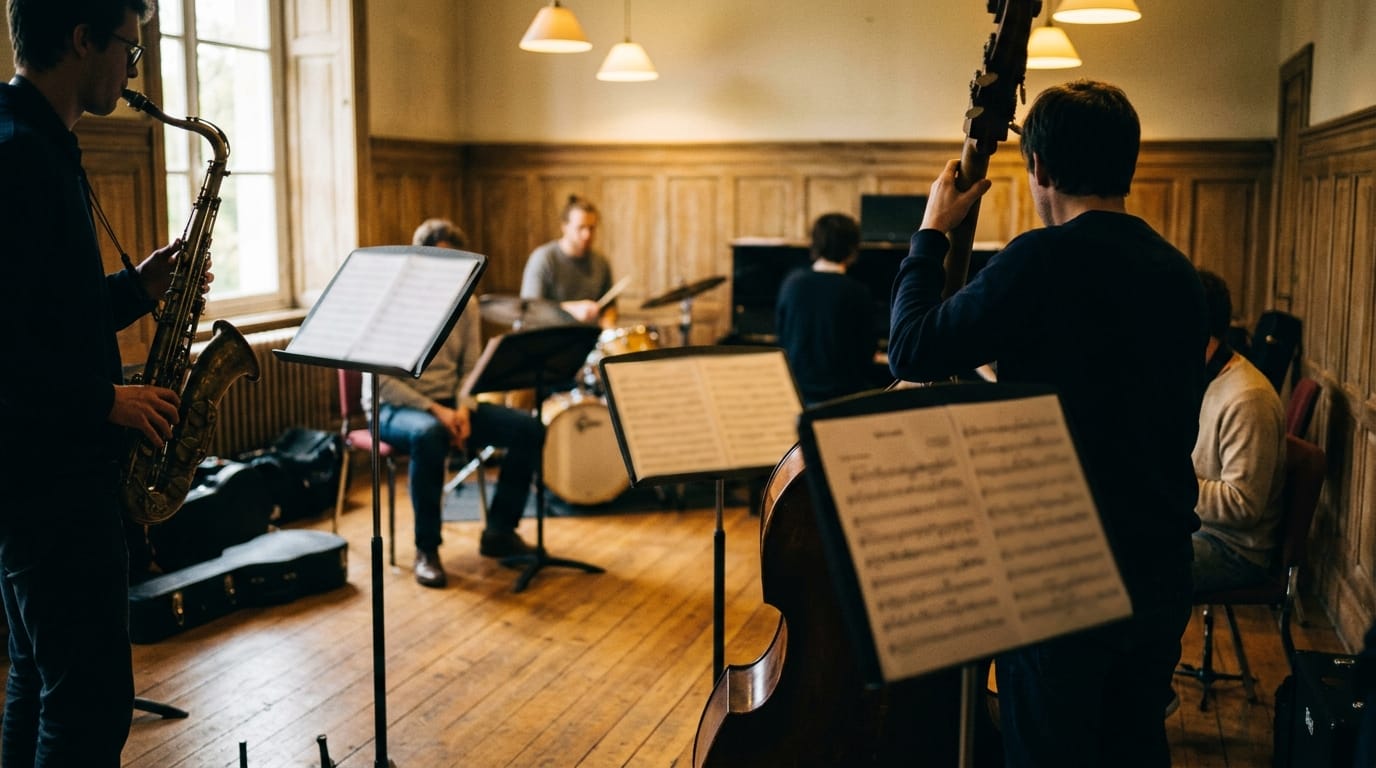
The pipeline of technically proficient jazz players in 2026 is larger, not smaller, than in prior decades. Berklee College of Music, described by Wikipedia as the largest independent college of contemporary music in the world, known specifically for jazz, graduates hundreds of working musicians annually. Juilliard’s jazz program, founded in 2001 and led by Wynton Marsalis and Aaron A. Flagg, trains players within one of the most demanding conservatory environments in the country. Manhattan School of Music has maintained a jazz program since its first official jazz ensemble performed publicly in 1971, and its alumni appear on jazz stages worldwide. This is measurable institutional output, not nostalgia.
The Artists Making the Argument Unnecessary
Kamasi Washington released Fearless Movement on Young Turks in 2024, his fifth studio album, demonstrating that a jazz saxophonist can sustain a decade-long career generating genuine mainstream cultural attention. Esperanza Spalding became the first jazz artist to win the Grammy for Best New Artist in 2011, beating Justin Bieber, then pushed compositional boundaries further with Songwrights Apothecary Lab (2021). Cécile McLorin Salvant has won three Grammy Awards for Best Jazz Vocal Album and receives serious coverage in mainstream press. These aren’t marginal figures keeping a dying form on life support. They’re artists with real audiences.
Christian Scott aTunde Adjuah, a Grammy-nominated trumpeter, coined the term “stretch music” to describe his approach of absorbing trap, hip-hop, and Indian classical elements into jazz’s improvisational logic. Joey Alexander, born in Bali in 2003, became the first Indonesian musician nominated at the Grammy Awards and is now a full working adult musician extending the piano tradition. Jazzmeia Horn, Grammy-nominated vocalist and winner of the Sarah Vaughan International Jazz Vocal Competition, carries the vocal tradition into the current decade with a sound rooted in classic figures but entirely her own. The genre that produces these musicians is not dead. It is, if anything, overflowing with talent. For a broader look at the contemporary players shaping the form, see eJazzNews’s guide to the most popular jazz artists working today.
The Historical Context, This Question Is Not New
Every generation inherits a version of jazz it doesn’t recognize and calls the previous version dead. That pattern is so consistent it should disqualify the claim on its own.
Jazz Has Been Declared Dead Before
In the late 1960s, rock and soul displaced jazz from pop radio, and critics began writing obituaries. In the 1970s, Miles Davis’s Bitches Brew (1970) was denounced by traditionalists as jazz’s suicide note, and simultaneously celebrated as its reinvention. The album is now regarded as one of the most influential recordings of the 20th century. In the 1980s, the neoclassical backlash led by Wynton Marsalis and the “Young Lions” movement was itself a response to a perceived death, and produced some of the era’s most recorded jazz output, with Marsalis eventually winning nine Grammy Awards across both jazz and classical categories. In the 1990s, A Tribe Called Quest’s heavy sampling of jazz records brought the music to an entirely new generation of listeners, while smooth jazz’s commercial ascent complicated the narrative further.
| Era | The Claim | What Actually Happened |
|---|---|---|
| Late 1960s | Rock killed jazz | Jazz fragmented into fusion, free jazz, and post-bop |
| 1970s | Fusion alienated purists | Bitches Brew became a landmark; jazz influence spread to funk and soul |
| 1980s | Jazz was irrelevant to youth | Neoclassical revival; Blue Note reissues drove new listeners |
| 1990s | Smooth jazz “ruined” the genre | Acid jazz and jazz-rap brought new audiences |
| 2010s-2020s | Streaming decimated jazz | Washington, Spalding, and McLorin Salvant achieved genuine crossover |
The pattern is unmistakable. Each era’s death declaration was wrong. There’s no compelling reason to believe the current one is different. For deeper context on how jazz has continuously reinvented itself, the eJazzNews guide to every jazz genre and subgenre traces the full arc from New Orleans to the present.
Who Actually Said “Jazz Isn’t Dead, It Just Smells Funny”
This quote is attributed to Frank Zappa, the composer and guitarist known for satirical commentary on the American music industry and avant-garde culture. Zappa deployed it as a provocation rather than an analysis, a way of needling both jazz’s defenders and its detractors simultaneously. The line has circulated since the 1970s and says more about Zappa’s wit than about jazz’s actual condition. That it keeps getting quoted as though it settles something illustrates how much of the “jazz is dead” conversation is rhetorical performance rather than critical argument.
What the Music Itself Says in 2026
Arguments about market share are abstract. The music is concrete. And the music, right now, is extraordinary.
Live Festivals Are Selling Tickets, Not Struggling
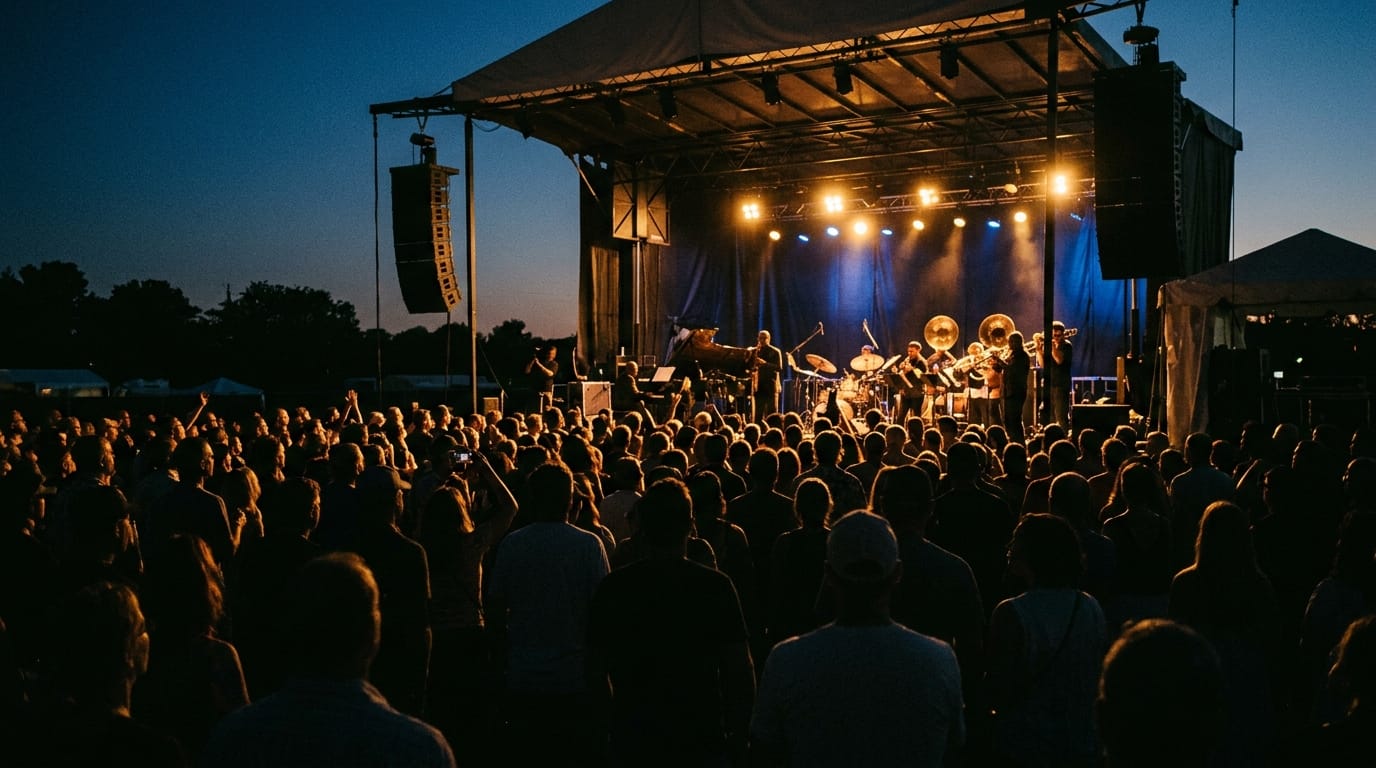
The Monterey Jazz Festival, established in 1958, continues to operate annually with lineups that include Herbie Hancock, Cécile McLorin Salvant, and Christian McBride, artists who draw audiences because of the music, not despite it. The Newport Jazz Festival runs July 31 through August 2, 2026, at Fort Adams State Park in Newport, Rhode Island, with a headliner list that includes Kamasi Washington and Robert Glasper. The Montreal International Jazz Festival holds the 2004 Guinness World Record as the world’s largest jazz festival, routinely drawing over 2 million attendees across its run and featuring roughly 3,000 artists from more than 30 countries. The festival market for jazz is not contracting. It is, by any reasonable measure, healthy.
The Adrian Younge / Jazz Is Dead Label, What It Actually Proves
Jazz Is Dead, founded in 2017 by Adrian Younge, Ali Shaheed Muhammad (founding member of A Tribe Called Quest), Andrew Lojero, and Adam Block, has released more than 27 catalog-style analog recordings pairing Younge with jazz and soul figures including Tony Allen, Lonnie Liston Smith, and Ebo Taylor. The label’s commercial and critical success, distributed through independent channels and reviewed in major outlets, is itself evidence of jazz’s living market. The label’s name is ironic. Its entire output is a counterargument to its own title.
The Grateful Dead Jazz Cover Band, Another Disambiguation
Search traffic for “jazz is dead” also lands on Jazz Is Dead, the instrumental ensemble that reimagines Grateful Dead material through jazz improvisation. Active since the early 1990s, the band continues to tour and record. Its continued existence is a minor but real data point: there is a live audience for jazz-adjacent instrumental music decades into the band’s existence. This article’s focus is the critical question, not the band, but readers arriving via that search deserve the disambiguation.
The Recordings That Settle the Argument
Cécile McLorin Salvant’s Ghost Song (Nonesuch, 2022) received two Grammy nominations, including Best Jazz Vocal Album, and drew serious coverage in mainstream press. The album moves between art song, blues, and jazz standard with a dramatic intelligence that only jazz’s interpretive tradition, its willingness to treat a lyric as a text to be inhabited rather than merely delivered, could produce. Kamasi Washington’s Fearless Movement (Young Turks, 2024) layers trap rhythms and orchestral strings beneath saxophone improvisation that still swings in the jazz sense: the harmonic language is unmistakably post-Coltrane. Christian Scott aTunde Adjuah’s Axiom, released on Ropeadope Records, earned Grammy nominations for Best Contemporary Instrumental Album and Best Improvised Jazz Solo, the Academy recognizing that “stretch music” is still jazz music. These recordings don’t sound like a genre in its death throes. They sound like a genre with somewhere to go.
What’s Actually Dead (And Why That’s Okay)
Let’s be honest about what genuinely ended. Jazz’s position as the soundtrack of American popular culture, roughly 1935 to 1965, is gone and is not returning. That era produced Ella Fitzgerald, Miles Davis, John Coltrane, and Duke Ellington as household names. It produced jazz on jukeboxes, jazz on the radio, jazz as the music young people danced to. That specific cultural moment is over.
But here’s the thing: rock has now lost the same position to hip-hop and pop. Every musical tradition eventually becomes a “tradition” rather than a dominant commercial force. That transition doesn’t equal death. It equals maturation. Jazz now occupies the cultural position classical music does, institutionally supported, educationally transmitted, artistically evolving, commercially niche. That is a stable ecosystem, not a terminal one. The musicians producing jazz in 2026 are not eulogizing the form. They are extending it, and they’re doing so with more technical training and more stylistic range than any previous generation.
The Verdict
Jazz is not dead. Jazz as America’s pop music is dead, and has been for roughly sixty years. Those are not the same statement, and conflating them has generated six decades of premature obituaries. The phrase “jazz is dead” functions as cultural shorthand for a real anxiety, about commercial relevance, about institutional support for working artists, about who controls the narrative of the music’s history. Those anxieties deserve honest engagement, not dismissal, and this article has tried to provide it.
The musicians carrying jazz forward in 2026, from McLorin Salvant’s voice to Washington’s saxophone to Adjuah’s trumpet, aren’t waiting for permission to declare the form alive. They’re too busy playing it. If you want to understand where the music actually stands, skip the think pieces and put on Ghost Song. The answer is in the first thirty seconds. For a deeper dive into the artists and albums that define jazz’s present, the eJazzNews ranking of the greatest jazz albums traces the tradition from its roots to its current practitioners.
Frequently Asked Questions
Is jazz a dead genre?
Jazz is not a dead genre, it is a commercially niche genre with active recording, festival, and educational ecosystems. Its share of music streaming and album sales is small, but thousands of professional musicians perform and record jazz annually, and major conservatories including Berklee, Juilliard, and Manhattan School of Music continue to train new players at scale.
Who said “jazz isn’t dead, it just smells funny”?
The quote is attributed to Frank Zappa, the composer and guitarist known for satirical commentary on the American music industry and avant-garde culture. It has circulated widely since the 1970s as a pithy provocation rather than a serious analytical claim about the genre’s health.
Why did the jazz era end?
Jazz lost its dominance of popular music in the mid-1960s as rock and soul absorbed its commercial audience. The jazz era ended as a market phenomenon, not as an artistic one, jazz composition and performance continued to evolve through fusion, free jazz, post-bop, and into the contemporary era, producing some of the music’s most ambitious work after its commercial peak had passed.
What is the Jazz Is Dead label?
Jazz Is Dead is an independent music label founded in 2017 by producers Adrian Younge and Ali Shaheed Muhammad, along with concert producer Andrew Lojero and industry veteran Adam Block. The label records new analog albums pairing Younge with jazz and soul figures, and has released more than 27 volumes in its catalog series. Its name is ironic, the project is a celebration of jazz, not a declaration of its end.
Is there still a market for live jazz in 2026?
Yes. Major jazz festivals including the Montreal International Jazz Festival, Newport Jazz Festival, and Monterey Jazz Festival continue to sell tickets and attract international audiences. The Montreal festival holds the Guinness World Record as the world’s largest jazz festival. Live jazz performance remains significantly more commercially viable than jazz recording, and festival attendance has held consistent through the 2020s.