Michael Franks: The Jazz-Pop Songwriter Behind Popsicle Toes
Michael Franks is an American singer-songwriter, born September 18, 1944, in La Jolla, California, who sets literate, softly sung lyrics to a blend of jazz, pop and Brazilian bossa nova. He wrote and recorded “Popsicle Toes,” from his 1975 album The Art of Tea; released as a single in 1976, it is his only Billboard Hot 100 entry. He has made 18 studio albums, the most recent being The Music in My Head (2018). At 82 he is alive and still writing: his latest concerts were three U.S. shows in August 2025, and in February 2026 he told fans he was working on songs for a new project.
Table of Contents
- Who Is Michael Franks?
- Early Life and Influences
- From Literature Student to Songwriter
- The Art of Tea and “Popsicle Toes”
- The Warner Bros. Years: 1977 to 1995
- Later Albums: 1999 to 2018
- Michael Franks Discography
- Is Michael Franks Jazz? His Style and Sound
- Personal Life: Wife Claudia
- Is Michael Franks Still Alive and Performing?
- Frequently Asked Questions
- How old is Michael Franks?
- Is Michael Franks still alive?
- Who is Michael Franks’s wife?
- What is Michael Franks’s net worth?
- Who wrote “Popsicle Toes”?
Who Is Michael Franks?
Franks is a songwriter first. In a 2011 interview with NPR’s Scott Simon he explained that he set out to write songs for other singers, not to become a recording artist. He sang his own demos, and when nobody else picked the songs up, he decided to record them himself. That quiet, conversational voice became his trademark. Unlike most of the male jazz singers who built careers on standards, he has recorded almost nothing but his own material; his official biography calls a cover version “a rarity” in his catalogue.
Other singers did eventually take up the songs. The Manhattan Transfer, Diana Krall, Natalie Cole, Patti LaBelle, Carmen McRae and the Carpenters have all recorded his compositions. His own albums feature jazz and studio musicians such as Joe Sample, Larry Carlton, Ron Carter, Kenny Barron and Michael Brecker.
Early Life and Influences
Franks grew up in Southern California. No one in his family was a musician, but his parents loved swing and the vocalists of the day; in the 2006 biography on his website he names June Christy and Peggy Lee as their favorites. His own early models were singers such as Peggy Lee and Nat King Cole and the songwriters of the American songbook: the Gershwins, Irving Berlin and Johnny Mercer.
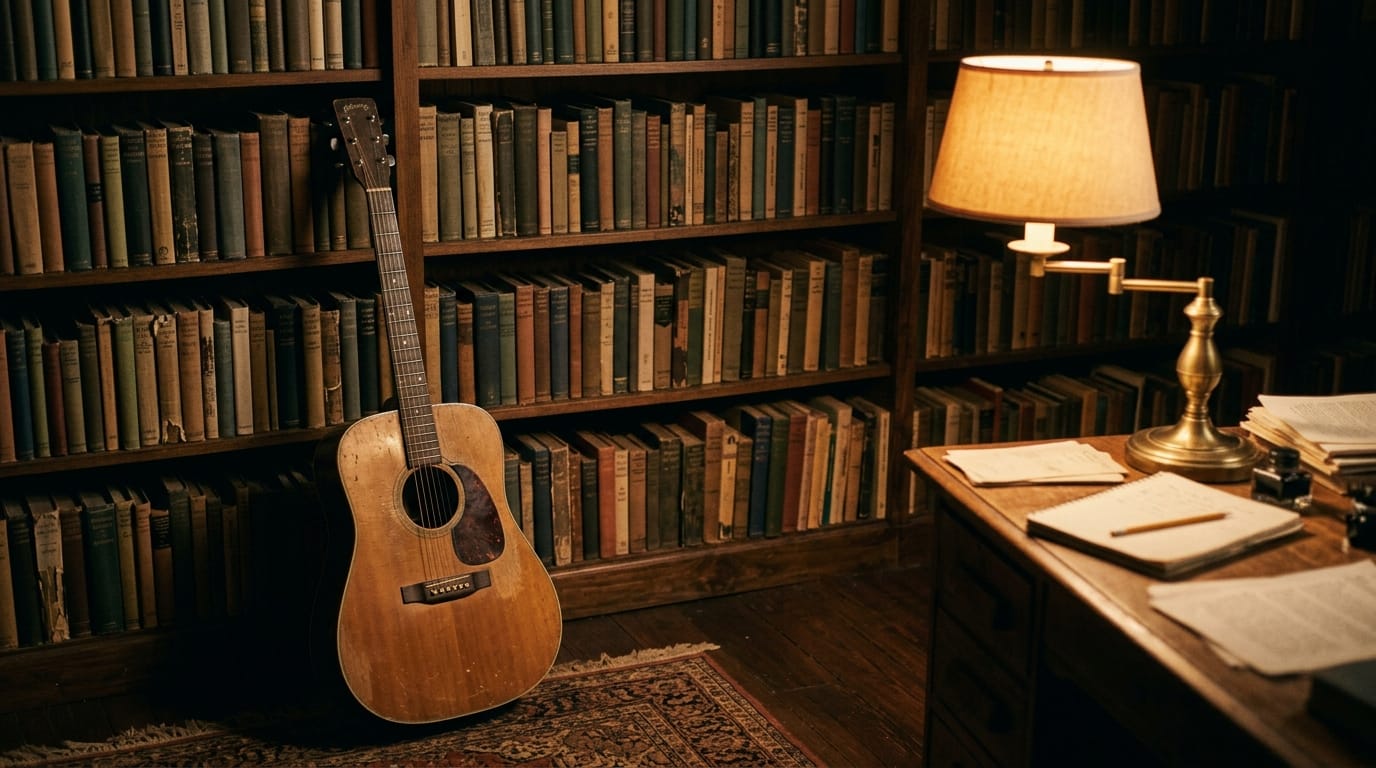
At 14 he bought his first guitar, a Japanese Marco Polo that cost $29.95 and came with six private lessons. Those lessons were the only formal music instruction he ever had. At University High School in San Diego he discovered the poetry of Theodore Roethke, and he began singing folk-rock to his own guitar accompaniment. The moment that turned him toward jazz came at a friend’s house in the early 1960s, when the friend’s father played him Mose Allison’s “Your Mind Is on Vacation” and Dave Brubeck’s “Take Five.” “When I heard those two songs, I felt like the blinders had been taken off,” he recalled in that 2006 biography. “Take Five” comes from Brubeck’s Time Out (1959), still one of the easiest jazz albums for new listeners, and decades later Franks turned that afternoon into a song.
From Literature Student to Songwriter
Franks studied English at UCLA, where he discovered Stan Getz, João Gilberto, Antonio Carlos Jobim and Miles Davis. He earned a BA in comparative literature in 1966 and an MA from the University of Oregon in 1968, then held a teaching assistantship in a PhD program in American literature at the University of Montreal before returning to Los Angeles to teach part-time at UCLA. None of these degrees involved music.
His first songs were written for an antiwar stage musical, Anthems in E-Flat. He then scored two 1974 films, Monte Hellman’s Cockfighter and Jan Troell’s Zandy’s Bride. The opening that mattered came from the blues duo Sonny Terry and Brownie McGhee, who recorded three of his songs, “You Bring Out the Boogie in Me,” “White Boy Lost in the Blues” and “Jesus Gonna Make It Alright,” on their 1973 A&M album Sonny & Brownie, with Franks playing guitar and banjo. “They actually got me my first record deal,” he told NPR.
His first album, a self-titled record for Brut, a label owned by the company behind Brut cologne, came out in 1973. It opened with “Can’t Seem to Shake This Rock ‘n’ Roll” but made little impact, and it was reissued in 1983 as Previously Unavailable.
The Art of Tea and “Popsicle Toes”
The Art of Tea was his first album for Reprise and the start of 20 years with the Warner Bros. labels. Tommy LiPuma produced it at Capitol Studios in Hollywood in May and June 1975, with three members of the Crusaders as the core band: Joe Sample on keyboards, Larry Carlton on guitar and Wilton Felder, the group’s saxophonist, here playing bass. John Guerin played drums, and the solos came from two saxophonists, David Sanborn on alto and Michael Brecker on tenor.
“Popsicle Toes,” which Franks wrote alone, became the album’s single in 1976. It reached No. 43 on the Billboard Hot 100, his only entry on that chart, and No. 45 on the Easy Listening chart, while the album peaked at No. 131 on the Billboard 200. The Manhattan Transfer recorded it on Coming Out (1976), and Diana Krall included it on When I Look in Your Eyes (1999). Peggy Lee, one of his childhood idols, heard rough mixes before release and singled out “Eggplant,” Franks told NPR; a few years later she recorded one of his songs.

The Warner Bros. Years: 1977 to 1995
Sleeping Gypsy (1977), again produced by LiPuma, took the Brazilian influence to its source. Franks flew to Rio de Janeiro to record “Down in Brazil” and “B’wana-He No Home” with Brazilian musicians including pianist João Donato and guitarist Hélio Delmiro. It opens with “The Lady Wants to Know” and includes “Antonio’s Song (The Rainbow),” one of three songs his official biography lists as dedications to Jobim.
By the late 1970s Franks had moved to New York. Burchfield Nines (1978) gave him “When the Cookie Jar Is Empty.” For Tiger in the Rain (1979), recorded at A&R Recording in New York, producer John Simon took over from LiPuma and used jazz players such as Kenny Barron, Ron Carter and Ben Riley. LiPuma returned for One Bad Habit (1980), which includes “Baseball” and “Lotus Blossom.”
The early 1980s were his commercial peak. Objects of Desire (1982), with “Tahitian Moon” and “Love Duet,” sung with Renee Diggs, reached No. 45 on the Billboard 200, his highest placing. Passionfruit (1983), produced and arranged by Rob Mounsey in New York, includes three of his best-known songs: “When Sly Calls (Don’t Touch That Phone),” usually described as his biggest hit, “Tell Me All About It,” later recorded by Natalie Cole, and “Rainy Night in Tokyo.” Astrud Gilberto sings backing vocals on “Amazon,” and the album reached No. 4 on Billboard’s jazz albums chart.
Skin Dive (1985) produced his biggest adult contemporary hit, “Your Secret’s Safe with Me,” which peaked at No. 4, and a duet with Brenda Russell, “When I Give My Love to You.” Two musicians on that record, bassist Mark Egan and drummer Danny Gottlieb, were still in his touring band in 2025. The Camera Never Lies (1987) added “Island Life” to his radio hits.
After the more electronic sound of those mid-1980s records, Blue Pacific (1990) returned to a quieter, Brazilian-leaning style, with tracks produced by LiPuma, Walter Becker of Steely Dan and Jeff Lorber. Three of its songs, “Vincent’s Ear,” “On the Inside” and “Woman in the Waves,” come from Noa Noa, his musical about the painter Paul Gauguin, which was briefly workshopped off-Broadway at Playwrights Horizons in 1995. Dragonfly Summer (1993) followed, and Abandoned Garden (1995), his last album of new material for Warner Bros., was dedicated to the memory of Jobim.
Later Albums: 1999 to 2018
Franks moved to Windham Hill for Barefoot on the Beach (1999), which includes “Mr. Smooth.” Watching the Snow (2003), a winter and holiday album with “Christmas in Kyoto,” was recorded in Catskill, New York, and co-produced with his musical director, keyboardist Charles Blenzig. Rendezvous in Rio (Koch, 2006) went back to Brazilian rhythms with producers Jeff Lorber, Jimmy Haslip of the Yellowjackets and guitarist Chuck Loeb; two of its songs, “The Cool School” and “Hearing ‘Take Five’,” look back at the records that pulled him into jazz as a teenager.
His two most recent albums are on Shanachie. Time Together (2011) opens with “Now That the Summer’s Here,” which he wrote, he told NPR, while daydreaming about summer during a hard upstate winter. The Music in My Head (2018) came after a seven-year gap and features one of the last recorded guitar solos by Chuck Loeb, who died in 2017.
Michael Franks Discography
Franks has released 18 studio albums, listed below with the original label and the songs to start with. He also released one live album, Michael Franks with Crossfire Live (1980), recorded in Sydney and Auckland with the Australian band Crossfire, and several compilations.
| Year | Album | Label | Songs to start with |
|---|---|---|---|
| 1973 | Michael Franks (reissued as Previously Unavailable) | Brut | Can’t Seem to Shake This Rock ‘n’ Roll |
| 1975 | The Art of Tea | Reprise | Popsicle Toes; Eggplant |
| 1977 | Sleeping Gypsy | Warner Bros. | The Lady Wants to Know; Antonio’s Song (The Rainbow) |
| 1978 | Burchfield Nines | Warner Bros. | When the Cookie Jar Is Empty |
| 1979 | Tiger in the Rain | Warner Bros. | Tiger in the Rain; When It’s Over |
| 1980 | One Bad Habit | Warner Bros. | One Bad Habit; Lotus Blossom |
| 1982 | Objects of Desire | Warner Bros. | Tahitian Moon; Love Duet |
| 1983 | Passionfruit | Warner Bros. | When Sly Calls (Don’t Touch That Phone); Rainy Night in Tokyo |
| 1985 | Skin Dive | Warner Bros. | Your Secret’s Safe with Me; When I Give My Love to You |
| 1987 | The Camera Never Lies | Warner Bros. | Island Life |
| 1990 | Blue Pacific | Reprise | The Art of Love; Woman in the Waves |
| 1993 | Dragonfly Summer | Reprise | Soul Mate; The Dream |
| 1995 | Abandoned Garden | Warner Bros. | Abandoned Garden; Like Water, Like Wind |
| 1999 | Barefoot on the Beach | Windham Hill | Barefoot on the Beach; Mr. Smooth |
| 2003 | Watching the Snow | Sleeping Gypsy (later Koch) | Christmas in Kyoto |
| 2006 | Rendezvous in Rio | Koch | Rendezvous in Rio; The Cool School |
| 2011 | Time Together | Shanachie | Now That the Summer’s Here |
| 2018 | The Music in My Head | Shanachie | Waterfall |
Is Michael Franks Jazz? His Style and Sound
He is usually filed under smooth jazz or jazz-pop, and his official biography calls “Tahitian Moon” a “Quiet Storm classic,” a reference to the late-night soul radio format. None of those labels says much about the writing, which is where his reputation rests. Asked by NPR how his music had changed over 40 years, he said he had always tried to emulate the writers he admired, naming Jobim and the Brazilians, Cole Porter and the Gershwins: “I always try to write a song as good as one of those if I can.”
The harmony comes from bossa nova and cool jazz, the forms are pop songs, and the lyrics run on wordplay. Several songs work as double entendres, among them “Eggplant,” “Baseball” and “Now That Your Joystick’s Broke,” and many are built on specific places and seasons: Tokyo in the rain, a Tahitian moon, Christmas in Kyoto. The singing stays small and close to speech, which keeps the words in front of the band. Our overview of jazz styles and subgenres shows where smooth jazz sits among them.
Personal Life: Wife Claudia
Franks is married to Claudia, and in his February 2026 note to fans he refers to their almost 50 years of marriage. “Rainy Night in Tokyo” is about her. Writing in Copper magazine in 2023, Rudy Radelic described the song as an autobiographical account of their wedding, and the lyric looks back to the seventh of September.
The couple live in upstate New York. Franks told NPR in 2011 that home was Woodstock, and his recent notes to fans are written from the snowbound Northeast. They also rescue animals: by his count they have taken in 21 cats and dogs over the course of their marriage, and he supports the national no-kill shelter Hearts United for Animals and local shelters in Ulster County.
Is Michael Franks Still Alive and Performing?
Yes. Franks turned 82 on September 18, 2026. His most recent concerts were in August 2025: Detroit’s Music Hall Center on August 16 (he also played there in 2024), Sony Hall in New York on August 22 and the Vogel at the Count Basie Center in Red Bank, New Jersey, on August 23. His band was led by keyboardist Charles Blenzig and featured singer Veronica Nunn. As of early October 2026, neither his website nor Songkick lists any 2026 dates.
He has not retired. In February 2026 he wrote that he was still writing songs for a new project, hoped to get into the studio, and was considering performing as a trio or taking a few solo gigs. He and Veronica Nunn have also launched a podcast, The And of One, in which he tells stories from more than 50 years of writing, recording and touring. New concerts are announced first on his official website.
Frequently Asked Questions
How old is Michael Franks?
Michael Franks was born on September 18, 1944, in La Jolla, California. He turned 82 in September 2026.
Is Michael Franks still alive?
Yes. He is alive and still writing songs. In February 2026 he told fans he was working on a new project, and his most recent concerts were in Detroit, New York and Red Bank, New Jersey, in August 2025.
Who is Michael Franks’s wife?
He is married to Claudia. In February 2026 he wrote of their almost 50 years of marriage, and his 1983 song “Rainy Night in Tokyo” is an autobiographical song about their wedding.
What is Michael Franks’s net worth?
No reliable figure exists. Franks has never made his finances public, and the numbers on celebrity net-worth sites are unsourced estimates. What is documented is the catalogue: 18 studio albums and songs recorded by artists such as Diana Krall, Natalie Cole and The Manhattan Transfer.
Who wrote “Popsicle Toes”?
Michael Franks wrote “Popsicle Toes” on his own and recorded it for The Art of Tea (1975), produced by Tommy LiPuma. Released as a single in 1976, it reached No. 43 on the Billboard Hot 100. The Manhattan Transfer and Diana Krall later recorded it.