Miles Davis Biography: Life, Albums, Wives and Children
Miles Davis (1926-1991) was an American trumpeter, bandleader and composer who changed the direction of jazz several times: he led the Birth of the Cool sessions of 1949-1950, recorded Kind of Blue (1959), one of the best-selling jazz albums ever (5x Platinum in the US), and took jazz electric with In a Silent Way (1969) and Bitches Brew (1970). He was married three times, to dancer Frances Taylor, singer Betty Mabry (later Betty Davis) and actress Cicely Tyson, and had four children: Cheryl, Gregory and Miles IV with his high school girlfriend Irene Birth, and Erin with Marguerite Eskridge. He died in Santa Monica, California, on September 28, 1991, aged 65, from the combined effects of a stroke, pneumonia and respiratory failure.
Table of Contents
- Early Life in East St. Louis
- Juilliard, Charlie Parker and Bebop (1944-1948)
- Birth of the Cool and the Heroin Years (1948-1954)
- The First Quintet and Kind of Blue (1955-1960)
- The Second Great Quintet (1963-1968)
- Electric Miles: From In a Silent Way to On the Corner (1968-1975)
- Retreat and Comeback (1975-1991)
- Miles Davis’s Wives
- Frances Taylor (married 1959-1968)
- Betty Mabry (married 1968-1969)
- Cicely Tyson (married 1981-1989)
- Other relationships
- Miles Davis’s Children
- How Miles Davis Died
- Legacy and the 2026 Centennial
- Frequently Asked Questions
- How many times was Miles Davis married?
- How many children did Miles Davis have?
- Who was Miles Davis IV and how did he die?
- What was Miles Davis’s cause of death?
| Full name | Miles Dewey Davis III |
| Born | May 26, 1926, Alton, Illinois (raised in East St. Louis) |
| Died | September 28, 1991, Santa Monica, California, aged 65 |
| Cause of death | Stroke, pneumonia and respiratory failure |
| Buried | Woodlawn Cemetery, the Bronx, New York |
| Spouses | Frances Taylor (1959-1968), Betty Mabry (1968-1969), Cicely Tyson (1981-1989) |
| Children | Cheryl (born 1944), Gregory (mid-1940s to 2023), Miles IV (1950-2015), Erin (born 1970) |
| Grammys | 8 wins from 32 nominations; Lifetime Achievement Award (1990) |
Early Life in East St. Louis
Davis was born in Alton, Illinois, and grew up in East St. Louis, where the family moved in 1927. His father, Miles Dewey Davis Jr., was a dentist who also owned a farm in Arkansas, and his mother, Cleota Mae Henry, was a music teacher and violinist who wanted him to play the violin. His father gave him a trumpet for his 13th birthday in 1939, and his teacher, Elwood Buchanan, told him to play without vibrato, a straight tone he kept for life.
At Lincoln High School he met his first girlfriend, Irene Birth. In July 1944, Billy Eckstine’s band came to town with Charlie Parker and Dizzy Gillespie, and Davis filled in for a sick trumpeter for two weeks. Hearing bebop up close convinced him to move to New York.
Juilliard, Charlie Parker and Bebop (1944-1948)
Davis enrolled at the Juilliard School in September 1944 but spent much of his time in Harlem clubs such as Minton’s looking for Parker, and he dropped out in 1945 to play full time. That year he replaced Gillespie in Parker’s quintet, at the center of the bebop scene. His solo on Parker’s “Now’s the Time” (November 1945) already hinted at the cooler, sparer style he would develop. He played with Parker on and off until December 1948, wrote “Cheryl” for his daughter in 1947, and that August led a session as the Miles Davis All Stars, with Parker in the band.
Birth of the Cool and the Heroin Years (1948-1954)
In 1948 Davis formed a nine-piece band with arranger Gil Evans and baritone saxophonist Gerry Mulligan, using French horn and tuba for a soft, almost orchestral sound. Its only club engagement was two weeks at the Royal Roost in September 1948, but its Capitol recordings from 1949 and 1950, compiled in 1957 as Birth of the Cool, influenced cool jazz and the West Coast style of the 1950s.
After his first trip to Paris in 1949, Davis became addicted to heroin. Work dried up, he was arrested for possession in Los Angeles in 1950 (he was acquitted), and by 1953 the habit was affecting his playing. He went back to his father’s home to quit, spent months in Detroit away from New York’s dealers, and by February 1954 he was clean. Some critics date the start of hard bop to his April 1954 Prestige session released as Walkin’.
The First Quintet and Kind of Blue (1955-1960)
After his set at the Newport Jazz Festival in July 1955, Columbia’s George Avakian signed him, and Davis formed his first quintet with John Coltrane on tenor saxophone, Red Garland on piano, Paul Chambers on bass and Philly Joe Jones on drums. To finish his Prestige contract the group recorded two marathon sessions in 1956, released as Cookin’, Relaxin’, Workin’ and Steamin’. His first Columbia album, ‘Round About Midnight, followed in March 1957. By then he often played with a Harmon mute held close to the microphone.
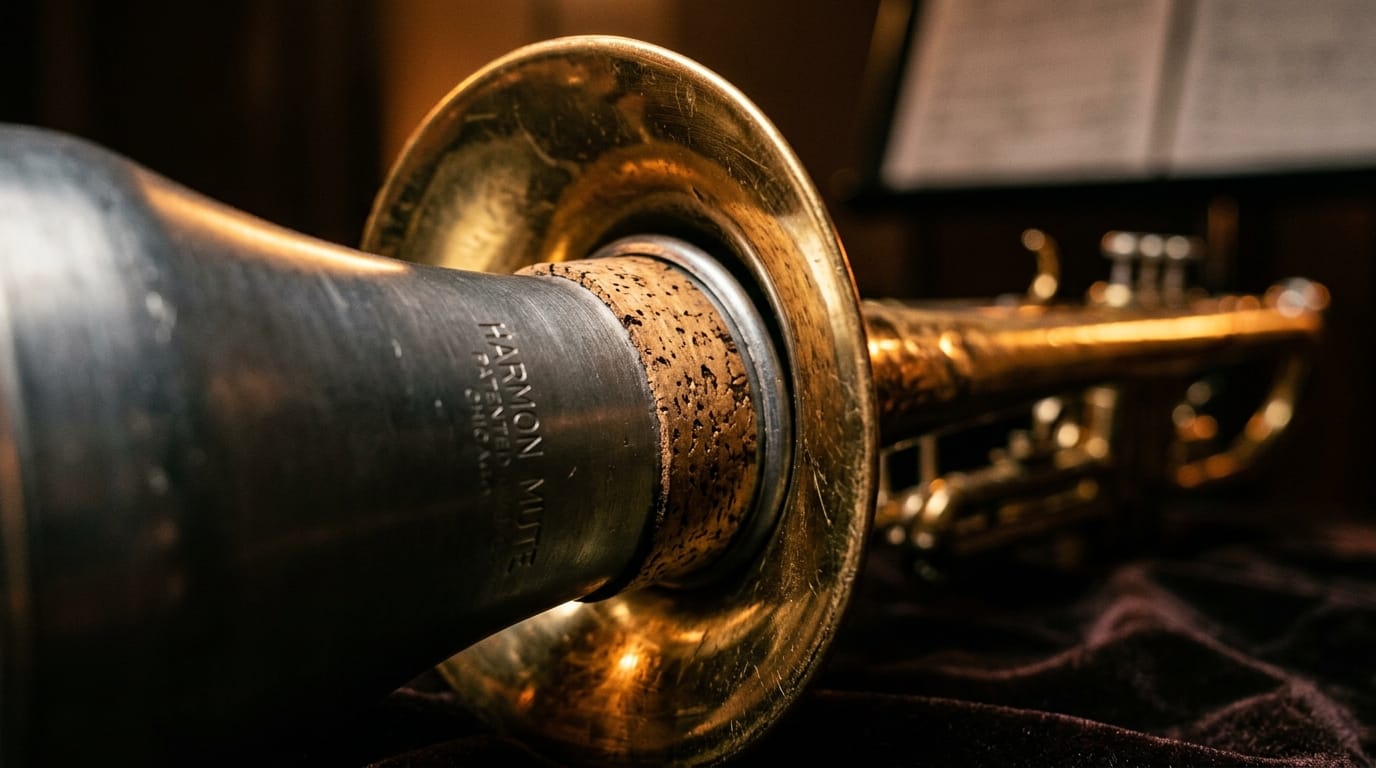
He also made orchestral albums with Gil Evans: Miles Ahead (1957), Porgy and Bess (1959) and Sketches of Spain (1960), which won him his first Grammy. With Cannonball Adderley added on alto saxophone, the band became a sextet for Milestones (1958).
Kind of Blue was recorded on March 2 and April 22, 1959, with Coltrane, Adderley, pianist Bill Evans (Wynton Kelly plays on “Freddie Freeloader”), Chambers and drummer Jimmy Cobb. Instead of running fast chord changes, the soloists improvised on slow-moving scales, which left room for melody and silence; our guide to how modal jazz works explains the idea. Released on August 17, 1959, the album was certified five times platinum by the RIAA in 2019.
The Second Great Quintet (1963-1968)
After Coltrane left in 1960, Davis rebuilt. By May 1963 he had bassist Ron Carter, 23-year-old pianist Herbie Hancock and 17-year-old drummer Tony Williams, and in 1964 Wayne Shorter joined from Art Blakey’s Jazz Messengers and became the band’s main composer. On E.S.P. (1965), Miles Smiles (1967) and Nefertiti (1968), the quintet moved away from fixed chord sequences and let the rhythm section respond to the soloists, an approach known as “time, no changes.”
Electric Miles: From In a Silent Way to On the Corner (1968-1975)
Miles in the Sky and Filles de Kilimanjaro, both recorded in 1968, brought in electric piano, bass and guitar on some tracks. In a Silent Way was recorded in a single session in February 1969 with Hancock, Chick Corea and Joe Zawinul on keyboards and John McLaughlin on guitar. Bitches Brew (recorded August 1969, released March 1970) was a double album of long group improvisations over rock and funk rhythms. It reached No. 35 on the Billboard album chart, his highest position, won a Grammy, became his first gold record in 1976 and went platinum in 2003. On August 29, 1970, he played the Isle of Wight Festival to an estimated 600,000 people, the largest audience of his career.
His sidemen went on to lead the main jazz fusion bands of the 1970s, including Weather Report (Zawinul and Shorter), Return to Forever (Corea) and the Mahavishnu Orchestra (McLaughlin). Davis pushed into funk and Stockhausen-inspired textures on On the Corner (1972). In October 1972 he broke both ankles in a car crash and leaned on painkillers and cocaine, and after a show at the Schaefer Music Festival in New York in September 1975 he stopped performing.
Retreat and Comeback (1975-1991)
For the next five years he did not perform and rarely played; in his autobiography he wrote that sex and drugs took the place music had occupied in his life. He returned with The Man with the Horn (1981), featuring bassist Marcus Miller, and went back on stage in June 1981. After a stroke in January 1982 temporarily paralyzed his right hand, he gave up alcohol and drugs, and Cicely Tyson encouraged him to draw. Painting became a second career.
The live album We Want Miles won a Grammy. In 1985 he left Columbia for Warner Bros., and Tutu (1986), written and arranged mostly by Marcus Miller with synthesizers and drum machines, won the Grammy for Best Jazz Instrumental Performance, Soloist. Miles: The Autobiography, written with Quincy Troupe, appeared in 1989 (for his own words, see our collection of Miles Davis quotes). On July 8, 1991, at the Montreux Jazz Festival, he revisited Gil Evans’s arrangements from Miles Ahead, Porgy and Bess and Sketches of Spain with an orchestra conducted by Quincy Jones. His last concert was at the Hollywood Bowl on August 25, 1991.
Miles Davis’s Wives
Frances Taylor (married 1959-1968)
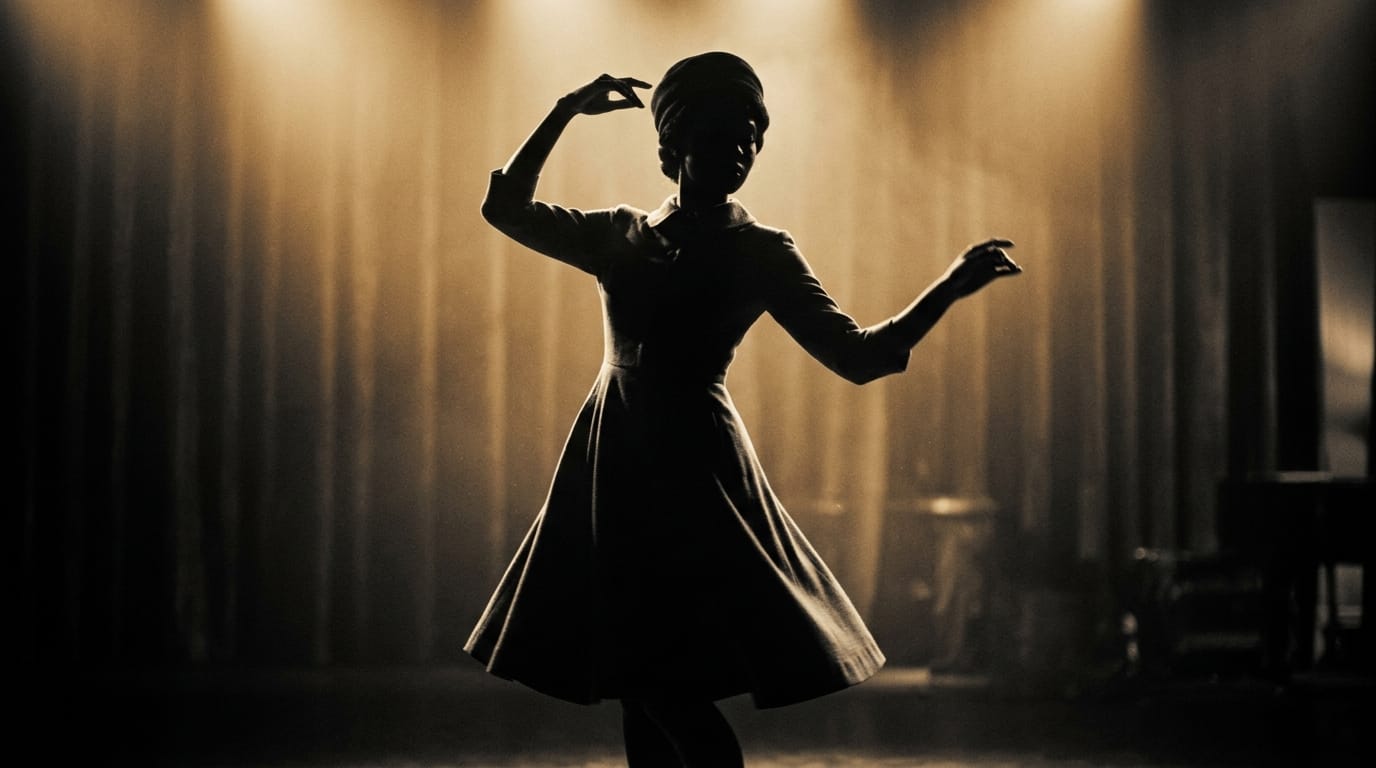
Frances Taylor (1929-2018), a dancer from Chicago, toured with the Katherine Dunham Company, was the first African American ballerina to perform with the Paris Opera Ballet (1951) and was in the original Broadway cast of West Side Story. Davis made her leave the show in 1958, and they married in Toledo, Ohio, on December 21, 1959. He wrote “Fran-Dance” for her and put her photograph on the cover of Someday My Prince Will Come (1961). The marriage was also violent. Davis wrote in his autobiography: “Every time I hit her, I felt bad because a lot of it really wasn’t her fault but had to do with me being temperamental and jealous.” Taylor left him in 1965, filed for divorce in 1966, and it was finalized in 1968.
Betty Mabry (married 1968-1969)
Betty Mabry (1944-2022), a model and songwriter from the New York counterculture, married Davis in September 1968. The marriage was short, but she introduced him to the rock, soul and funk musicians around her, and he was soon listening to Jimi Hendrix and Sly and the Family Stone. She is on the cover of Filles de Kilimanjaro, which includes “Mademoiselle Mabry.” Davis filed for divorce in 1969. As Betty Davis she later recorded three funk albums of her own, starting with Betty Davis (1973).
Cicely Tyson (married 1981-1989)
Actress Cicely Tyson (1924-2021), who in 2018 became the first African American woman to receive an honorary Oscar, first dated Davis in the 1960s; she is on the cover of Sorcerer (1967). They rekindled the relationship in 1978 and married on November 26, 1981, at Bill Cosby’s home. Davis credited her with saving his life and helping him beat his cocaine addiction, but the marriage was turbulent. Tyson filed for divorce in 1988, and it was finalized in 1989. She wrote about him in her memoir, Just as I Am, published in January 2021, two days before her death.
Other relationships
Davis had a long affair with the French singer Juliette Gréco that began in Paris in 1949, and a relationship with Marguerite Eskridge, the mother of his son Erin. From 1984 his partner was the sculptor Jo Gelbard, who taught him to paint and was with him when he died.
Miles Davis’s Children
Davis had four children, three with Irene Birth (later Irene Cawthon) and one with Marguerite Eskridge.
- Cheryl Davis (born 1944), his eldest, is one of the three family members who oversee the Miles Davis Estate.
- Gregory Davis (born in the mid-1940s) was his father’s assistant road manager and bodyguard in the fusion years and wrote the memoir Dark Magus: The Jekyll and Hyde Life of Miles Davis (2006). He later took the name Rahman Ali; the estate announced his death in June 2023.
- Miles Davis IV (1950-2015) served in the U.S. Navy and later took the name Muhammad Abdullah. According to the family’s announcement, he died in October 2015, aged 65, of complications from a heart ailment, and was buried at Jefferson Barracks National Cemetery in St. Louis.
- Erin Davis (born 1970), his son with Marguerite Eskridge, runs the estate with Cheryl and their cousin, drummer Vince Wilburn Jr.
His will, as reported by Jet in November 1991, left 40 percent of his estate to Erin and 20 percent to Cheryl, and excluded Gregory and Miles IV.
How Miles Davis Died
In early September 1991, Davis checked into St. John’s Hospital in Santa Monica for tests. After repeated bouts of bronchial pneumonia, doctors suggested a tracheal tube to help him breathe, which would have made playing the trumpet nearly impossible. The suggestion reportedly provoked an angry outburst, followed by a brain hemorrhage and a coma. He was kept on life support for several days and died on September 28, 1991, aged 65. The cause of death was given as the combined effects of a stroke, pneumonia and respiratory failure.
His health had been poor for years, with hip operations in 1965 and 1975, the 1982 stroke and diabetes. He was buried at Woodlawn Cemetery in the Bronx, near Duke Ellington, under a headstone carrying the opening notes of his tune “Solar.”
Legacy and the 2026 Centennial
Davis won 8 Grammys from 32 nominations, according to the Recording Academy. Kind of Blue was certified 5x Platinum by the RIAA in 2019; only Vince Guaraldi’s A Charlie Brown Christmas (6x Platinum in 2026) has a higher US certification among jazz albums. He was inducted into the Rock and Roll Hall of Fame in 2006. Coltrane, Bill Evans, Hancock, Shorter, Corea, McLaughlin and Keith Jarrett all played in his bands. Not everyone followed him into electric music; in 1990 the critic Stanley Crouch called him “the most brilliant sellout in the history of jazz.” For the records, see our ranking of the best Miles Davis albums; for his peers, our guide to jazz trumpet players.
His 100th birthday on May 26, 2026, was marked by a campaign from the estate and Reservoir, which acquired his publishing catalog in 2025. It included a reissue of The Complete Live at the Plugged Nickel 1965, a centennial edition of his autobiography with forewords by Hanif Abdurraqib and Nas, and the premiere of The Voice of Miles: A Symphonic Celebration at National Sawdust in New York, according to the estate’s centennial announcement.
Frequently Asked Questions
How many times was Miles Davis married?
Three times. He married dancer Frances Taylor in 1959 (divorced 1968), singer and model Betty Mabry in 1968 (divorced 1969), and actress Cicely Tyson in 1981. Tyson filed for divorce in 1988, and it was finalized in 1989.
How many children did Miles Davis have?
Four. Cheryl (born 1944), Gregory (born in the mid-1940s) and Miles IV (born 1950) were his children with Irene Birth, later Irene Cawthon. Erin (born 1970) is his son with Marguerite Eskridge. Miles IV died in 2015 and Gregory in 2023.
Who was Miles Davis IV and how did he die?
Miles Davis IV, born in 1950, was the youngest of Davis’s three children with Irene Birth. He served in the U.S. Navy and later took the name Muhammad Abdullah. According to the family, he died in October 2015, aged 65, of complications from a heart ailment.
What was Miles Davis’s cause of death?
Miles Davis died on September 28, 1991, at St. John’s Hospital in Santa Monica, California, aged 65. The cause was given as the combined effects of a stroke, pneumonia and respiratory failure.