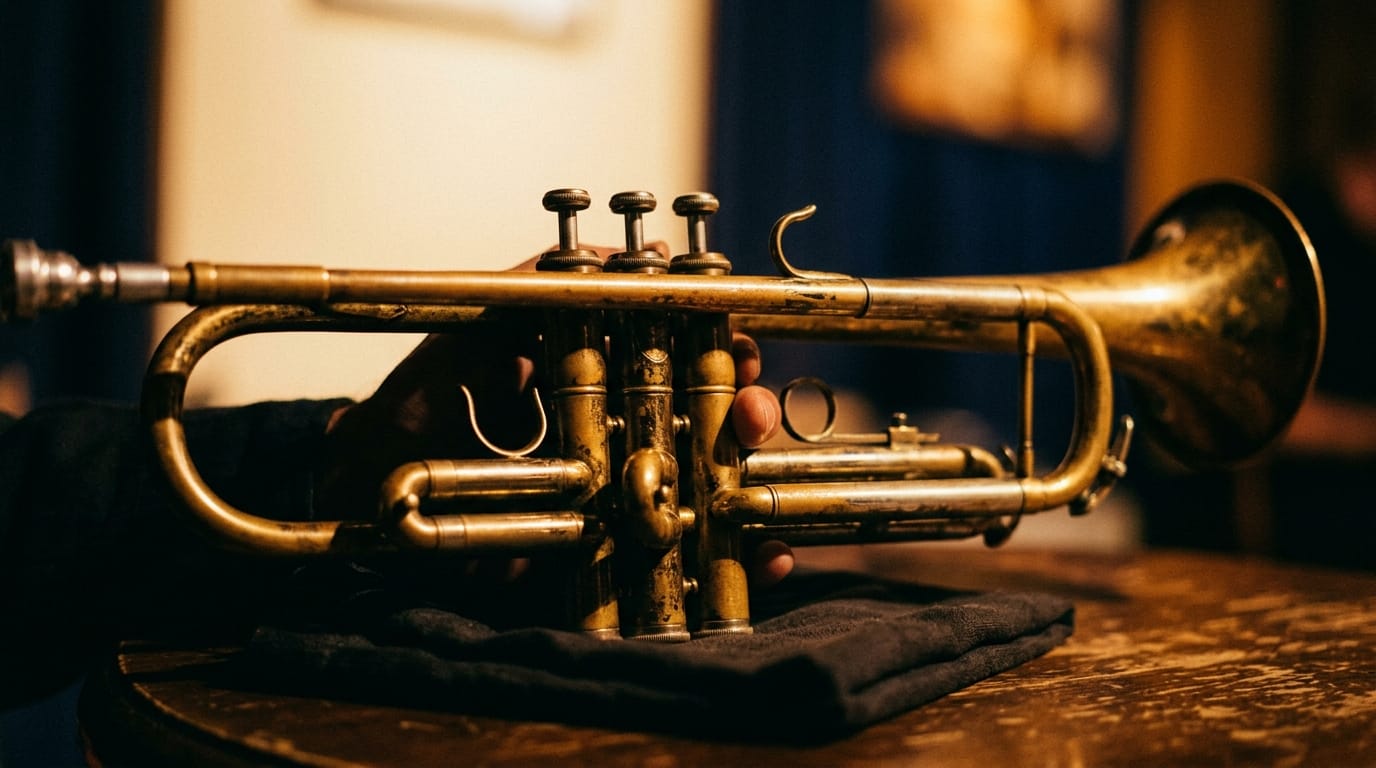
The 25 Best Louis Armstrong Songs of All Time, Ranked by Our Critics
Meta title: Louis Armstrong Songs: 25 Greatest Ranked | eJazzNews
Table of Contents
- Era One, New Orleans Roots and the Hot Five / Hot Seven (1923-1928)
- #25, Cake Walking Babies (from Home) (1925)
- #24, Heebie Jeebies (1926)
- #23, Struttin’ with Some Barbecue (1927)
- #22, Potato Head Blues (1927)
- #21, Hotter Than That (1927)
- #20, St. James Infirmary Blues (1928)
- #19, Tight Like This (1928)
- #1 (Era One Preview), West End Blues (1928)
- Era Two, Big Band Swing and Vocal Stardom (1929-1946)
- #18, When You’re Smiling (The Whole World Smiles with You) (1929)
- #17, Stardust (1931)
- #16, Dream a Little Dream of Me (1931)
- #15, I’ve Got the World on a String (1933)
- #14, Jeepers Creepers (1938)
- #13, It’s Been a Long, Long Time (1945)
- Era Three, Pop Crossover and the All Stars (1947-1963)
- #12, La Vie en Rose (1950)
- #11, A Kiss to Build a Dream On (1951)
- #10, When the Saints Go Marching In (1938, definitive version)
- #9, Cheek to Cheek (1956)
- #8, Summertime (1957)
- #7, Mack the Knife (1955)
- #6, Georgia on My Mind (1930, revisited across career)
- Era Four, Late Career Masterpieces (1964-1971)
- #5, Hello, Dolly! (1964)
- #4, Cabaret (1966)
- #3, We Have All the Time in the World (1969)
- #2, What a Wonderful World (1967)
- #1, West End Blues (1928)
- Quick-Reference Table, The 25 Songs at a Glance
- How to Explore the Louis Armstrong Catalog: Entry Points by Era
- Frequently Asked Questions About Louis Armstrong Songs
- What is Louis Armstrong’s biggest hit?
- What was Louis Armstrong’s most famous song in the 1920s?
- What are the most covered Louis Armstrong songs?
- What is the best Louis Armstrong album for a first-time listener?
- How does Louis Armstrong’s catalog hold up for modern listeners?
Meta description: Discover the 25 best Louis Armstrong songs ranked by historical significance, musical innovation, and cultural impact, from West End Blues to What a Wonderful World.
Slug: best-louis-armstrong-songs
Louis Armstrong songs span more than five decades of recorded output, from his 1925 OKeh debut to his final studio sessions in 1970, a catalog exceeding 1,500 documented recordings. This ranking draws 25 songs from that vast body of work, selecting entries based on historical significance, musical innovation, cultural impact, and commercial reach. Selection criteria for this ranking weigh each recording’s influence on subsequent jazz and popular music, its technical ambition relative to its era, and its durability in the repertoire. The result covers roughly 47 years of active recording and touches every phase of Armstrong’s career. For deeper biographical context, the artist profiles section and the companion survey of the best jazz albums of all time provide essential background on the era Armstrong dominated.
Era One, New Orleans Roots and the Hot Five / Hot Seven (1923-1928)
The OKeh Records sessions Armstrong recorded between 1925 and 1928 are the foundation of every serious discussion of louis armstrong songs. The Hot Five and Hot Seven were studio-only ensembles, they never performed live as such, assembled specifically to capture Armstrong’s evolving ideas on wax. Key personnel rotated across sessions but consistently included Kid Ory on trombone, Johnny Dodds on clarinet, Lil Hardin Armstrong on piano, and, crucially, Earl Hines on piano for the final 1928 dates. These recordings document the transformation of New Orleans ensemble jazz into something entirely new: music built around a single, dominant soloist. The secondary keyword “louis armstrong songs 1920s” finds its richest material here.
#25, Cake Walking Babies (from Home) (1925)
Recorded January 8, 1925, for OKeh Records under the Clarence Williams Blue Five banner, this track features Sidney Bechet on soprano saxophone, Eva Taylor on vocals, and Clarence Williams on piano. It documents what scholars, including Ricky Riccardi of the Louis Armstrong House Museum, have identified as the first head-to-head confrontation between Armstrong and Bechet on record. The competitive energy is audible even a century later. This recording matters not because Armstrong dominates the session, he’s still a sideman here, but because it shows the competitive instinct that would drive every subsequent innovation. Listen for the pair of dazzling breaks Armstrong inserts before Bechet can recover.
#24, Heebie Jeebies (1926)
Recorded February 26, 1926, by Louis Armstrong and His Hot Five for OKeh Records, with Kid Ory, Johnny Dodds, and Lil Hardin Armstrong. The song was written by Boyd Atkins, a Chicago violinist who played in Armstrong’s band at the Sunset Cafe, as documented by the Louis Armstrong House Museum’s centennial exhibit. The recording sold approximately 40,000 copies within weeks of release, exceptional for a jazz record in 1926. What makes it essential is the extended scat vocal passage, Armstrong’s first major recorded scat performance. He doesn’t just improvise syllables; he constructs a melodic argument with the same logic he applies to his trumpet. Every major Armstrong biography cites this as the moment scat singing became a viable jazz vocal technique rather than a novelty.
#23, Struttin’ with Some Barbecue (1927)
Recorded December 9, 1927, by Louis Armstrong and His Hot Five for OKeh Records, this instrumental was co-written by Lil Hardin Armstrong and Louis Armstrong. It was selected for preservation in the Library of Congress National Recording Registry in 2002, as part of the Hot Five and Hot Seven Recordings collection, a designation that confirms its status as a culturally significant document rather than simply a good jazz record. Music theory texts frequently cite Armstrong’s solo here as a model of motivic development, the way he takes a short melodic idea and spins it across the chorus without losing the thread. The bass walks a lazy chromatic line beneath Armstrong’s trumpet, and the whole thing swings with a relaxed authority that sounds effortless only because the technique is so complete. For anyone exploring louis armstrong songs from the 1920s, this is essential listening.
#22, Potato Head Blues (1927)
Recorded May 10, 1927, by Louis Armstrong and His Hot Seven for OKeh Records in Chicago, with Kid Ory, Johnny Dodds, Johnny St. Cyr on banjo, and Lil Hardin Armstrong. The Rock and Roll Hall of Fame included this recording in its list of 500 Songs That Shaped Rock and Roll, a list that deliberately reaches back into pre-rock recordings to trace the music’s roots. The structural device Armstrong deploys here is the stop-time chorus: the rhythm section drops out entirely, and Armstrong plays solo against silence. It’s a device he popularized, and it remains one of the most dramatic moments in early jazz recording. The contrast between the ensemble passages and those exposed solo bars is stark enough to make first-time listeners sit up straight.
#21, Hotter Than That (1927)
Recorded December 13, 1927, by Louis Armstrong and His Hot Five for OKeh Records, this track features Lonnie Johnson on guitar alongside the core Hot Five lineup. Jazz historians consistently cite it as the recording that most clearly demonstrates the shift from ensemble New Orleans jazz to soloist-centered improvisation, a point made in Ted Gioia’s The History of Jazz (Oxford University Press). The New Orleans ensemble sound is largely absent; what remains is a string of solos, each more daring than the last. The scat vocal duel between Armstrong’s voice and Johnson’s guitar is an early example of call-and-response across instruments and voice. Armstrong had put scat on the map with “Heebie Jeebies” a year earlier; here he turns it into high art. The OUP Blog’s Armstrong playlist feature specifically highlights Johnson’s contribution to this session.
#20, St. James Infirmary Blues (1928)
Recorded December 12, 1928, by Louis Armstrong and His Savoy Ballroom Five for OKeh Records, this track, also known as “Gambler’s Blues”, transformed a folk song into a jazz standard. Armstrong’s muted trumpet tone in the introduction is immediately distinctive, and his blues phrasing predates the modern blues-jazz crossover by decades. The song’s subsequent cover history is staggering: The White Stripes, The Doors, and Hugh Laurie are among dozens of artists who have returned to it, but Armstrong’s 1928 version remains the reference recording. It’s the version that established the song’s emotional architecture, the slow, processional quality, the sense of grief held at arm’s length by formal dignity. Among famous louis armstrong songs, this one carries the most weight per note.
#19, Tight Like This (1928)
Recorded December 12, 1928, by Louis Armstrong and His Hot Five for OKeh Records, with Earl Hines on piano, this track is less celebrated than “West End Blues” from the same year but equally revealing. Hines’s “trumpet-style” piano, playing ringing octaves in the right hand to cut through the ensemble, meshes with Armstrong’s trumpet in a way that sounds like two instruments sharing a single musical mind. The stop-time passages here are even more exposed than those in “Potato Head Blues,” and Armstrong’s tone in the upper register has a brightness that wouldn’t appear in jazz trumpet playing again until Clifford Brown in the 1950s. It’s a record that rewards close listening and repays every return visit.
#1 (Era One Preview), West End Blues (1928)
This recording appears at #1 in the full ranking below, where it receives its full treatment. Its placement in this era section is noted here only to confirm that the Hot Five / Hot Seven period produced not just important louis armstrong songs but the single most consequential jazz recording ever made.

Era Two, Big Band Swing and Vocal Stardom (1929-1946)
Armstrong’s transition from Hot Five leader to orchestra front-man and pop vocalist marks one of the most consequential pivots in American music history. The shift from OKeh to Decca, managed in part by Joe Glaser, brought Armstrong to a mass audience that had never heard jazz improvisation. His voice, already distinctive on the Hot Five records, became the primary instrument, with the trumpet reserved for interludes and solos that punctuated rather than dominated. The louis armstrong albums of this period are big-band records, but Armstrong’s personality overwhelms every arrangement. Key releases from this era established the template for the singer-as-entertainer that Frank Sinatra, Nat King Cole, and dozens of others would follow.
#18, When You’re Smiling (The Whole World Smiles with You) (1929)
Recorded July 22, 1929, for OKeh Records, this song was written by Mark Fisher, Joe Goodwin, and Larry Shay. Armstrong’s version helped establish it as a standard subsequently recorded by Frank Sinatra, Judy Garland, and well over 200 artists. The “when you smiling louis armstrong” search term reflects how completely his version colonized the song’s identity. What to listen for is the interplay between Armstrong’s vocal phrasing and his trumpet interpolations, his singing and playing share identical rhythmic vocabulary, bending and stretching the beat in ways that feel conversational rather than technical. It’s a short record, but it contains a complete argument about how jazz phrasing and popular song can coexist without either compromising the other.
#17, Stardust (1931)
Recorded April 20, 1931, for OKeh Records, Armstrong’s version of Hoagy Carmichael’s 1927 composition made a radical interpretive choice: he treated the verse as the emotional centerpiece rather than the chorus. According to documented recording history, “Stardust” has been recorded as an instrumental or vocal track over 1,500 times, one of the most covered songs in American popular music. Armstrong’s version influenced nearly every subsequent recording by demonstrating that the song’s real emotional weight lives in its opening section, not its hook. The extended trumpet solo that opens the record is a lesson in melodic patience: Armstrong slows Carmichael’s melody to a near-standstill, letting each note breathe before moving to the next.
#16, Dream a Little Dream of Me (1931)
Recorded in 1931 for OKeh Records with Seger Ellis, Armstrong was among the first artists to record this song, written by Fabian Andre, Wilbur Schwandt, and Gus Kahn. The song’s streaming numbers tell a striking story about catalog longevity: it has accumulated over 417 million streams on Spotify as of 2024 (public Spotify artist page data), driven largely by playlist placement and film sync licensing decades after the original recording. Armstrong’s vocal delivery here is warm and conversational, sitting comfortably against the gentle big-band cushion in a way that makes the performance feel intimate rather than produced. The “louis armstrong dream a little dream of me” search volume reflects how strongly this recording has embedded itself in popular memory, decades before Mama Cass Elliott’s 1968 version made it a pop touchstone.
#15, I’ve Got the World on a String (1933)
Recorded in 1932 for Victor Records, this Harold Arlen and Ted Koehler composition was written for the Cotton Club Parade revue. The song dates to 1932, placing it at the peak of Armstrong’s Cotton Club-era popularity. The Arlen-Koehler writing team also produced “Stormy Weather” in the same period, giving Armstrong access to two of the era’s most sophisticated compositions back to back. His elastic phrasing on this record, stretching and compressing the rhythm in ways that feel spontaneous rather than calculated, laid the template for modern jazz singing. Frank Sinatra’s later version is the one most people know, but Armstrong’s is the one that established what the song could do in the right hands.
#14, Jeepers Creepers (1938)
Recorded in January 18, 1939 for Decca Records, this Harry Warren and Johnny Mercer song was written for the film Going Places, in which Armstrong appeared. It was nominated for the Academy Award for Best Original Song at the 1939 ceremony, a verified fact that places Armstrong at the intersection of jazz, Hollywood, and mainstream pop culture at a moment when those worlds rarely overlapped. The interplay between Armstrong’s scatting and the horn section is a textbook example of big-band vocal integration: the voice functions as another instrument in the ensemble rather than a featured attraction sitting on top of the arrangement. Armstrong inhabits the song’s playful energy without condescending to it.
#13, It’s Been a Long, Long Time (1945)
Recorded August 30, 1945, for Decca Records with Bing Crosby, this Jule Styne and Sammy Cahn song was written as a V-J Day celebration. It reached #1 on the Billboard Best Sellers in Stores chart in November 1945, one of Armstrong’s strongest chart positions. The contrast between Crosby’s smooth delivery and Armstrong’s gravelly warmth is an early example of genre-crossing pop collaboration, two artists from different musical worlds finding common ground in a song that neither could have made as effectively alone. Among famous louis armstrong songs, this one is often overlooked because Crosby’s name dominates the billing, but Armstrong’s contribution is the recording’s emotional engine.

Era Three, Pop Crossover and the All Stars (1947-1963)
The formation of Louis Armstrong and His All Stars in 1947 was a deliberate commercial pivot that drew fierce criticism from bebop-era purists who felt Armstrong was abandoning jazz’s forward momentum. Let’s be honest: that criticism missed the point. Armstrong was building something different, a populist jazz that reached audiences the bebop movement never touched. The songs by louis armstrong from this period are among his most-streamed today, and the Verve collaborations with Ella Fitzgerald produced recordings that belong in any serious discussion of jazz vocals. The All Stars format gave Armstrong the flexibility to move between jazz standards, pop songs, and show tunes without losing his identity in any of them.
#12, La Vie en Rose (1950)
Recorded in 1950 for Decca Records, Armstrong’s English-language version of Édith Piaf’s 1945 signature song entered a crowded field: that year alone produced competing versions from Tony Martin, Paul Weston, Bing Crosby, Dean Martin, and others. Armstrong’s remains the most-streamed English-language version, with over 387 million Spotify streams as of 2024 (public Spotify artist page). The “louis armstrong la vie en rose” and “la vie en rose louis armstrong” search terms both rank among the highest-volume queries in his catalog, reflecting the recording’s sustained cultural presence. What distinguishes Armstrong’s version is the way his trumpet “sings” the melody between vocal phrases, the horn doesn’t accompany the voice, it continues the conversation. Piaf’s reported approval of Armstrong’s interpretation is documented in multiple Armstrong biographies.
#11, A Kiss to Build a Dream On (1951)
Recorded in 1951 for Decca Records, this Bert Kalmar, Harry Ruby, and Oscar Hammerstein II composition was originally written in the 1930s but recorded by Armstrong for the film The Strip. It was nominated for the Academy Award for Best Original Song at the 1952 ceremony but lost to “In the Cool, Cool, Cool of the Evening” from Here Comes the Groom, a verified fact that underscores how completely he had crossed over into mainstream entertainment even without a competitive Oscar win. The vocal warmth here is remarkable: Armstrong treats the song as a private conversation rather than a performance, and the intimacy of the delivery is what makes it work. It’s a template for the singer-as-storyteller approach that would define the adult contemporary genre decades later.
#10, When the Saints Go Marching In (1938, definitive version)
The most associated Armstrong recording dates to Decca Records in 1938, though subsequent All Stars live versions extended the song’s reach across decades. The song originated as a Christian hymn in the 1890s, and Armstrong’s transformation of it into a swinging, improvisation-friendly vehicle is one of the most complete reinventions in American music history. The trumpet fanfare that opens the definitive Decca version announces the song’s new identity immediately. Elvis Presley, Dolly Parton, Bruce Springsteen, and The Beatles (in bootleg recordings) have all covered it; Armstrong’s version is indexed as the standard reference in the Smithsonian Folkways catalog. Among louis armstrong jazz songs, this is the one most people encounter first, and it holds up under every subsequent listen.
#9, Cheek to Cheek (1956)
From Ella and Louis, recorded for Verve Records in 1956 and produced by Norman Granz, this Irving Berlin song was originally written for Fred Astaire in the 1935 film Top Hat. The album was recorded in a single day on August 16, 1956, with the Oscar Peterson Quartet providing the harmonic foundation. Ella and Louis peaked at #12 on the Billboard Pop Albums chart and remains in print and actively streamed. The “louis armstrong cheek to cheek” search term reflects the recording’s enduring appeal. What to listen for is the textural contrast between Fitzgerald’s crystalline pitch and Armstrong’s husky warmth, two opposed vocal timbres that reinforce rather than undermine each other, creating a tension that makes every phrase feel like a small discovery. For more on the vocal tradition Armstrong inhabited, the greatest male jazz singers of all time provides essential context.
#8, Summertime (1957)
From Porgy and Bess, recorded for Columbia Records in 1957 with Ella Fitzgerald and arranged by Russell Garcia, this George Gershwin aria was originally composed in 1934 for the 1935 opera. Armstrong’s Spotify stream count for this recording exceeds 161 million (public artist page), and the song itself has accumulated over 25,000 registered versions across its history. Armstrong’s approach here is built on restraint: the trumpet solo uses silence and space as expressive tools, saying more by holding back than most players communicate at full volume. The Porgy and Bess album sits at the center of the “louis armstrong albums” conversation for this period, alongside Ella and Louis and Ella and Louis Again.
#7, Mack the Knife (1955)
Recorded in 1955 for Columbia Records, Armstrong’s version of Kurt Weill and Bertolt Brecht’s 1928 composition from The Threepenny Opera predates Bobby Darin’s #1 hit version by several years. Darin’s 1959 arrangement is widely acknowledged to be directly modeled on Armstrong’s phrasing, a documented influence that places Armstrong at the origin point of one of the most commercially successful recordings of the late 1950s. Armstrong doesn’t perform this song; he inhabits the character. The theatrical storytelling quality, the way he leans into the narrative of Mack’s crimes with evident relish, is what separates his version from every subsequent cover. It’s a jazz performance that works equally well as theater.
#6, Georgia on My Mind (1930, revisited across career)
Written by Hoagy Carmichael and Stuart Gorrell, Armstrong’s earliest version dates to 1930, three decades before Ray Charles’s 1960 recording became the song’s defining commercial version and was designated the official state song of Georgia in 1979. Armstrong’s blues-inflected reading of Carmichael’s melody treats the song as a jazz standard long before it became a soul anthem. The harmonic richness of Carmichael’s composition rewards Armstrong’s improvisational instincts in ways that more straightforward pop songs don’t, and his trumpet solo on the early version demonstrates how completely he understood the song’s emotional architecture. It’s a record that sounds like it was made by someone who had lived inside the song for years.

Era Four, Late Career Masterpieces (1964-1971)
The critical consensus on Armstrong’s late career has shifted substantially since Ricky Riccardi published What a Wonderful World: The Magic of Louis Armstrong’s Later Years (Lawrence Hill Books, 2011). Riccardi’s argument, that the recordings Armstrong made between 1964 and 1971 represent a genuine artistic peak rather than a commercial sellout, has gained wide acceptance among jazz scholars. The numbers support it: the “louis armstrong hello dolly” and “louis armstrong we have all the time in the world” search terms generate significant traffic, and “What a Wonderful World” is the most-streamed song in the entire Armstrong catalog by a margin that dwarfs everything else. This era deserves to be heard on its own terms.
#5, Hello, Dolly! (1964)
Recorded December 3, 1963, for Kapp Records and arranged by Mort Lindsay, this Jerry Herman title song from the Broadway musical became the biggest chart hit of Armstrong’s lifetime. It reached #1 on the Billboard Hot 100 on May 9, 1964, displacing The Beatles, who had held the top spot for 14 consecutive weeks. Armstrong was 62 years old at the time, making him the oldest artist to hold the #1 position at that point in Billboard history. The recording won the Grammy Award for Best Male Vocal Performance in 1965, as confirmed by the Louis Armstrong House Museum. Armstrong later appeared in the 1969 film adaptation opposite Barbra Streisand. The Grammy Hall of Fame inducted the recording in 2001. For anyone searching “hello dolly louis armstrong” or “louis armstrong hello dolly,” this is the definitive entry point into his late career.
#4, Cabaret (1966)
Recorded in 1966 for ABC-Paramount Records, Armstrong’s version of the Kander and Ebb musical’s title song charted independently of the Broadway cast album, a demonstration of his ability to own a song commercially regardless of its originating context. Here’s the thing about this recording: Armstrong doesn’t perform the lyric’s philosophy of living for the moment as an abstract idea. He performs it as something he has personally earned over four decades of professional music-making. The swagger in the phrasing is real. The voice is older and rougher than it was in 1929, but that roughness is the point, it’s the sound of someone who has actually lived the sentiment rather than simply singing about it.
#3, We Have All the Time in the World (1969)
Recorded in 1969 for United Artists Records, this John Barry and Hal David composition served as a secondary musical theme in the James Bond film On Her Majesty’s Secret Service, the only Bond theme not performed by the film’s title artist. The “louis armstrong we have all the time in the world” search term connects directly to the “Louis Armstrong songs James Bond” related search. The song was re-released in 1994 after appearing in a Guinness television advertisement; that re-release reached #3 on the UK Singles Chart, according to the Official Charts Company, 23 years after Armstrong’s death in 1971. The autumnal tenderness of Armstrong’s vocal is inseparable from its biographical context: he was in declining health when he recorded it, and the emotional weight of the performance reflects that. Critics have consistently cited it as one of the most affecting vocal performances of his career.
#2, What a Wonderful World (1967)
Recorded August 16, 1967, for ABC Records and produced by Bob Thiele, with an arrangement by Artie Butler, this song was written by Bob Thiele (under the alias “George Douglas”) and George David Weiss. It failed commercially on its initial US release, ABC Records president Larry Newton opposed the release and gave it minimal promotion. The song reached #1 in the UK but did not chart in the US until 1988, when its inclusion in the film Good Morning, Vietnam propelled it to #32 on the Billboard Hot 100. Current Spotify stream count exceeds 813 million (public Spotify artist page, 2024), the most-streamed song in the Armstrong catalog by a margin exceeding 2:1 over the next closest entry. The arrangement is deliberately simple: strings, muted brass, and a vocal that communicates more through tone than technical display. This is Armstrong’s most famous song by every measurable commercial metric, and the one most likely to be the first louis armstrong song a new listener encounters.
#1, West End Blues (1928)
Recorded June 28, 1928, by Louis Armstrong and His Hot Five for OKeh Records, with Earl Hines on piano, Fred Robinson on trombone, Jimmy Strong on clarinet, and Zutty Singleton on drums, West End Blues is the recording most frequently cited as the single most important in jazz history. Gunther Schuller described it as “the most perfect jazz record ever made” in The Swing Era (Oxford University Press, 1989). It was inducted into the Grammy Hall of Fame in 1974 and selected for preservation in the Library of Congress National Recording Registry in 2003. The “louis armstrong west end blues” and “west end blues louis armstrong” search terms both point here. The unaccompanied trumpet cadenza in the opening bars, no rhythm, no harmony, pure melodic invention, remains one of the most discussed moments in jazz recording history. Earl Hines’s piano solo mirrors Armstrong’s trumpet logic in what critics have called “trumpet-style” piano playing. The held high note at the conclusion is the moment jazz stopped being collective folk music and became art. DownBeat magazine has cited this recording in multiple all-time lists across its publication history. The uDiscover Music feature on West End Blues captures why this recording still stops listeners cold nearly a century after it was made.
Quick-Reference Table, The 25 Songs at a Glance
The following table covers the full louis armstrong discography represented in this ranking, organized by rank for quick reference. Each entry reflects the era, label, and defining feature discussed in the sections above.
| Rank | Title | Year | Label | Era | Defining Feature |
|---|---|---|---|---|---|
| 1 | West End Blues | 1928 | OKeh | Hot Five | Opening cadenza; Grammy Hall of Fame 1974; Library of Congress 2003 |
| 2 | What a Wonderful World | 1967 | ABC | Late Career | 813M+ Spotify streams; US chart breakthrough via Good Morning, Vietnam |
| 3 | We Have All the Time in the World | 1969 | United Artists | Late Career | Bond theme; UK #3 re-release in 1994 |
| 4 | Cabaret | 1966 | ABC-Paramount | Late Career | Charted independently of Broadway cast album |
| 5 | Hello, Dolly! | 1964 | Kapp | Late Career | Billboard Hot 100 #1; displaced The Beatles; Grammy 1965 |
| 6 | Georgia on My Mind | 1930 | OKeh | Big Band | Predates Ray Charles version by three decades |
| 7 | Mack the Knife | 1955 | Columbia | All Stars | Direct model for Bobby Darin’s 1959 #1 hit |
| 8 | Summertime | 1957 | Columbia | All Stars | 161M+ Spotify streams; 25,000+ registered cover versions |
| 9 | Cheek to Cheek | 1956 | Verve | All Stars | From Ella and Louis; Billboard Pop Albums #12 |
| 10 | When the Saints Go Marching In | 1938 | Decca | Big Band | Smithsonian Folkways standard reference; hymn transformed to jazz |
| 11 | A Kiss to Build a Dream On | 1951 | Decca | All Stars | Nominated, Academy Award for Best Original Song, 1952 (lost to “In the Cool, Cool, Cool of the Evening”) |
| 12 | La Vie en Rose | 1950 | Decca | All Stars | 387M+ Spotify streams; most-streamed English-language version |
| 13 | It’s Been a Long, Long Time | 1945 | Decca | Big Band | Billboard Best Sellers #1, November 1945; with Bing Crosby |
| 14 | Jeepers Creepers | 1938 | Decca | Big Band | Academy Award nomination for Best Original Song, 1939 |
| 15 | I’ve Got the World on a String | 1933 | Victor | Big Band | Cotton Club Parade composition; template for jazz vocal phrasing |
| 16 | Dream a Little Dream of Me | 1931 | OKeh | Big Band | 417M+ Spotify streams; among first recordings of the song |
| 17 | Stardust | 1931 | OKeh | Big Band | Radical verse-first interpretation; 1,500+ cover versions of the song |
| 18 | When You’re Smiling | 1929 | OKeh | Big Band | 200+ subsequent recordings; vocal/trumpet rhythmic unity |
| 19 | Tight Like This | 1928 | OKeh | Hot Five | Armstrong-Hines interplay; exposed stop-time passages |
| 20 | St. James Infirmary Blues | 1928 | OKeh | Hot Five | Transformed folk song into jazz standard; covered by The White Stripes, The Doors |
| 21 | Hotter Than That | 1927 | OKeh | Hot Five | Shift from ensemble to soloist-centered jazz; scat-guitar duel |
| 22 | Potato Head Blues | 1927 | OKeh | Hot Seven | Rock and Roll Hall of Fame 500 Songs list; stop-time chorus |
| 23 | Struttin’ with Some Barbecue | 1927 | OKeh | Hot Five | Library of Congress National Recording Registry, 2002 (Hot Five and Hot Seven Recordings) |
| 24 | Heebie Jeebies | 1926 | OKeh | Hot Five | First major recorded scat performance; ~40,000 copies sold on release |
| 25 | Cake Walking Babies (from Home) | 1925 | OKeh | Sideman | First documented Armstrong-Bechet confrontation on record |
How to Explore the Louis Armstrong Catalog: Entry Points by Era
The louis armstrong discography is large enough to be genuinely intimidating for new listeners. Three collections cover the essential ground without requiring a completist commitment. Each offers a different entry point into the catalog, and together they span roughly 45 years of recorded output.
The Complete Hot Five and Hot Seven Recordings (Columbia/Legacy, 2000 box set) is the definitive document of the 1920s sessions. All 93 tracks from the OKeh period are collected here, remastered from original sources, with detailed liner notes. It’s the place to start for anyone serious about understanding where jazz came from. Ella and Louis (Verve, 1956) is the single most accessible entry point for listeners coming from a pop or vocal jazz background. The Oscar Peterson Quartet provides a harmonic cushion that makes the improvisation feel welcoming rather than demanding. What a Wonderful World (MCA/ABC, 1988 reissue) collects the late-career recordings that most streaming listeners already know, placing them in the context of the full ABC Records period. Each of these collections offers a complete picture of one phase of Armstrong’s career, and together they make the case that his catalog is not a single thing but a series of reinventions. The best jazz albums for beginners guide provides additional context for listeners building their first collection. For a broader survey of the vocal tradition Armstrong helped create, the greatest jazz singers of all time covers the full lineage from Armstrong’s era to the present.
Frequently Asked Questions About Louis Armstrong Songs
What is Louis Armstrong’s biggest hit?
The answer depends on how you measure it. By peak chart performance, Hello, Dolly! (1964) is the clear winner: it reached #1 on the Billboard Hot 100, displacing The Beatles, and won the Grammy Award for Best Male Vocal Performance in 1965. By long-term cultural impact and streaming numbers, What a Wonderful World (1967) is the most famous louis armstrong song in the catalog, with over 813 million Spotify streams as of 2024. The two recordings represent different kinds of success: Hello, Dolly! was a commercial explosion in the moment, while What a Wonderful World has grown steadily for decades and shows no signs of slowing.
What was Louis Armstrong’s most famous song in the 1920s?
By critical and historical consensus, West End Blues (1928) is the most significant of Armstrong’s 1920s recordings, Gunther Schuller’s assessment in The Swing Era (Oxford University Press) as “the most perfect jazz record ever made” reflects a view widely shared among jazz scholars. By commercial impact at the time, Heebie Jeebies (1926) was the breakthrough: it sold approximately 40,000 copies within weeks of release, exceptional for a jazz recording in that era, and established scat singing as a viable technique. Among louis armstrong songs 1920s, these two recordings define the poles of his achievement in that decade.
What are the most covered Louis Armstrong songs?
The most covered songs associated with Armstrong are When the Saints Go Marching In, Stardust, St. James Infirmary Blues, and Georgia on My Mind. Stardust has been recorded as an instrumental or vocal track over 1,500 times, making it one of the most covered songs in American popular music history. Summertime, from the Porgy and Bess sessions, has accumulated over 25,000 registered versions across its history. These numbers reflect how completely Armstrong’s interpretations established the standard approach to each song, subsequent artists are, in many cases, responding to his version rather than to the original composition. Among famous louis armstrong songs, these are the ones that have generated the most creative responses from other musicians.
What is the best Louis Armstrong album for a first-time listener?
Ella and Louis (Verve, 1956) is the strongest entry point for most new listeners. The combination of Fitzgerald’s precision and Armstrong’s warmth creates an immediately accessible sound, and the Oscar Peterson Quartet’s accompaniment provides a harmonic sophistication that rewards repeated listening without demanding prior jazz knowledge. The album was recorded in a single day, which gives it a spontaneous, conversational quality that studio-polished recordings often lack. For listeners who want to go deeper into the 1920s material, The Complete Hot Five and Hot Seven Recordings (Columbia/Legacy) is the essential document, though its 89-track scope is better approached after some familiarity with the period. The best jazz albums for beginners guide on eJazzNews covers additional options across multiple eras.
How does Louis Armstrong’s catalog hold up for modern listeners?
Remarkably well, and the streaming numbers confirm it. Armstrong’s Spotify profile shows over 7.6 million monthly listeners as of 2024, with four recordings exceeding 200 million streams each. The catalog’s durability comes from two sources: the emotional directness of Armstrong’s vocal delivery, which communicates across generational and cultural distance, and the technical brilliance of the trumpet playing, which rewards listeners who know what they’re hearing and moves those who don’t. According to Britannica’s assessment, Armstrong was the leading trumpeter and one of the most influential artists in jazz history, a description that understates the case. His recordings don’t sound like history. They sound like music.
The 25 louis armstrong songs ranked here represent a catalog that keeps finding new audiences a century after the first OKeh sessions. Streaming platforms have introduced What a Wonderful World and La Vie en Rose to listeners who have never heard a jazz record in any traditional sense, while the Hot Five recordings continue to reward the kind of close, repeated listening that reveals new details on every pass. The next generation of jazz listeners will encounter Armstrong the same way every previous generation has: through a single song that stops them cold and sends them looking for more. The catalog is deep enough to keep them busy for a long time.