Montreux Jazz Festival: History, Dates, Venues, Tickets and Free Stages
The Montreux Jazz Festival runs for 16 days every July on the Lake Geneva waterfront in Montreux, Switzerland, and its 61st edition is scheduled for 2 to 17 July 2027. The two paid venues are inside the renovated Montreux Music & Convention Centre (2m2c): the Auditorium Stravinski, with a capacity of 4,000, and the standing-only Montreux Jazz Lab, which holds 2,000. Most of the festival’s 700-plus concerts and activities take place on free stages along the quays, and the paid programme is announced, with tickets going on sale, in April.
Table of Contents
- When Is the Montreux Jazz Festival?
- Where the Festival Takes Place
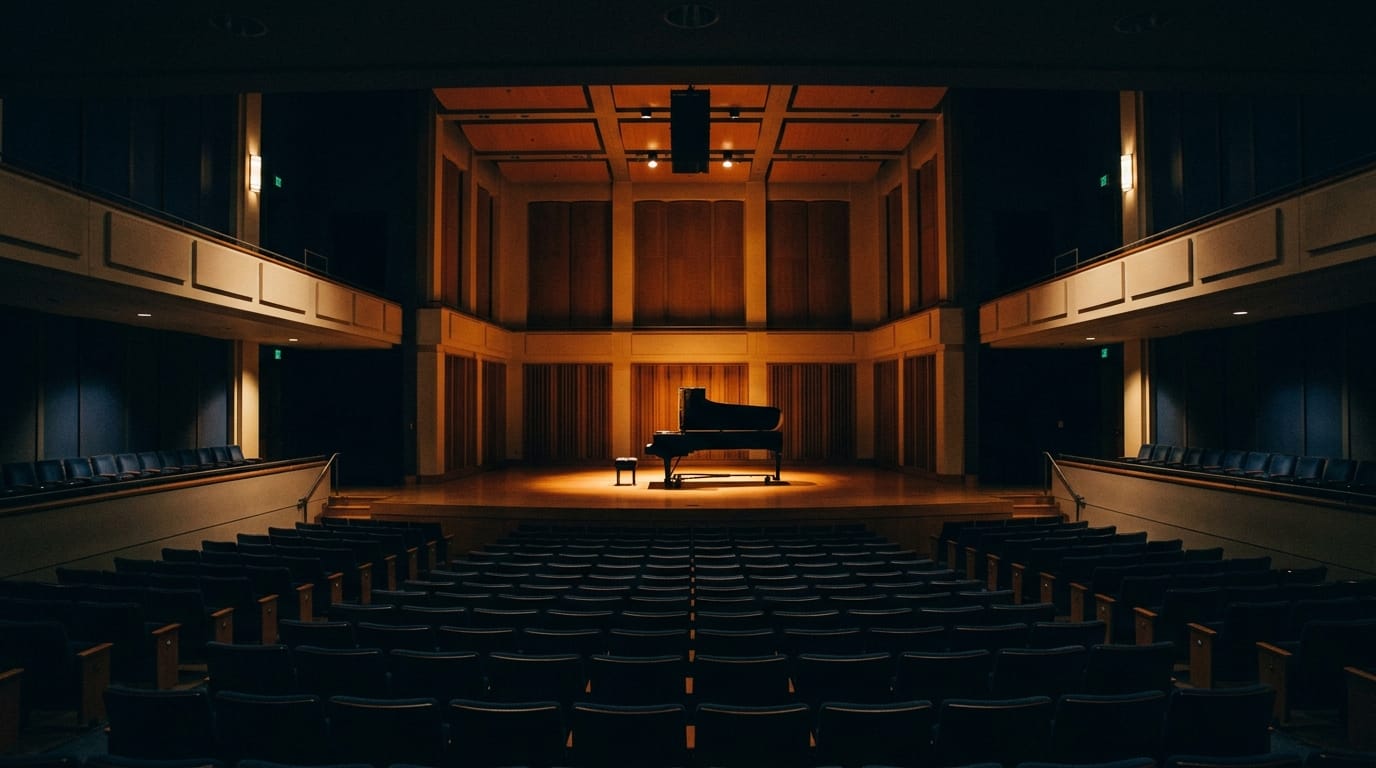
- Auditorium Stravinski and Montreux Jazz Lab: Capacity and Seating
- The Free Stages
- Tickets, Passes and Prices
- The 60th Edition in 2026
- A Short History of the Montreux Jazz Festival
- Getting to Montreux
- Where to Stay
- Practical Tips and What Else to See
- Frequently Asked Questions
- When is the Montreux Jazz Festival 2027?
- What is the capacity of the Auditorium Stravinski and the Montreux Jazz Lab?
- Is the Montreux Jazz Festival free?
- Where is the Montreux Jazz Festival held?
- Is the Montreux Jazz Festival still a jazz festival?
| Montreux at a glance | |
|---|---|
| Next edition | 2-17 July 2027 (61st edition) |
| Programme and tickets | Announced in April 2027 |
| Auditorium Stravinski | 4,000 capacity, seated and/or standing; doors 7:30 pm, concerts 8:30 pm |
| Montreux Jazz Lab | 2,000 capacity, standing; doors 7 pm, concerts 8 pm |
| Free stages | 13 of the 15 stages in 2026 |
| Attendance | About 250,000 a year |
| Founded | 1967, by Claude Nobs; directed by Mathieu Jaton since 2013 |
When Is the Montreux Jazz Festival?
The festival takes up 16 days in the first half of July. The 60th edition ran from 3 to 18 July 2026, and the festival has announced 2 to 17 July 2027 for the 61st. The 2027 programme will be unveiled in April 2027 and tickets go on sale around the same time, so the dates are fixed long before anyone knows who is playing.
Outside July the festival runs smaller series, such as the MJF Spotlight Sessions, which bring emerging artists to the theatre of the Villars Palace in Villars-sur-Ollon, and the MJF Residency, a run of free concerts, workshops and jam sessions at the Petit Palais of the Fairmont Le Montreux Palace. Montreux-branded editions also take place abroad, including Miami since 2024, Franschhoek in South Africa, Suzhou in China and Japan.
Where the Festival Takes Place
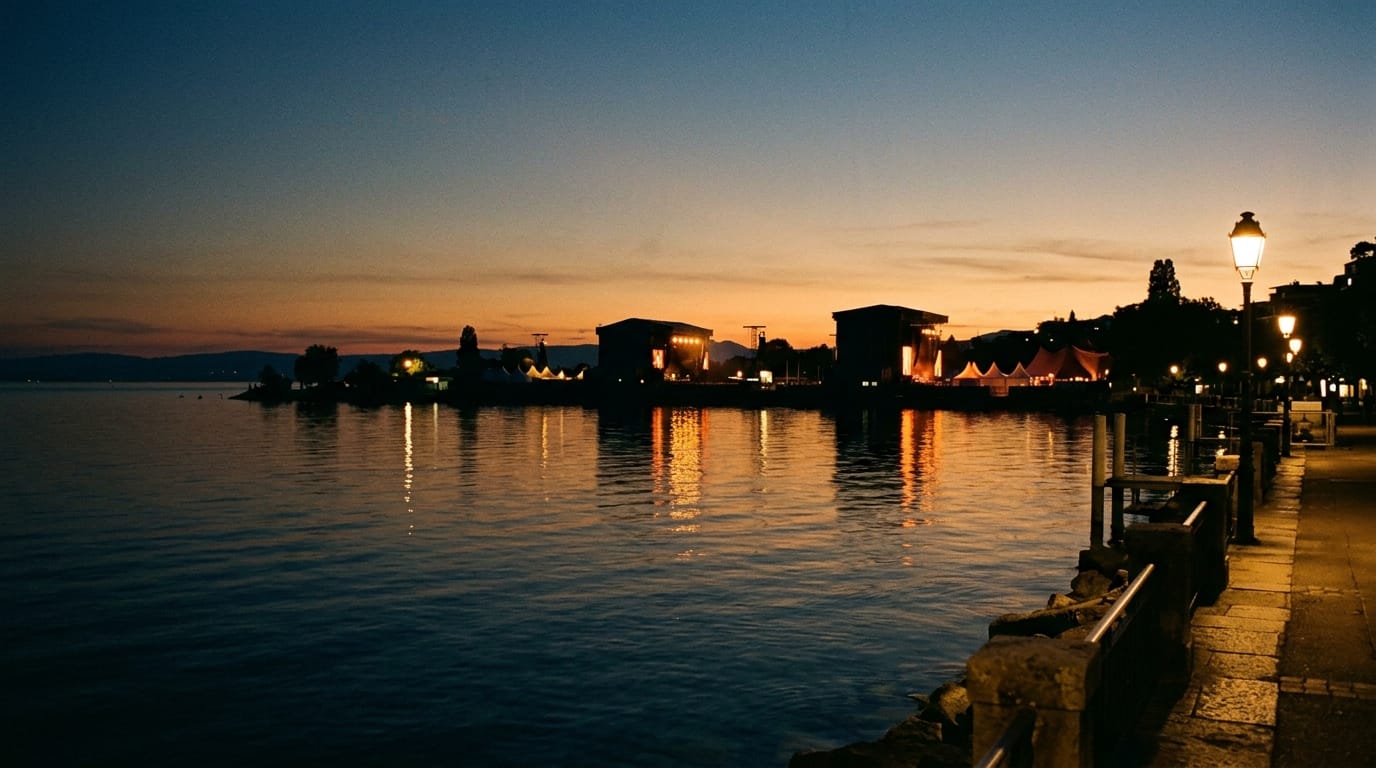
Since 1993 the festival’s base has been the convention centre on the Montreux lakefront, now the Montreux Music & Convention Centre, or 2m2c. The building closed for renovation in July 2023, so the 2024 and 2025 editions ran without the Auditorium Stravinski and the Lab; the 60th edition in 2026 was the first event held in the renovated centre. The free stages and more than 55 food stalls and bars line the quays around it.
Auditorium Stravinski and Montreux Jazz Lab: Capacity and Seating
The Auditorium Stravinski is the main hall, with a capacity of 4,000 in a seated, standing or mixed layout. Doors open at 7:30 pm and concerts start at 8:30 pm. James Brown, B.B. King, Keith Jarrett, David Bowie, Etta James, Leonard Cohen and Prince are among the artists who have played it. Tickets come in several categories: A is seated, C is general admission standing, L and M are standing places on raised podiums (named Lake and Mountain) with a clear view of the stage, and the S seated package puts you in the front rows with a bar card for the whole concert.
The Montreux Jazz Lab, the former Miles Davis Hall, holds 2,000 people, all standing. Doors open at 7 pm and concerts start at 8 pm. The festival books it for discovery and newer artists, and its ticket categories are C for standing and P and W for the south and west podiums. In 2026 most nights in both halls were double bills.
These are the only two venues that need a ticket. At the festival you exchange your ticket for a wristband, after which you can leave and come back during the evening. Lose the wristband and you cannot get back in, even with the ticket.
The Free Stages
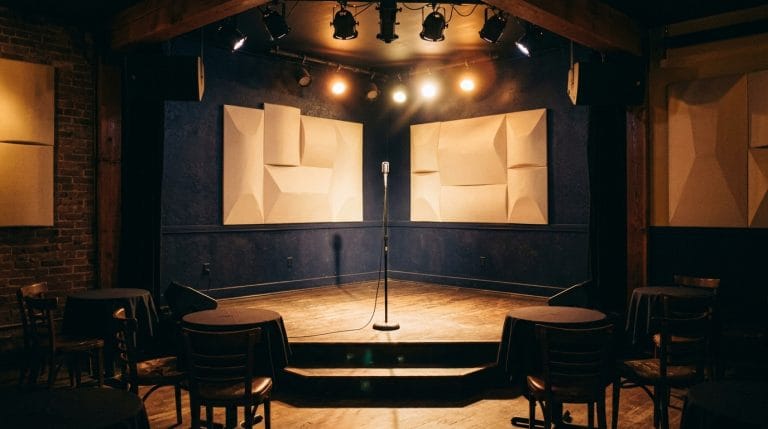
The free programme is the larger part of the festival: in 2026, 13 of the 15 stages were free, and roughly 600 of more than 700 concerts and activities cost nothing, running from midday until the early morning. For jazz listeners the key room is The Memphis, an American-style club with round tables and a bar devoted to jazz. Evenings start with workshops and screenings, continue with concerts, and end with the festival’s jam sessions, which run into the small hours; the club opens from 5 pm to 5 am and admits only over-18s after 10 pm. It is also the base for the Montreux Jazz Artists Foundation’s programmes for emerging musicians.
The other free stages cover everything else. The open-air Spotlight Stage (capacity 550) presents emerging pop and urban artists under the MJF Spotlight label the festival created in 2021. The Super Bock Stage in the Parc Suisse holds 1,500 and mixes Swiss and international acts with a beer garden. The 2026 list also included the Nestlé Sunset Stage, Duplex, La Coupole, Le Cinéma, La Bibliothèque, El Mundo, Lilo and the Paloma Beach Club, plus pool parties, for which the festival sells a separate pass. ID is required for the night venues after 10 pm. The official stages page lists hours and age limits for each.
Tickets, Passes and Prices
Tickets go on sale with the programme in April, on the festival website, through the Ticketcorner call centre and its outlets such as Fnac and Coop City, and at the festival shop until the festival begins. During the festival the box office in the main lobby of the 2m2c opens at 4 pm every day. When a concert is sold out, a limited number of tickets is released on the day, one per person, with the wristband fitted on the spot.
Tickets cannot be returned, exchanged or refunded, but those bought on the festival website can be resold at face value, minus fees, through your customer account up to 24 hours before the concert. Children under 6 are not admitted to the concert areas, everyone from 6 up needs a full-price ticket, and under-16s must come with an adult. Montreux residents get 10 percent off; there are no student discounts. Visitors with disabilities can get a free seat for a companion, ordered in advance.
Single-ticket prices vary by concert and are published with the programme. As a guide to the upper end, the 2026 All Music Pass, covering every paid concert in the standing areas, cost CHF 1,590, the seated package started at CHF 450, and hospitality packages ran from CHF 500 for standing to CHF 1,600 and up for VIP. The ticketing information page carries the current terms.
The 60th Edition in 2026
The anniversary edition ran from 3 to 18 July 2026 in the reopened centre. Its poster was made by Kévin Germanier, the Valais-born, Paris-based designer, who became the first fashion designer to create an official festival poster. He hand-embroidered more than 60,000 sequins and beads from his earlier collections onto velvet, taking cues from Jean Tinguely’s 1982 poster.
RAYE opened the festival on 3 July with a show co-created with Audemars Piguet that paid tribute to Nina Simone, Prince and Ray Charles, and brought out Alicia Keys and Mark Ronson as surprise guests. The Stravinski programme included Sting, Nick Cave & The Bad Seeds, John Legend, The Isley Brothers, The Roots, Deep Purple, Moby and Vulfpeck, and closed on 18 July with Van Morrison and James Taylor. The jazz highlights were in the Lab: Billy Cobham’s Time Machine and Marcus Miller’s “We Want Miles!” on 16 July, then Charles Lloyd and Gregory Porter on 17 July. The festival reported more than 250,000 attendees, an average occupancy of 91 percent in the ticketed halls and 51 concerts streamed live (closing report).
A Short History of the Montreux Jazz Festival
Claude Nobs, then director of the Montreux tourism office, organised the first festival in 1967 with René Langel and Géo Voumard. It lasted three days at the Montreux Casino on a budget of 10,000 francs, and the headline act was Charles Lloyd, whose group included Keith Jarrett and Jack DeJohnette. In 1968 Bill Evans recorded Bill Evans at the Montreux Jazz Festival there on 15 June; the album won a Grammy and has Chillon Castle on its cover. Ella Fitzgerald first played the festival in 1969, the year Les McCann and Eddie Harris recorded Swiss Movement on its stage.
In the 1970s Nobs widened the programme to blues, soul and rock: Santana first played in 1970, and Led Zeppelin, Pink Floyd and Frank Zappa followed. In December 1971 the casino burned down during a Frank Zappa concert after someone in the audience fired a flare gun. Deep Purple, in town to record, turned the night into “Smoke on the Water,” and the “Funky Claude” in the lyric is Nobs, who helped people out of the building; the band dedicated Machine Head to him. The festival returned to the rebuilt casino in 1975. Nina Simone‘s 1976 concert and Marvin Gaye’s only Montreux show in 1980 are among the performances the festival itself singles out.
Since 1967 the festival has given artists a free hand with its poster: Jean Tinguely’s 1982 design produced the logo still used today, Keith Haring made three versions in 1983, and Haring and Andy Warhol made the 1986 poster together. Quincy Jones co-produced the festival from 1991 to 1993, and on 8 July 1991 Miles Davis played Montreux for the tenth and last time, revisiting Gil Evans’s arrangements with an orchestra conducted by Jones.
Nobs died on 10 January 2013, after a skiing accident, and Mathieu Jaton has directed the festival since. The same year its audiovisual collection was added to UNESCO’s Memory of the World Register as “The Claude Nobs Legacy”, and through a partnership with the EPFL more than 11,000 hours of live music from the archive have been digitised. Later milestones on the festival’s timeline include the 50th edition in 2016, Elton John’s 2019 concert for 15,000 people at the Saussaz stadium, the festival’s first stadium show, and a stage built on the lake, 25 metres from the shore, for the smaller 2021 edition.
Getting to Montreux
Come by train. Montreux station is served by the SBB trains on the Simplon line and is also the western end of the narrow-gauge GoldenPass lines to Zweisimmen, with GoldenPass Express trains on to Interlaken, and to Rochers de Naye. Direct trains from Geneva Airport take about 75 to 85 minutes, Zurich Airport is about three hours away with at least one change, and Lausanne is about 20 minutes. During the festival SBB adds regular and special trains, but concerts can end after the last connection to some regions, so check your return before the night.
In 2026 the town offered free VMCV buses on lines 201 and 204 in the evenings, running until 4 am on weekdays and 5 am at weekends, plus a free N291 night bus; the Territet-Glion funicular ran until 3 am, and a free 400-space bike park opened on Place de l’Eurovision. Parking is limited, illegal parking is forbidden, and the Grand-Rue closes to private cars in the evenings. CGN boats on the lake link Lausanne, Vevey and Montreux. There is no camping on the festival site, but there are campsites nearby and around Lausanne, about 30 minutes away.
Where to Stay
Demand for rooms during the festival is very high, and the festival strongly advises booking early through the Montreux Riviera tourism office. If Montreux is full, Vevey is five to eight minutes away by train and Lausanne about 20 minutes; check the time of the last train back before a late concert.
Switzerland is an expensive destination, so it pays to budget the trip as a whole rather than ticket by ticket. Readers travelling from the Netherlands will find general advice on keeping a short trip affordable, from when to book to which booking platforms to compare, in Infobak’s guide to a cheap weekend away (in Dutch).
Practical Tips and What Else to See
Pack light. The concert halls refuse umbrellas, bulky bags and backpacks, glass, cans, food, cameras, audio recorders and seats of any kind, and filming or recording concerts is forbidden. Noise can reach 100 decibels, so free earplugs are handed out at the entrances. The infirmary is in the 2m2c and is open from 9 am to 5 am.
Between concerts, Chillon Castle stands on the shore between Montreux and Villeneuve; the castle bills itself as Switzerland’s most visited historic monument. On the lakefront in town is the statue of Freddie Mercury by Irena Sedlecká, unveiled on 25 November 1996; Mercury recorded his last songs at Mountain Studios in Montreux. The terraced vineyards of Lavaux are minutes away. If you are also planning a spring trip, our guide to New Orleans Jazz Fest covers the two-weekend festival at the Fair Grounds.
Frequently Asked Questions
When is the Montreux Jazz Festival 2027?
The 61st Montreux Jazz Festival runs from 2 to 17 July 2027. The festival plans to unveil the programme in April 2027, and tickets go on sale around the same time.
What is the capacity of the Auditorium Stravinski and the Montreux Jazz Lab?
The Auditorium Stravinski holds 4,000 people in a seated, standing or mixed layout. The Montreux Jazz Lab, the former Miles Davis Hall, holds 2,000, all standing.
Is the Montreux Jazz Festival free?
Most of it is. Only concerts in the Auditorium Stravinski and the Montreux Jazz Lab need a ticket. In 2026, 13 of the 15 stages were free, including The Memphis jazz club, the Spotlight Stage and the Super Bock Stage.
Where is the Montreux Jazz Festival held?
In Montreux, Switzerland, on Lake Geneva. The paid concerts take place in the Montreux Music and Convention Centre (2m2c) on the lakefront, and the free stages, bars and food stalls line the quays around it.
Is the Montreux Jazz Festival still a jazz festival?
Jazz, soul and blues are its roots, but since the 1970s it has booked rock, pop, hip-hop and electronic acts as well. Jazz is concentrated in The Memphis club, with its nightly jam sessions, and on selected nights in the paid halls, such as the 2026 Lab bill of Charles Lloyd and Gregory Porter.