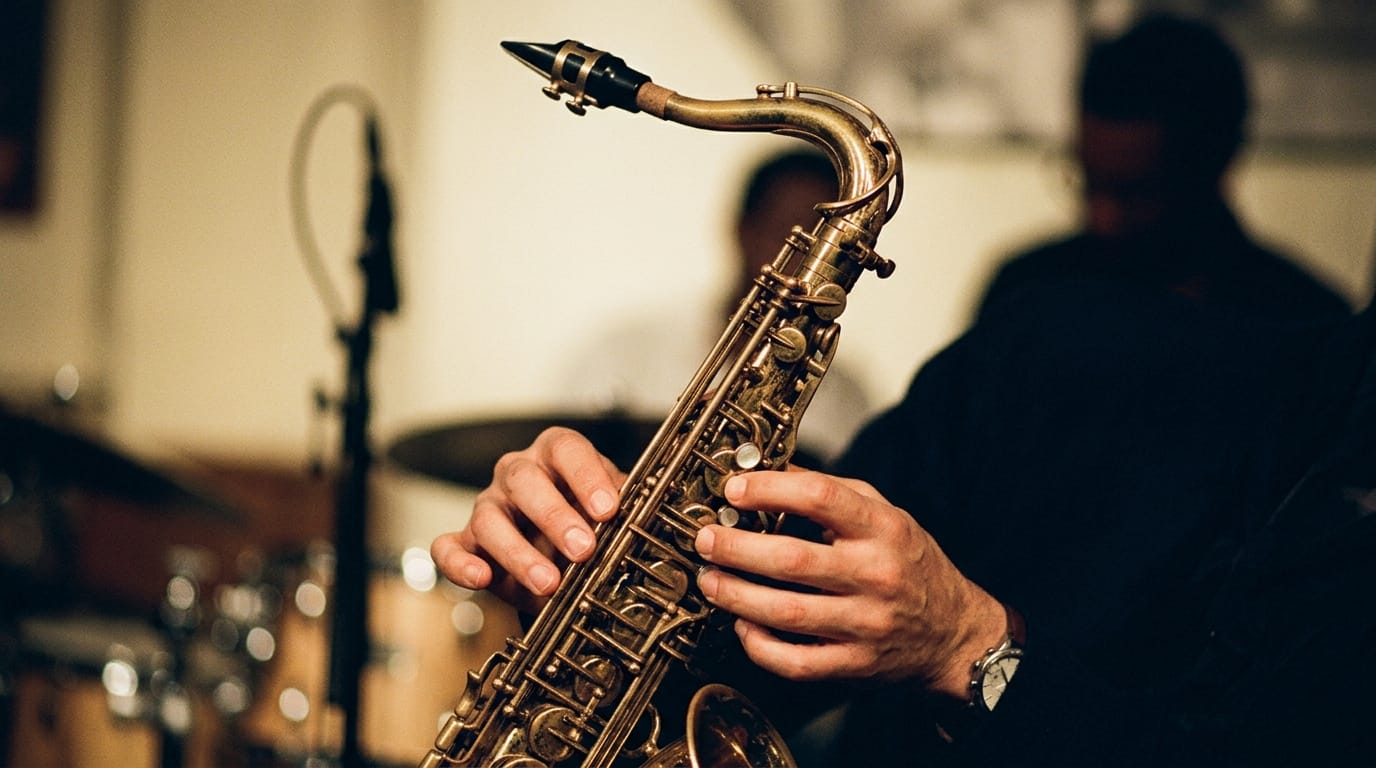
What Is Bebop Jazz? The Complete Guide to Jazz’s Most Revolutionary Style
- A precise definition of bebop jazz and why it changed everything
- How and where bebop originated, including the key role of Minton’s Playhouse
- The founding musicians who built the style from scratch
- The musical characteristics that define bebop: tempo, harmony, form, and rhythm
- How bebop differs from swing, cool jazz, and modal jazz
- Five essential bebop albums with track-by-track guidance for new listeners
Bebop jazz is a style of jazz that emerged in New York City in the early to mid-1940s, defined by fast tempos (typically 180-300+ BPM), complex chromatic harmony, and virtuosic improvisation over chord changes rather than melody. It is the single most consequential turning point in jazz history: the moment the music stopped being popular entertainment and started being an art form musicians composed and performed on their own terms.
Table of Contents
- Bebop Jazz Definition: What Makes It “Bebop”?
- The One-Sentence Definition (And Why It’s Incomplete)
- Where Did the Word “Bebop” Come From?
- The Origins of Bebop Jazz: Minton’s Playhouse and the After-Hours Laboratory
- Minton’s Playhouse: The Proving Ground
- The Players Who Gathered
- Why Did Bebop Emerge When It Did? The Historical Context
- The AFM Recording Ban (1942-1944)
- The Cabaret Tax and the Death of the Big Band Economy
- Reaction Against Swing’s Commercialization
- Bebop Jazz Characteristics: What Does It Sound Like?
- Tempo: Faster Than Anyone Had Played Before
- Harmony: Extensions, Substitutions, and Altered Chords
- Small Combo Format
- Virtuosic Improvisation Over Chord Changes
- Bebop Jazz Instruments: The Standard Palette
- The Founding Figures of Bebop Jazz
- Charlie Parker: The Alto Saxophone as a New Language
- Dizzy Gillespie: The Architect of Bebop Trumpet
- Thelonious Monk: Harmonic Iconoclast
- Bud Powell: The Definitive Bebop Piano Voice
- Kenny Clarke and Max Roach: Reinventing the Drum Kit
- Who Are the Kings of Bebop Jazz?
- Who Is the Queen of Bebop?
- Bebop Jazz Guitarists: A Special Case
- Why Guitar Was Marginalized, Then Reinvented
- The Three Architects of Bebop Guitar
- 5 Essential Bebop Jazz Albums
- #1: Charlie Parker on Dial, The Complete Dial Sessions (Dial Records, 1946-47)
- #2: Shaw ‘Nuff, Dizzy Gillespie (Guild/Musicraft, 1945)
- #3: Genius of Modern Music, Vol. 1, Thelonious Monk (Blue Note, 1947-48; released 1951)
- #4: The Amazing Bud Powell, Vol. 1 (Blue Note, 1949-51; released 1952)
- #5: Dizzy Gillespie and His Orchestra, RCA Victor Sessions (RCA Victor, 1947)
- Bebop vs. Swing Jazz: What Changed and Why It Mattered
- Side-by-Side Comparison
- The Deeper Shift: From Entertainment to Art
- Bebop vs. Cool Jazz: Two Responses to the Same Revolution
- What Is Cool Jazz?
- Modal Jazz vs. Bebop: Escaping the Chord Changes
- How Modal Jazz Rejected Bebop’s Harmonic Density
- How Did Bebop Evolve? Hard Bop, Post-Bop, and Beyond
- Hard Bop (Mid-1950s to 1960s)
- Post-Bop and Free Jazz
- Bebop’s Permanent Legacy
- Bebop Jazz Standards: The Core Repertoire
- Frequently Asked Questions About Bebop Jazz
- What is bebop jazz, in simple terms?
- Who are the kings of bebop jazz?
- Who is the queen of bebop?
- How did bebop differ from earlier jazz forms, especially swing?
- What instruments are used in bebop jazz?
- What is hard bop, and how is it different from bebop?
- What is the difference between cool jazz and bebop?
- What is modal jazz, and how does it differ from bebop?
- Where did bebop start?
- What are the best bebop jazz albums for beginners?
- Is bebop jazz hard to listen to?
- Further Reading and Sources
The architects of that turn were a tight circle of musicians working in Harlem and on 52nd Street. Charlie Parker (alto saxophone), Dizzy Gillespie (trumpet), Thelonious Monk (piano), Bud Powell (piano), Kenny Clarke (drums), and Max Roach (drums) collectively invented a new musical grammar between roughly 1940 and 1945. Every jazz musician since has learned that grammar whether they chose to or not.
The word “bebop” itself came from the scatting syllables musicians used to communicate the new rhythmic feel to each other, approximating a syncopated two-note figure at the heart of the style. Musicians themselves often preferred “modern jazz” or “progressive jazz,” but “bebop” stuck, partly because it captured the music’s nervous, clipped energy so accurately.
For a wider view of where bebop fits in jazz’s full arc, see our guide to every jazz genre and subgenre explained.
Bebop Jazz Definition: What Makes It “Bebop”?
The textbook one-liner, “fast, complex, improvisation-focused small-group jazz from the 1940s”, is accurate but incomplete. Bebop is also a sociological statement: a conscious rejection of jazz-as-entertainment in favor of jazz-as-composition, performed by musicians who demanded the same attentive listening granted to European concert music.
The One-Sentence Definition (And Why It’s Incomplete)
Bebop operates simultaneously on four levels: as a technical vocabulary (harmonic extensions, tritone substitutions, chromatic passing tones), as a performance format (the small combo of 4-6 players), as a philosophical stance (the improviser as composer in real time), and as a cultural assertion (Black musicians reclaiming creative ownership of their own music). Any definition that stops at “fast and complicated” misses three of those four dimensions.
Where Did the Word “Bebop” Come From?
The term derives from a vocalized approximation of a syncopated two-note figure, typically notated as a dotted eighth followed by a sixteenth, that recurs throughout the style’s early recordings. Musicians scat-sang “be-bop” or “re-bop” to demonstrate the rhythmic feel to bandmates. The syllable appears in song titles as early as 1945 (“Salt Peanuts,” “Shaw ‘Nuff,” “Bebop” itself) and gradually became the genre’s accepted name, even though most of its founders considered it reductive.
The Origins of Bebop Jazz: Minton’s Playhouse and the After-Hours Laboratory
Bebop wasn’t born in a recording studio. It was forged over three or four years of nightly jam sessions at after-hours venues in Harlem, where musicians with no commercial obligations and no audience to please could test the most demanding ideas they could conceive.
Minton’s Playhouse: The Proving Ground
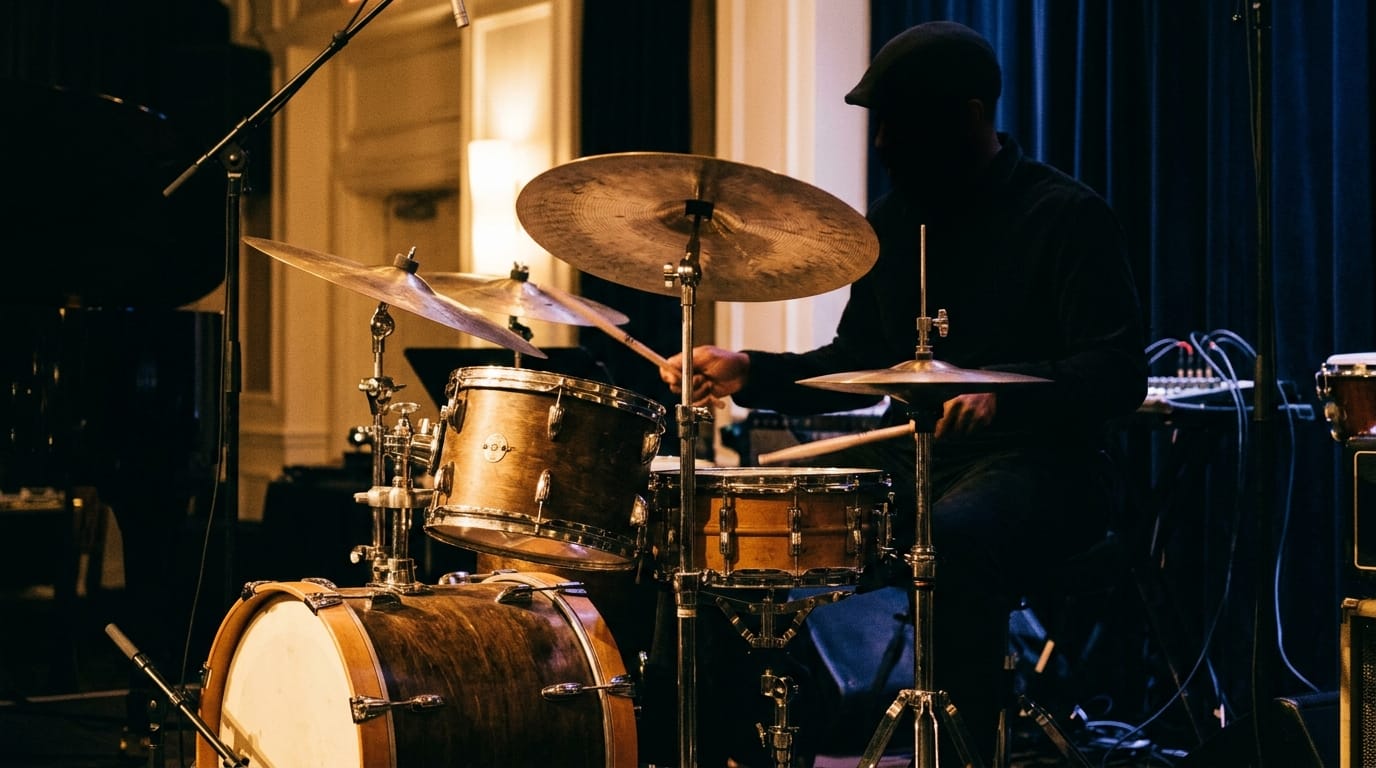
Minton’s Playhouse, located at 210 West 118th Street in Harlem, became the central laboratory for the new music after Henry Minton hired former bandleader Teddy Hill as house manager in 1940. Hill assembled a house band led by drummer Kenny Clarke, with Thelonious Monk as the house pianist. This distinction matters: Clarke ran the band; Monk was a sideman, albeit an extraordinarily influential one.
Monroe’s Uptown House served a parallel function, drawing similarly ambitious players from across the city. The culture at both venues was deliberately exclusionary: musicians would call obscure tunes at ferocious tempos and use complex chord substitutions to discourage less-advanced players from sitting in. That competitive pressure accelerated harmonic and technical development at a rate no formal institution could have matched.
The Players Who Gathered
Charlie Parker arrived in New York with pianist Jay McShann’s band in 1942, already carrying a fully formed musical vision that had been developing since his teenage years in Kansas City, Kansas. Dizzy Gillespie had been developing parallel ideas on trumpet, and the two met in Earl Hines’ band in 1942-43, forming the partnership that would define the style. As Scott DeVeaux documents in The Birth of Bebop (University of California Press, 1997), the emergence of bebop was not a sudden rupture but a years-long accretion of ideas by musicians who were building on each other’s discoveries in real time.
Why Did Bebop Emerge When It Did? The Historical Context
Bebop didn’t appear out of nowhere. Three intersecting forces in the early 1940s created the exact conditions the new music needed to survive and spread: a recording ban that silenced the commercial industry, a federal tax that crippled ballroom economics, and a generation of Black musicians who were finished performing on the music industry’s terms.
The AFM Recording Ban (1942-1944)
On August 1, 1942, the American Federation of Musicians declared a recording ban, prohibiting union members from recording for commercial labels. Decca Records settled with the union in September 1943; Columbia and Victor held out until November 11, 1944. The ban froze the recorded output of established swing orchestras at the height of their commercial dominance and created a gap in the market that newer independent labels, including Savoy, Guild, and Dial, filled with bebop recordings once the ban lifted. Those independent labels became bebop’s first commercial home.
The Cabaret Tax and the Death of the Big Band Economy
The U.S. government introduced a 30% federal cabaret tax in 1944 on venues where patrons danced to live music. As Eric Felten analyzed in the Wall Street Journal in March 2013, this tax devastated the ballroom economics that had sustained large touring dance bands throughout the swing era. A 15-to-20-piece orchestra is expensive to maintain under any conditions; under a 30% tax on the venues that booked them, it became untenable for all but the biggest names. Small combos of 4-6 musicians were cheaper, more mobile, and perfectly suited to the club format that survived the tax.
Reaction Against Swing’s Commercialization
Swing had become pop music by the early 1940s: radio-friendly, dance-oriented, and, in the view of younger Black musicians, increasingly co-opted by white bandleaders who achieved mainstream commercial success the originators could not access. In Blues People (1963), Amiri Baraka argues that bebop represented a conscious reassertion of Black musical identity against that commercial dilution, a way of making the music too demanding for casual appropriation. Ted Gioia, writing in The History of Jazz (Oxford University Press, 2011 edition), characterizes the period as one of irresolvable tension between the artistic ambitions of the music’s creators and the entertainment economy that had previously sustained them.
Bebop Jazz Characteristics: What Does It Sound Like?
Bebop has a specific, identifiable sound built from five interlocking characteristics. You can hear all five in the first 30 seconds of Charlie Parker’s “Ko-Ko” (1945). Here’s what to listen for.
Tempo: Faster Than Anyone Had Played Before
Bebop tempos typically ran from 180 to 300+ BPM, compared to the dance-oriented swing standard of roughly 120-180 BPM. “Ko-Ko,” recorded in November 1945, was clocked at approximately 300 BPM. “Rhythm changes” (the chord progression borrowed from George Gershwin’s “I Got Rhythm,” 1930) became the bebop proving ground, played at tempos that made any hesitation in the harmonic navigation immediately audible.
Harmony: Extensions, Substitutions, and Altered Chords
Bebop harmony moved beyond the triads (three-note chords) and dominant sevenths of swing to treat 9ths, 11ths, and 13ths as standard chord tones. Two concepts are worth understanding here. First, the tritone substitution: a dominant seventh chord (e.g., G7) can be replaced by another dominant chord whose root sits a tritone (six semitones) away, in this case Db7. The two chords share the same critical notes (the third and seventh), so the substitution creates harmonic motion while introducing unexpected color. Second, altered chords: dominant chords with raised or lowered 5ths and 9ths that generate maximum tension before resolving. These devices demanded that improvisers outline the actual chord changes rather than simply decorate a melody.
Small Combo Format
The standard bebop ensemble ran 4-6 musicians, typically trumpet, alto or tenor saxophone, piano, double bass, and drums. This replaced swing’s 15-to-20-piece big bands almost entirely. The rhythm section’s role transformed with the format: drummers moved their primary timekeeping from the bass drum to the ride cymbal, freeing the bass drum for accents and conversational “comping” (short for accompanying) on the snare. Pianists abandoned the stride style (left hand playing bass notes and chords alternately) in favor of sparse, punctuating chords that left space for the soloists.
Virtuosic Improvisation Over Chord Changes
“Playing the changes” is bebop’s central technical test: the ability to audibly outline each chord in a rapidly moving progression while inventing new melodic lines in real time. Bebop improvisers used a specific vocabulary of chromatic passing tones (notes outside the scale used to move between scale tones), enclosures (approaching a target note from a half step above and below), and arpeggios of extended chords. Getting any of this wrong at 250 BPM is obvious to every musician in the room.
Bebop Jazz Instruments: The Standard Palette
The core bebop instruments are alto or tenor saxophone, trumpet, piano, double bass, and drums. Guitar appeared in some combos but occupied a more marginal role than in swing (more on this below). Voice was used instrumentally: scat singing applied the bebop melodic vocabulary to the human voice, and later vocalists including Jon Hendricks and Eddie Jefferson applied actual lyrics to recorded bebop lines in a practice called “vocalese.” For a full instrument-by-instrument breakdown, see our complete guide to jazz instruments.
The Founding Figures of Bebop Jazz
Five or six musicians built bebop from the ground up. Their individual contributions were distinct enough that you can hear each one’s fingerprints separately, yet the style only exists because all of them were operating in the same city at the same time.
Charlie Parker: The Alto Saxophone as a New Language
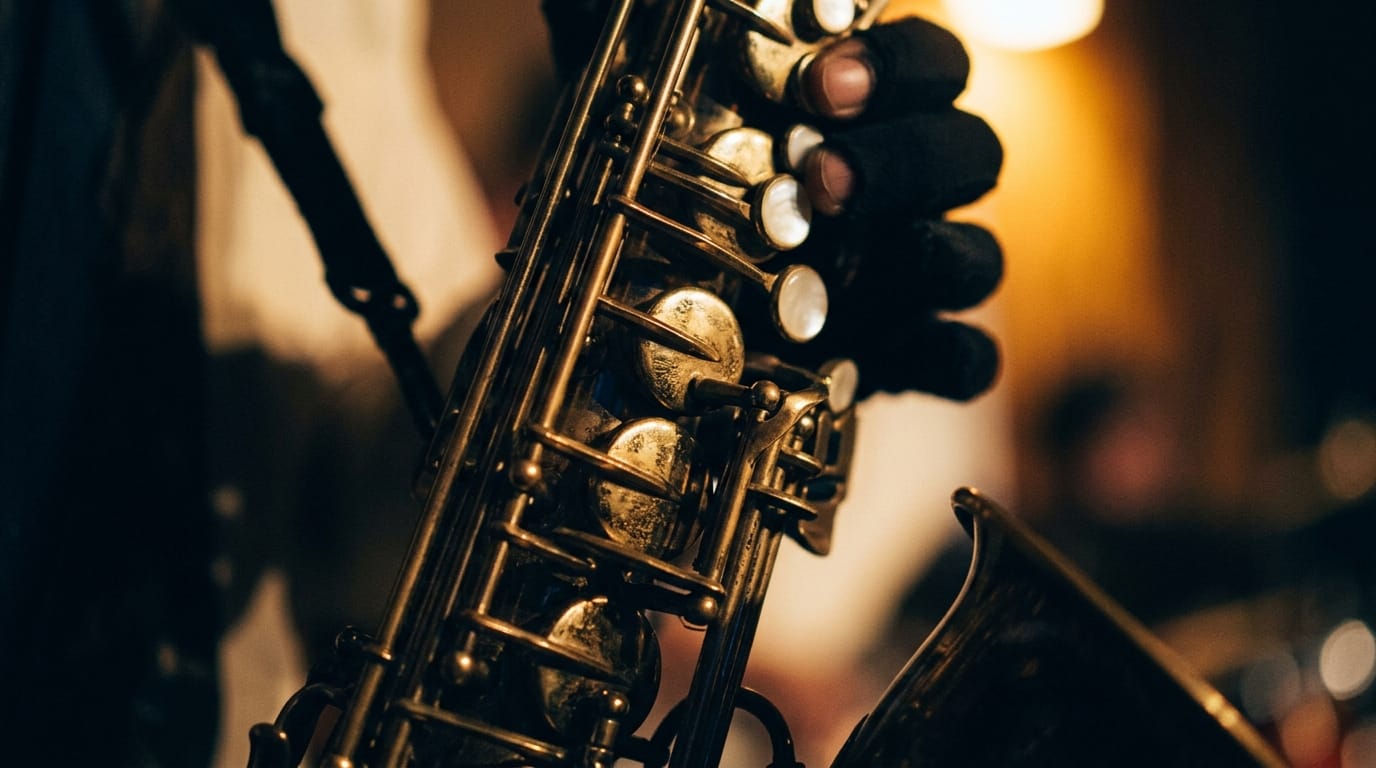
Born in Kansas City, Kansas in 1920, Parker (nicknamed “Bird” and “Yardbird”) died in New York in 1955 at age 34. His core innovation was a method of melodic construction that implied multiple chord changes simultaneously: his phrases crossed barlines, compressed and expanded rhythmically, and landed on chord tones so precisely that every note carried harmonic information. The New York club Birdland, which opened in 1949 at 1678 Broadway, was named in his honor. His recordings on the Dial and Verve labels remain the primary text for anyone studying the bebop language.
Dizzy Gillespie: The Architect of Bebop Trumpet
Born in Cheraw, South Carolina in 1917, Gillespie died in 1993. He developed the bebop trumpet vocabulary: wide interval leaps, rapid scalar runs in the upper register, and a full command of the chromatic scale at any tempo. What set Gillespie apart from Parker was his role as theorist and teacher. He could explain what he was doing harmonically, and he taught the new language to other musicians with systematic clarity. In 1947 he extended bebop into Afro-Cuban territory through his collaboration with Cuban percussionist Chano Pozo, producing “Manteca” and effectively founding a new subgenre.
Thelonious Monk: Harmonic Iconoclast
Born in Rocky Mount, North Carolina in 1917, Monk died in 1982. As house pianist at Minton’s (under Kenny Clarke’s bandleading), Monk worked from a harmonic language that was idiosyncratic even within bebop. His deliberate use of silence, whole-tone passages, and notes that sounded “wrong” by any conventional standard was not ignorance; it was a fully intentional compositional voice. His compositions, including “Round Midnight,” “Straight, No Chaser,” and “Epistrophy” (the last co-written with Kenny Clarke), became some of the most performed jazz standards of the 20th century. Monk is rightly considered a founding bebop jazz pianist pioneer, alongside Bud Powell.
Bud Powell: The Definitive Bebop Piano Voice
Born in New York in 1924, Powell died in 1966. If Monk was the harmonic visionary, Powell was the bebop piano technician: single-note right-hand lines moving at maximum velocity, with the left hand reduced to sparse, punctuating comping. He translated the Parker/Gillespie horn language directly to the keyboard, solving the fundamental problem of how a piano player navigates bebop’s harmonic demands without losing the music’s rhythmic momentum. His approach remains the de facto standard for jazz piano improvisation. Every jazz pianist who followed him had to decide where they stood in relation to what Powell built.
Kenny Clarke and Max Roach: Reinventing the Drum Kit
Kenny Clarke pioneered the move of primary timekeeping from the bass drum to the ride cymbal, freeing the rest of the kit for accent and dialogue. As the leader of the Minton’s house band, he was central to bebop’s development from the inside. Max Roach extended Clarke’s innovations into a fully compositional approach to drumming: every element of the kit was a voice in the ensemble conversation, not just a timekeeping device. Roach later became a founding figure of hard bop and one of the most important composer-drummers in jazz history.
Who Are the Kings of Bebop Jazz?
The term “kings of bebop” most commonly refers to Charlie Parker (alto saxophone) and Dizzy Gillespie (trumpet) as the style’s two central architects. Thelonious Monk and Bud Powell are widely regarded as the defining voices on piano; Max Roach and Kenny Clarke as the style’s founding drummers.
Who Is the Queen of Bebop?
Vocalist Sarah Vaughan is most frequently cited as the “Queen of Bebop.” Vaughan sang with the Billy Eckstine band alongside Parker and Gillespie in 1944-45 and brought the bebop harmonic sensibility fully into the vocal tradition. Ella Fitzgerald also embraced bebop vocabulary, particularly in her scat improvisations, and is sometimes named in the same conversation.
Bebop Jazz Guitarists: A Special Case
Let’s be honest: the guitar was nearly written out of jazz during the bebop era. It wasn’t malice; it was physics and aesthetics. The bebop combo had no obvious role for the instrument as swing had used it.
Why Guitar Was Marginalized, Then Reinvented
In the swing big band, the guitar played rhythm: strumming four-to-the-bar chords to anchor the ensemble. That role disappeared in the bebop small combo, where the piano handled chordal accompaniment. The guitar’s attack and sustain also made the spare, conversational comping style bebop demanded difficult to execute cleanly. Three guitarists solved these problems, each in a different way.
The Three Architects of Bebop Guitar
Charlie Christian (1916-1942) is the bridge figure: his single-note, horn-like approach with the Benny Goodman Sextet and at Minton’s jam sessions gave later bebop guitarists the template they needed. Christian died before bebop fully crystallized, at age 25, and it’s worth asking how different the guitar’s place in the music might have been if he’d lived another decade.
Barney Kessel (1923-2004) brought the bebop vocabulary to the West Coast and recorded with Charlie Parker on Jazz at the Philharmonic sessions, demonstrating that the guitar could participate in the bebop conversation at the highest level. Jimmy Raney (1927-1995) is considered by many critics to be among the most harmonically sophisticated bebop guitarists; his work with tenor saxophonist Stan Getz in the early 1950s remains the definitive statement of what bebop guitar could achieve in a front-line role.
5 Essential Bebop Jazz Albums
These five recordings cover bebop’s first decade from multiple angles. Each documents something the others don’t: together they give you a complete picture of what the music was doing and where it was going. According to DownBeat, bebop officially emerged in 1945 and underwent several significant mutations in the 1950s and 1960s while maintaining its small-group format, which makes these early documents especially valuable as primary sources.
#1: Charlie Parker on Dial, The Complete Dial Sessions (Dial Records, 1946-47)
| Artist | Charlie Parker |
|---|---|
| Label | Dial Records |
| Recorded | Los Angeles and New York, 1946-1947 |
| Key Personnel | Miles Davis (trumpet on selected sessions), Dizzy Gillespie (trumpet on selected sessions), Lucky Thompson (tenor saxophone) |
Key tracks: “Ornithology” (Parker’s contrafact on “How High the Moon,” built on chord substitutions rather than the original melody), “A Night in Tunisia” (Gillespie’s composition featuring Parker’s famous re-entry break passage), “Yardbird Suite” (a showcase for Parker’s melodic invention over rhythm changes), and “Lover Man” (recorded during Parker’s breakdown, historically significant as a document of the music under extreme personal duress).
The Dial sessions capture bebop at its most raw. They predate Parker’s more polished Verve recordings and document the music being invented in something close to real time. Start with “Ornithology” and pay attention to how Parker’s lines land on chord tones that haven’t arrived yet in the rhythm section’s playing.
#2: Shaw ‘Nuff, Dizzy Gillespie (Guild/Musicraft, 1945)
| Artist | Dizzy Gillespie and His All-Stars / Sextet |
|---|---|
| Label | Guild Records (reissued on Musicraft) |
| Recorded | New York, 1945 |
| Key Personnel | Dizzy Gillespie (trumpet), Charlie Parker (alto saxophone), Clyde Hart (piano), Remo Palmieri (guitar), Slam Stewart (bass), Cozy Cole (drums) |
Key tracks: “Shaw ‘Nuff” (co-written by Parker and Gillespie, one of the first fully realized bebop performances on a commercial label), “Salt Peanuts” (the rhythmic figure in the title phrase is the scat syllable “bebop” literalized in music), and “Hot House” (Tadd Dameron’s contrafact on “What Is This Thing Called Love”).
The Guild sessions are the first commercial documentation of Parker and Gillespie playing bebop together. “Salt Peanuts” is as good an entry point as exists: it’s fast, funny, and structurally transparent enough that you can hear exactly what the bebop rhythmic feel means.
#3: Genius of Modern Music, Vol. 1, Thelonious Monk (Blue Note, 1947-48; released 1951)
| Artist | Thelonious Monk |
|---|---|
| Label | Blue Note Records |
| Recorded | New York, October–November 1947 and July 1948 |
| Key Personnel | Thelonious Monk (piano), Idrees Sulieman and George Taitt (trumpet on respective sessions), Sahib Shihab (alto saxophone), Milt Jackson (vibes, July 1948 session) |
Key tracks: “Round Midnight” (the harmonic movement in the bridge is a textbook tritone substitution), “Straight, No Chaser” (a blues that applies bebop rhythmic displacement and melodic chromaticism), and “Epistrophy” (co-written with Kenny Clarke, a direct product of the Minton’s house band’s compositional output).
This album documents Monk’s singular harmonic voice and introduces compositions that became foundational jazz standards. His piano sound is nothing like Powell’s: where Powell is fluid and horn-like, Monk is angular, percussive, and comfortable with silence in ways that initially confused listeners expecting bebop convention.
#4: The Amazing Bud Powell, Vol. 1 (Blue Note, 1949-51; released 1952)
| Artist | Bud Powell |
|---|---|
| Label | Blue Note Records |
| Recorded | New York, 1949 and 1951 |
| Key Personnel | Bud Powell (piano), Fats Navarro (trumpet, 1949 session), Sonny Rollins (tenor saxophone, 1949 session), Tommy Potter (bass, 1949 session), Roy Haynes (drums, 1949 session); Curley Russell (bass, 1951 session), Max Roach (drums, 1951 session) |
Key tracks: “Un Poco Loco” (Powell’s most harmonically advanced composition here; three distinct takes were recorded, each a study in increasing abstraction), “A Night in Tunisia” (compare with Parker’s Dial version to hear how the same bebop vocabulary translated across instruments), and “Ornithology” (another direct comparison with Parker’s Dial recording).
This album establishes the definitive bebop piano template. Powell’s right-hand lines are the most direct keyboard translation of the Parker/Gillespie horn vocabulary ever put on record, and the 1951 trio session (Powell with Curley Russell and Max Roach) points forward to hard bop’s immediately approaching arrival.
#5: Dizzy Gillespie and His Orchestra, RCA Victor Sessions (RCA Victor, 1947)
| Artist | Dizzy Gillespie and His Orchestra |
|---|---|
| Label | RCA Victor |
| Recorded | New York, 1947 |
| Key Personnel | Dizzy Gillespie (trumpet and direction), Chano Pozo (congas), large ensemble |
Key tracks: “Manteca” (co-written with Chano Pozo; the founding document of Afro-Cuban jazz and bebop’s most significant cross-cultural fusion), “Cubano Be, Cubano Bop” (George Russell arrangement; introduces clave rhythm into the bebop big band context), and “Two Bass Hit” (a straight bebop showcase demonstrating Gillespie’s ensemble writing).
This album proves bebop’s expansive ambition. Gillespie’s big band showed that bebop harmonic complexity could function at large-ensemble scale and could absorb rhythmic structures from outside the jazz tradition. “Manteca” created a template that Latin jazz musicians are still building on today, nearly 80 years later.
Bebop vs. Swing Jazz: What Changed and Why It Mattered
Bebop didn’t simply replace swing. It reframed the entire question of what jazz was for. Here’s the side-by-side picture.
Side-by-Side Comparison
| Feature | Swing Jazz | Bebop Jazz |
|---|---|---|
| Tempo | 120-180 BPM (dance-oriented) | 180-300+ BPM (listening music) |
| Ensemble size | 15-20 piece big band | 4-6 piece small combo |
| Primary purpose | Dancing and entertainment | Artistic expression and attentive listening |
| Improvisation role | Solos within arranged framework | Central to the entire performance |
| Harmonic language | Triads, 7th chords, basic ii-V-I | Extended chords, tritone subs, altered dominants |
| Rhythm section | Bass drum on every beat; piano stride or four-beat comping | Ride cymbal timekeeping; sparse piano comping |
| Commercial orientation | High (radio, ballrooms, touring) | Low (small clubs, after-hours venues) |
| Key figures | Benny Goodman, Count Basie, Glenn Miller | Charlie Parker, Dizzy Gillespie, Thelonious Monk |
The Deeper Shift: From Entertainment to Art
Bebop musicians explicitly rejected the entertainer role. They turned their backs on audiences, refused to announce song titles from the bandstand, and played at tempos that made dancing impossible. This wasn’t arrogance; it was a declaration that the music’s demands on the listener were legitimate and non-negotiable. That reframing has shaped how jazz has been presented, funded, taught, and criticized ever since. For context on the wider arc of jazz history and how the musicians who shaped jazz compare across eras, our ranked guide to the most influential artists covers the full picture.
Bebop vs. Cool Jazz: Two Responses to the Same Revolution
Cool jazz didn’t reject bebop; it reacted to bebop’s intensity with a different set of aesthetic choices. The two styles share harmonic sophistication but diverge sharply on temperature, timbre, and emotional register.
What Is Cool Jazz?
Cool jazz emerged in the late 1940s and early 1950s, associated with the Miles Davis Birth of the Cool sessions (recorded 1949-50, released 1957 on Capitol Records), West Coast players including Dave Brubeck and Paul Desmond, and later Chet Baker. Its characteristics include slower or more varied tempos, a smoother tonal quality, more arranged ensemble passages, and an influence from European classical music that bebop largely avoided. You can read more about Miles Davis’s role across multiple jazz eras in our complete Miles Davis biography.
Modal Jazz vs. Bebop: Escaping the Chord Changes
Modal jazz didn’t simply evolve from bebop; in a real sense it was a solution to a specific problem bebop created. Here’s what that problem was and how modal jazz solved it.
How Modal Jazz Rejected Bebop’s Harmonic Density
Bebop’s challenge is relentless: an improviser working through a standard bebop tune might encounter 40 or 50 chord changes per chorus, many moving by the bar. That leaves almost no time to develop a melodic idea before the harmony shifts beneath it. Modal jazz (Miles Davis, Kind of Blue, Columbia Records, 1959; John Coltrane’s early modal work) replaced those rapid changes with static scales held for four, eight, or more bars at a time. The soloist could now develop a single melodic idea at length, breathing room that bebop’s harmonic pace made structurally impossible. George Russell’s Lydian Chromatic Concept of Tonal Organization (1953) provided the theoretical bridge between bebop harmony and the modal approach Davis and Coltrane would develop.
How Did Bebop Evolve? Hard Bop, Post-Bop, and Beyond
Bebop didn’t freeze in 1945. Every major jazz development from the late 1940s onward either built directly on it or defined itself against it.
Hard Bop (Mid-1950s to 1960s)
Hard bop reconnected bebop’s harmonic complexity with the blues feeling and gospel-influenced rhythmic intensity that cool jazz had moved away from. Key figures include Art Blakey and the Jazz Messengers, Clifford Brown (whose 1954–56 recordings with Max Roach established hard bop’s template), Horace Silver, and Sonny Rollins. If bebop was a reaction against swing’s commercialism, hard bop was, in part, a reaction against cool jazz’s perceived emotional distance from Black musical tradition.
Post-Bop and Free Jazz
By the early 1960s, John Coltrane and Ornette Coleman were pushing past bebop’s remaining formal structures, including the chord changes and the standard 32-bar song form. Post-bop retained bebop’s improvisational depth and harmonic seriousness while dismantling the chord-change framework that made those improvisations legible by conventional standards. Free jazz went further still, abandoning fixed meter along with fixed harmony.
Bebop’s Permanent Legacy
Every serious jazz education curriculum in the world begins with bebop vocabulary. The ii-V-I progression (a two-chord movement through the supertonic and dominant resolving to the tonic) remains the foundational building block of jazz theory instruction from conservatory level down to first-year lessons. Ted Gioia, in The History of Jazz, describes bebop as “the grammar of modern jazz,” and that description has only become more accurate as the decades have accumulated. Bebop’s fingerprints are audible in jazz fusion, nu-jazz, and in the harmonic language of contemporary improvisation regardless of genre.
Bebop Jazz Standards: The Core Repertoire
Bebop composers rarely set new lyrics. Instead, they wrote new melodies, called contrafacts, over existing chord progressions, or composed entirely original pieces with bebop-level harmonic complexity. The result was a repertoire built on shared harmonic foundations that any bebop musician could navigate on first hearing.
- “Anthropology” / “Thriving on a Riff” (Parker/Gillespie), rhythm changes (Gershwin’s “I Got Rhythm”)
- “Donna Lee” (attributed to Parker), chord changes of “Indiana (Back Home Again in Indiana)”
- “Groovin’ High” (Gillespie), changes of the pop standard “Whispering”
- “Round Midnight” (Monk), original composition; Monk’s most recorded work
- “Ko-Ko” (Parker), changes of “Cherokee” (Ray Noble, 1938)
- “Hot House” (Dameron), changes of “What Is This Thing Called Love” (Cole Porter)
For a broader look at the standards bebop musicians drew from, see our ranked guide to the 50 best jazz albums of all time, which traces how these repertoire choices evolved across generations.
Frequently Asked Questions About Bebop Jazz
What is bebop jazz, in simple terms?
Bebop jazz is a style of jazz that developed in New York in the early 1940s, characterized by fast tempos, complex harmonies, and improvisation-focused performance by small groups of 4-6 musicians. Unlike swing, which was designed for dancing, bebop was composed and performed as art music for attentive listeners.
Who are the kings of bebop jazz?
The two most frequently cited “kings of bebop” are Charlie Parker (alto saxophone) and Dizzy Gillespie (trumpet), who together defined the style’s core vocabulary. Thelonious Monk and Bud Powell are considered the defining bebop pianists; Max Roach and Kenny Clarke the foundational drummers.
Who is the queen of bebop?
Sarah Vaughan is most widely credited as the “Queen of Bebop.” She sang with the bebop-era Billy Eckstine band and brought the harmonic sophistication of Parker and Gillespie into the vocal jazz tradition. Ella Fitzgerald is sometimes named alongside Vaughan, particularly for her scat-singing work.
How did bebop differ from earlier jazz forms, especially swing?
Bebop replaced swing’s large dance-oriented ensembles with small combos; raised tempos from 120-180 BPM to 180-300+ BPM; and shifted improvisation from ornamenting a melody to working through complex, rapidly changing harmonies. See the full comparison table in the Bebop vs. Swing section above.
What instruments are used in bebop jazz?
The standard bebop combo includes alto or tenor saxophone, trumpet, piano, double bass, and drums. Guitar appeared in some bebop groups but held a more marginal role than in swing, as the instrument’s function in the smaller ensemble required reinvention.
What is hard bop, and how is it different from bebop?
Hard bop (mid-1950s onward) retained bebop’s harmonic complexity but reinfused stronger blues and gospel influences and a heavier rhythmic feel. Key hard bop figures include Art Blakey, Clifford Brown, and Horace Silver. Where bebop can feel cerebral, hard bop plants its feet firmly in the physical, visceral tradition of Black American music.
What is the difference between cool jazz and bebop?
Cool jazz (emerging in the late 1940s and early 1950s) was partly a reaction to bebop’s intensity: slower tempos, smoother timbres, more European classical influence. See the full comparison table in the Cool Jazz vs. Bebop section above.
What is modal jazz, and how does it differ from bebop?
Modal jazz replaced bebop’s rapid chord changes with static scales (modes) held for long stretches, giving improvisers space to develop longer melodic ideas. Miles Davis’s Kind of Blue (Columbia, 1959) is the defining modal jazz recording and the clearest single document of that structural difference.
Where did bebop start?
Bebop developed primarily at after-hours jam sessions at Minton’s Playhouse (210 West 118th Street, Harlem) and Monroe’s Uptown House in New York City in the early 1940s. The Minton’s house band was led by drummer Kenny Clarke, with Thelonious Monk as house pianist.
What are the best bebop jazz albums for beginners?
The five essential albums for new listeners are: Charlie Parker on Dial (1946-47), Shaw ‘Nuff (Dizzy Gillespie, 1945), Genius of Modern Music Vol. 1 (Thelonious Monk, 1947-48), The Amazing Bud Powell Vol. 1 (1949-51), and Dizzy Gillespie’s 1947 RCA Victor big band sessions. Full track notes for each appear in the Essential Albums section above.
Is bebop jazz hard to listen to?
Bebop can be initially challenging because of its fast tempos and dense harmonic language. The recommended entry point is a slower or mid-tempo standard: “Round Midnight” (Monk), “A Night in Tunisia” (Gillespie), or “Ornithology” (Parker) all make accessible starting points before you move to full-speed rhythm changes performances at 280 BPM.
Further Reading and Sources
- Scott DeVeaux, The Birth of Bebop: A Social and Musical History (University of California Press, 1997), the definitive scholarly account of the period
- Ted Gioia, The History of Jazz (Oxford University Press, 2011 edition)
- Amiri Baraka, Blues People (William Morrow, 1963), essential for understanding bebop’s cultural politics; paraphrase recommended
- Eric Felten, “How the Taxman Cleared the Dance Floor,” Wall Street Journal, March 2013, on the cabaret tax and its economic consequences
- DownBeat Jazz 101, authoritative overview of bebop’s emergence and mutations
- All About Jazz, extensive artist profiles and discography resources for all key bebop figures
Bebop jazz remains the most rigorous and consequential style in the music’s history. The musicians who built it between 1940 and 1955 created a vocabulary so complete and so demanding that every jazz musician since has either studied it deeply or worked consciously against it. Start with “Ornithology,” let your ear adjust to the velocity, and then trace the lineage forward through hard bop, modal jazz, and post-bop: you’ll find bebop’s grammar underneath all of it, still running.