Types of Jazz: Every Jazz Genre and Subgenre Explained
Jazz is an American-born musical genre defined by improvisation, syncopated rhythm, and expressive performance, encompassing more than 16 distinct types of jazz that evolved continuously from the 1890s to the present day. Understanding the types of jazz starts with recognizing that jazz isn’t one sound. It’s a methodology, a philosophy of music-making that has worn radically different sonic clothes across more than a century.
Table of Contents
- What Is Jazz? (The Foundation Before the Branches)
- The Building Blocks Every Jazz Genre Shares
- The Jazz Family Tree: How Every Genre Connects
- Quick-Reference: All Types of Jazz Music at a Glance
- Types of Jazz Music, Explained Chronologically
- 1. New Orleans Jazz (Dixieland), c. 1895–1920s
- 2. Swing / Big Band Jazz, 1930s–1940s
- 3. Bebop, Early 1940s–1950s
- 4. Cool Jazz, Late 1940s–1950s
- 5. Hard Bop, Mid-1950s–1960s
- 6. Modal Jazz, Late 1950s–1960s
- 7. Free Jazz / Avant-Garde Jazz, 1960s–1970s
- 8. Latin Jazz, 1940s–Present
- 9. Afro-Cuban Jazz (Cubop), 1940s–1950s
- 10. Spiritual Jazz, 1960s–1970s
- 11. Jazz Funk, Late 1960s–1970s
- 12. Jazz Fusion, Late 1960s–1980s
- 13. Smooth Jazz, 1980s–Present
- 14. Acid Jazz, Late 1980s–1990s
- 15. Chamber Jazz, 1990s–Present
- 16. Nu Jazz / Future Jazz, 2000s–Present
- How to Tell Jazz Subgenres Apart by Ear
- Listen for Tempo First
- Identify the Rhythm Section’s Feel
- Listen to Harmonic Movement
- People Also Ask: Your Jazz Questions Answered
- What are the main types of jazz music?
- What is the “Big 4” in jazz?
- What is the most popular type of jazz?
- What is the difference between bebop and hard bop?
- Is smooth jazz really jazz?
- Finding Your Entry Point into Jazz
- Final Thoughts on Types of Jazz: Where to Go From Here
- A plain-language definition of jazz and why it resists a single category
- All 16 major types of jazz music, explained in chronological order
- What each genre sounds, feels, and looks like, with specific listening examples
- A master comparison table for quick reference across all subgenres
- How to tell jazz genres apart by ear, using tempo, rhythm, and harmony as your guide
What Is Jazz? (The Foundation Before the Branches)
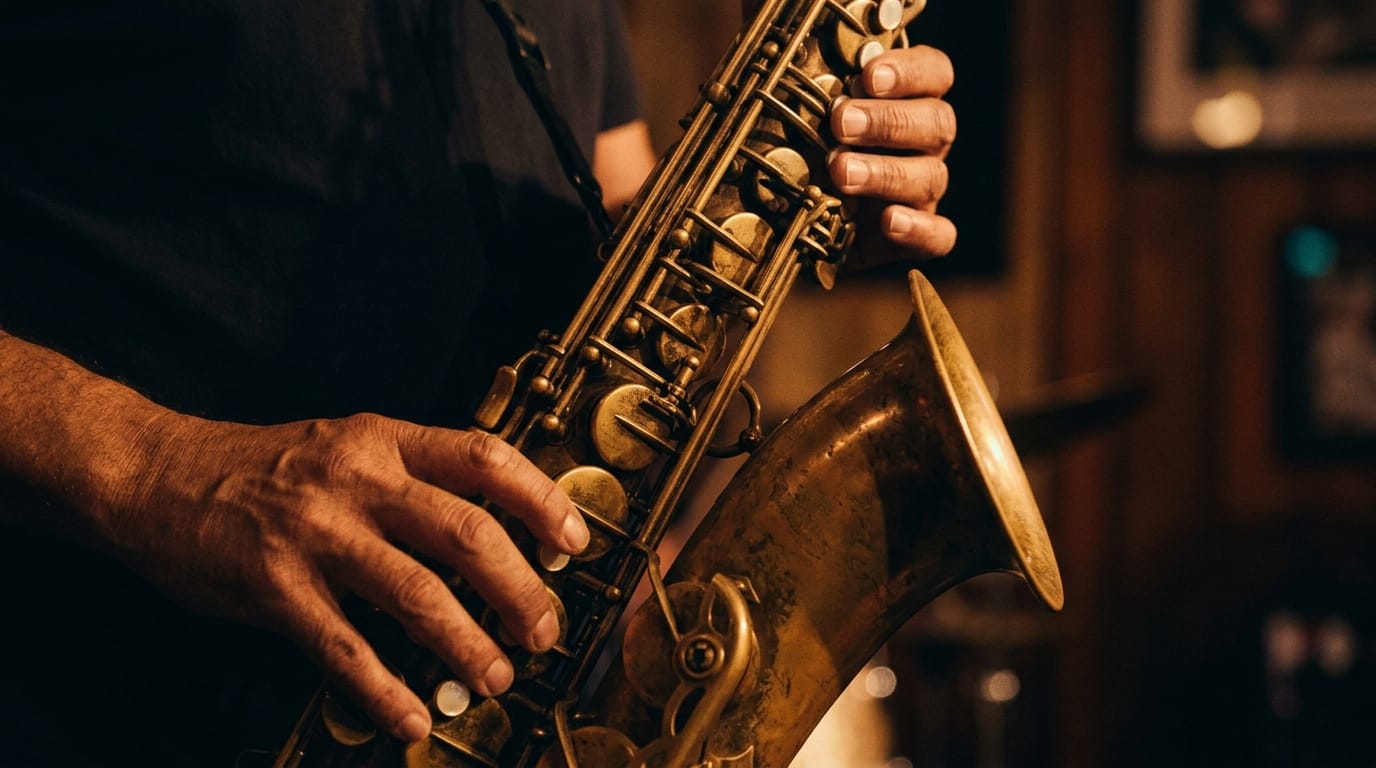
The word “jazz” entered commercial use when the Original Dixieland Jass Band recorded for Victor Records in 1917. That moment marks jazz’s entry into the recording era, but the music itself had been developing in New Orleans for at least two decades prior. Every subgenre you’ll read about below grew from that original root.
The Building Blocks Every Jazz Genre Shares
Before separating the branches, you need to know what holds the tree together. Four core elements run through virtually every jazz style, even the ones that appear to reject them.
First, improvisation: soloists compose melodies in real time, responding to the chords, the rhythm section, and each other. Second, the swing feel: a forward-leaning push in the eighth-note phrasing that gives jazz its momentum, even when a genre deliberately subverts it. Third, blue notes: the flattened 3rd, 5th, and 7th scale degrees borrowed from the blues tradition, adding expressive color. Fourth, call-and-response: a conversational exchange between musicians inherited directly from African musical tradition. Learn to hear these four elements, and you can follow jazz anywhere it goes.
For a deeper look at the instruments that carry these ideas, see our complete guide to jazz instruments.
The Jazz Family Tree: How Every Genre Connects
Jazz doesn’t jump randomly from style to style. Each genre reacts to the one before it, either extending its ideas or pushing back against them. Knowing the lineage makes every subgenre easier to understand and easier to hear.
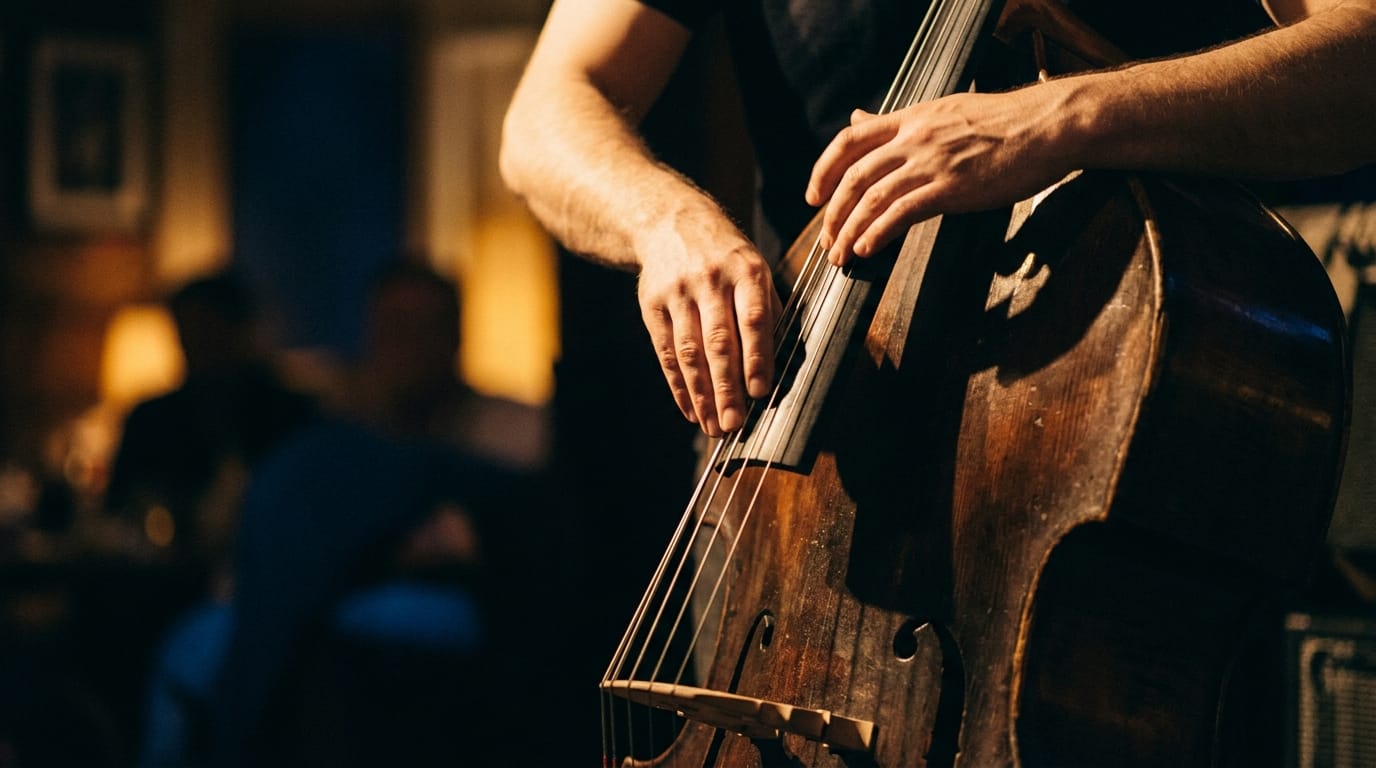
The main trunk runs like this: New Orleans/Dixieland birthed Swing/Big Band, which triggered Bebop as a deliberate reaction. Bebop then forked into two directions simultaneously: Hard Bop (adding soul and gospel) and Cool Jazz (pulling back toward restraint). Both fed into Modal Jazz, which opened the door to Free Jazz. From those experiments came Jazz Fusion and Jazz Funk, which in turn produced Smooth Jazz, Acid Jazz, and eventually Nu Jazz. Running as a parallel and intersecting track throughout: Latin Jazz and Afro-Cuban Jazz, which cross-pollinate with nearly every era. Spiritual Jazz and Chamber Jazz develop as aesthetic sub-streams rather than strict evolutionary links.
According to JazzTimes columnist Stanley Crouch, mainstream jazz as a defined category has become increasingly difficult to pin down as the music evolves and blends with diverse styles, allowing artists to experiment with whatever fusion they choose to create. That observation applies to the entire family tree.
Quick-Reference: All Types of Jazz Music at a Glance
Use this table to orient yourself before reading the full genre breakdowns below. Each row gives you the sonic fingerprint and one track to start with right now.
| Genre | Era | Tempo Feel | Key Instruments | Mood | Start Here |
|---|---|---|---|---|---|
| New Orleans / Dixieland | 1895–1920s | Medium march feel | Cornet, clarinet, trombone, banjo | Jubilant, communal | “West End Blues” – Louis Armstrong |
| Swing / Big Band | 1930s–1940s | Driving 4/4 swing | Full brass section, rhythm guitar | Danceable, exuberant | “Take the A Train” – Duke Ellington |
| Bebop | 1940s–1950s | Fast, complex | Alto/tenor sax, trumpet, piano trio | Intellectual, urgent | “Ko-Ko” – Charlie Parker |
| Cool Jazz | Late 1940s–1950s | Relaxed, laid-back | Trumpet, flute, piano | Introspective, restrained | “Move” – Miles Davis |
| Hard Bop | 1950s–1960s | Mid-tempo groove | Tenor sax, trumpet, Hammond B3 | Soulful, earthy | “Moanin'” – Art Blakey & The Jazz Messengers |
| Modal Jazz | Late 1950s–1960s | Spacious, open | Piano, bass, drums, horn | Meditative, hypnotic | “So What” – Miles Davis |
| Free Jazz | 1960s–1970s | Arhythmic / collective | Any combination | Confrontational, liberated | “Lonely Woman” – Ornette Coleman |
| Latin Jazz | 1940s–present | Clave-driven | Congas, piano, trumpet, bass | Rhythmic, festive | “Oye Como Va” – Tito Puente |
| Afro-Cuban / Cubop | 1940s–1950s | Mambo/son clave | Congas, bongos, brass | Energetic, polyrhythmic | “Manteca” – Dizzy Gillespie/Chano Pozo |
| Spiritual Jazz | 1960s–1970s | Slow to medium | Tenor sax, flute, percussion | Transcendent, devotional | “A Love Supreme Pt. I” – John Coltrane |
| Jazz Funk | Late 1960s–1970s | Heavy groove | Rhodes, bass guitar, drums | Funky, groove-driven | “Chameleon” – Herbie Hancock |
| Jazz Fusion | Late 1960s–1980s | Electric, varied | Electric guitar, synth, bass | Experimental, electric | “Birdland” – Weather Report |
| Smooth Jazz | 1980s–present | Steady, polished | Alto/soprano sax, synth | Relaxed, radio-friendly | “This Masquerade” – George Benson |
| Acid Jazz | Late 1980s–1990s | Funk/hip-hop groove | Samples, organ, drums | Hip, retro-funky | “Cantaloop” – Us3 |
| Chamber Jazz | 1990s–present | Varied, orchestral | String quartet + jazz combo | Refined, intimate | Officium – Garbarek/Hilliard Ensemble |
| Nu Jazz / Future Jazz | 2000s–present | Electronic, fluid | Synths, loops, acoustic hybrids | Atmospheric, forward-looking | “Khmer” – Nils Petter Molvær |
Types of Jazz Music, Explained Chronologically
Below, we cover every major jazz genre in the order it emerged, from the street parades of New Orleans to the electronic atmospheres of nu jazz. Each section gives you the sonic feel, the key artists, the essential albums, and one track to try first.
1. New Orleans Jazz (Dixieland), c. 1895–1920s
New Orleans Jazz is the original form, born in post-Reconstruction Louisiana and formalized commercially in 1917. The feel is jubilant and communal: the front line (cornet, clarinet, trombone) improvises simultaneously around the melody while the rhythm section (banjo, tuba, drums) keeps the parade moving. There’s no soloist-then-band structure here. Everyone talks at once, and somehow it works.
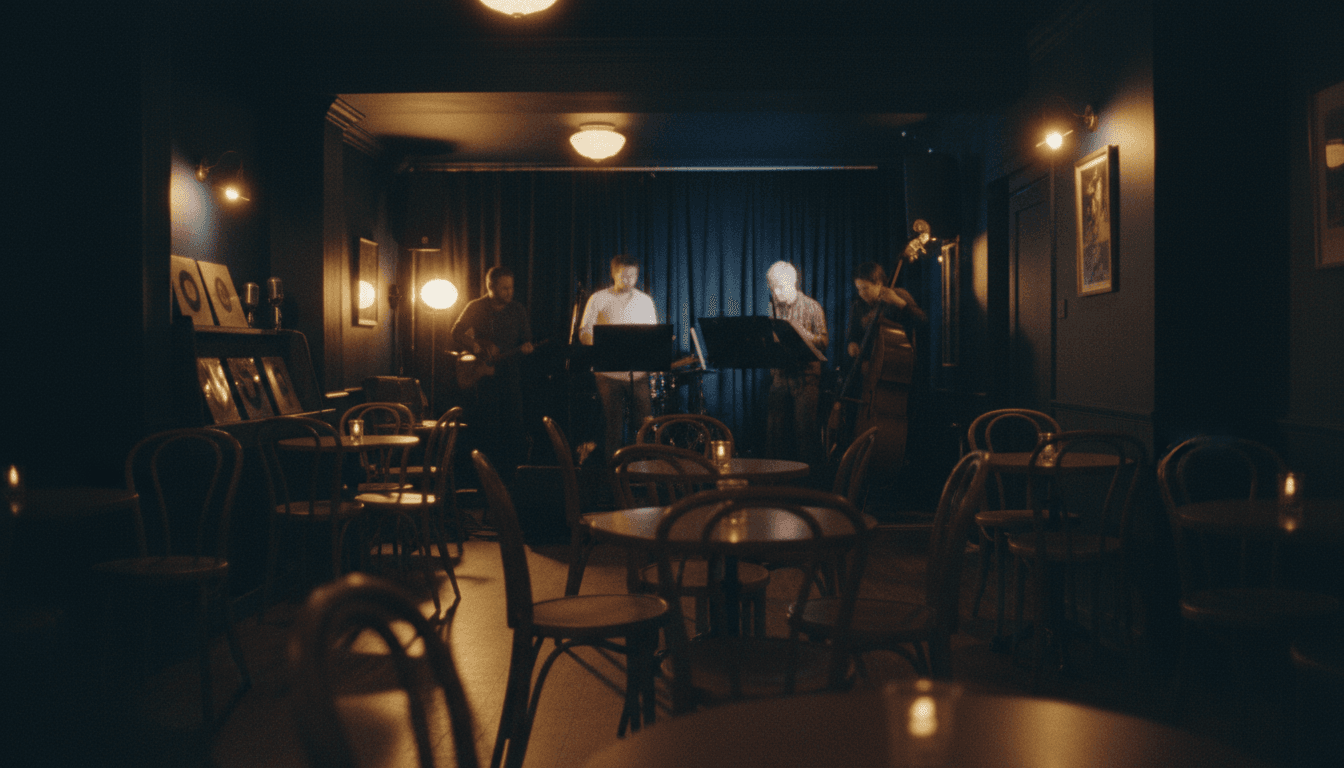
This style is also called “trad jazz” (short for traditional jazz) or Dixieland. Key figures include Buddy Bolden (proto-jazz, active c.1898–1906), Jelly Roll Morton, Louis Armstrong, King Oliver, and the Original Dixieland Jass Band, whose 1917 Victor session gave jazz its commercial debut.
Essential albums: The Genius of Louis Armstrong Vol. 1: 1923–1933 (Columbia); Jelly Roll Morton: The Complete Library of Congress Recordings (Rounder, 2005); King Oliver’s Creole Jazz Band: The Complete Set (Retrieval, 2003).
Track to try first: “West End Blues”, Louis Armstrong & His Hot Five (1928). That opening trumpet cadenza announces jazz’s arrival as a virtuosic art form in under 20 seconds.
2. Swing / Big Band Jazz, 1930s–1940s
Swing was America’s pop music for a full decade. It took New Orleans’s collective improvisation and organized it into charts written for 12 to 20 musicians divided into brass, reed, and rhythm sections, with individual soloists stepping out over arranged backgrounds. The Swing Era ran roughly from 1935 to 1945 and produced some of the most widely recognized jazz recordings in history.
The genre’s social power was real. Swing generated the jitterbug, the lindy hop, and a nationwide ballroom culture. Duke Ellington, Count Basie, Benny Goodman (dubbed the “King of Swing”), Ella Fitzgerald, and Glenn Miller were household names. Goodman’s 1938 Carnegie Hall concert is one of the most celebrated and thoroughly documented jazz performances of the era.
Essential albums: Ellington at Newport (Columbia, 1956); The Complete Decca Recordings, Count Basie (GRP, 1992); Benny Goodman at Carnegie Hall: 1938 Complete (Columbia/Legacy).
Track to try first: “Take the A Train”, Duke Ellington Orchestra (1941). The reed section’s unison lines and the easy, rolling 4/4 pulse tell you everything about why this style filled dance halls coast to coast.
3. Bebop, Early 1940s–1950s
Bebop is the genre that split jazz into “art music” and “entertainment,” and it did so deliberately. Charlie Parker, Dizzy Gillespie, Thelonious Monk, and Bud Powell developed the style in Harlem jam sessions around 1941 to 1944, pushing tempos toward 200 to 300 BPM, stacking harmonic substitutions on top of chord changes, and rejecting the dancefloor as a design goal. This was music made to be listened to, not danced to.
The rhythm section convention that bebop established, piano, bass, drums, and a horn, became the standard small-group format for decades. Bebop’s harmonic language, built on complex chord extensions and chromatic voice leading, remains the theoretical bedrock of most jazz education today.
Essential albums: Charlie Parker on Dial: The Complete Sessions (Spotlite, 1945–47); Thelonious Monk: Genius of Modern Music Vol. 1 (Blue Note, 1947–48); Shaw ‘Nuff, Dizzy Gillespie (Musicraft, 1945).
Track to try first: “Ko-Ko”, Charlie Parker (1945). At roughly 300 BPM, with Parker’s alto saxophone tracing arcs over cascading chord changes, it remains one of the most breathtaking single performances in jazz history.
4. Cool Jazz, Late 1940s–1950s
Cool Jazz pulled the temperature down after bebop’s feverish intensity. It’s cerebral and understated, drawing on European classical influences and favoring emotional restraint over expressionist heat. The founding document is Miles Davis‘s Birth of the Cool, recorded in New York in 1949 and 1950 for Capitol Records.
The style quickly developed a West Coast variant centered in Los Angeles, often called simply “West Coast Jazz,” built around arranged ensemble writing and a lighter rhythmic touch. Dave Brubeck’s Time Out (Columbia, 1959) introduced odd time signatures like 5/4 to a mainstream audience and became one of the best-selling jazz albums of its era. Chet Baker’s breathy trumpet and introspective phrasing defined the style’s emotional register.
Essential albums: Birth of the Cool, Miles Davis (Capitol, 1957); Time Out, Dave Brubeck Quartet (Columbia, 1959); Chet Baker Sings (Pacific Jazz, 1954).
Track to try first: “Move”, Miles Davis Nonet (Birth of the Cool, 1949). Nine musicians, perfectly balanced, swinging with their elbows rather than their fists.
5. Hard Bop, Mid-1950s–1960s
Hard Bop came back swinging with soul. Where Cool Jazz had drifted toward European restraint, Hard Bop grabbed bebop’s technical firepower and drove it back toward gospel, blues, and R&B. The result was warmer, grittier, and considerably more accessible without sacrificing an ounce of musical sophistication.
The Hammond B3 organ entered the jazz combo in this era, anchoring a groove beneath saxophone and trumpet conversations that owed as much to the Black church as to the concert hall. Art Blakey & The Jazz Messengers became the style’s central training ground, producing figures like Terence Blanchard; the Messengers alumni roster reads like a who’s-who of post-1955 jazz. Moanin’ (Blue Note, 1958) is the essential document.
Essential albums: Moanin’, Art Blakey & The Jazz Messengers (Blue Note, 1958); Clifford Brown and Max Roach (EmArcy, 1954); Song for My Father, Horace Silver (Blue Note, 1965).
Track to try first: “Moanin'”, Art Blakey & The Jazz Messengers (1958). Bobby Timmons’s gospel-drenched piano intro alone explains the whole Hard Bop project in eight bars.
6. Modal Jazz, Late 1950s–1960s
Modal Jazz replaced bebop’s relentless chord-change cycling with something more open: scales (called modes) as the harmonic foundation, allowing melodies to breathe and soloists to explore without the pressure of a new chord every two beats. The shift created music that feels spacious, almost meditative, with long melodic arcs that bebop’s tempo never permitted.
Miles Davis’s Kind of Blue (Columbia, 1959) is not just the central modal jazz text. It’s the best-selling jazz album of all time, with approximately 5 million certified copies sold in the United States alone. John Coltrane, Bill Evans, and Herbie Hancock each took modal concepts into increasingly personal territory through the 1960s.
Essential albums: Kind of Blue, Miles Davis (Columbia, 1959); A Love Supreme, John Coltrane (Impulse!, 1965); Maiden Voyage, Herbie Hancock (Blue Note, 1965).
Track to try first: “So What”, Miles Davis (Kind of Blue, 1959). The bass plays the theme. Think about that.
7. Free Jazz / Avant-Garde Jazz, 1960s–1970s
Free Jazz is the most polarizing of all the types of jazz, and it earns that reputation honestly. It abandons preset chord changes, fixed meter, and sometimes tonality altogether, opening improvisation to collective, simultaneous expression with no predetermined map. Ornette Coleman’s album Free Jazz: A Collective Improvisation (Atlantic, 1961), recorded with a double quartet, gave the subgenre its name and its most extreme early statement.
Here’s the thing: free jazz isn’t random. It demands exceptional musical instincts and real-time communication. Albert Ayler’s saxophone screams and smears carry identifiable melodic shapes. Cecil Taylor’s piano clusters follow their own percussive logic. The structure is internal rather than external.
Essential albums: The Shape of Jazz to Come, Ornette Coleman (Atlantic, 1959); Free Jazz: A Collective Improvisation, Ornette Coleman Double Quartet (Atlantic, 1961); Spiritual Unity, Albert Ayler (ESP-Disk, 1964).
Track to try first: “Lonely Woman”, Ornette Coleman (1959). It starts with a melody so aching and clear that it reframes what “free” can mean.
8. Latin Jazz, 1940s–Present
Latin Jazz is the broadest of the parallel tracks, covering jazz harmony and improvisation laid over Afro-Latin rhythmic frameworks. The foundation is the clave, a 3-2 or 2-3 rhythmic pattern played on two wooden sticks that organizes everything the congas, timbales, bongos, and bass play around it. Remove the clave, and Latin Jazz collapses.
The genre consolidated through the 1950s and 1960s in New York’s vibrant Latin music scene, with Tito Puente, Cal Tjader, and Eddie Palmieri as its primary architects. It continues actively today, intersecting with post-bop, contemporary jazz, and Afro-Caribbean traditions. The artist profiles in our jazz archive include several musicians working directly in this tradition.
Essential albums: El Rey Bravo, Tito Puente (Tico, 1962); Soul Sauce, Cal Tjader (Verve, 1965); Live at the Village Gate, Eddie Palmieri (Coco, 1963).
Track to try first: “Oye Como Va”, Tito Puente (original, 1962). Santana made it famous in 1970, but Puente’s version eight years earlier is the real article.
9. Afro-Cuban Jazz (Cubop), 1940s–1950s
Afro-Cuban Jazz, also called Cubop, is Latin Jazz’s more precisely defined ancestor: specifically the fusion of bebop harmonic sophistication with Cuban rhythmic tradition. Its founding moment arrived on September 29, 1947, when Dizzy Gillespie and Cuban percussionist Chano Pozo performed together at Carnegie Hall, producing “Manteca” and “Cubana Be, Cubana Bop” as permanent documents of the collision.
The distinction from broader Latin Jazz is harmonic. Cubop carries bebop’s dense chord changes and virtuosic soloing under a polyrhythmic Afro-Cuban percussion framework, creating an explosive combination that neither tradition could produce alone. Mario Bauzá, the Cuban trumpet player and arranger who worked with Machito’s Afro-Cubans, deserves equal credit for building the bridge.
Essential albums: Afro-Cuban Jazz, Machito (Clef, 1950); Cubana Be, Cubana Bop, Dizzy Gillespie (recorded 1947); Mongo, Mongo Santamaría (Fantasy, 1959).
Track to try first: “Manteca”, Dizzy Gillespie & Chano Pozo (1947). The conga and bongo conversation in the opening bars sounds like two languages discovering they share a grammar.
10. Spiritual Jazz, 1960s–1970s
Spiritual Jazz treats music as devotional practice, not entertainment. It uses jazz improvisation as a vehicle for religious, cosmic, or broadly transcendent expression, drawing on Islamic mysticism, African spirituality, Eastern philosophy, and universal concepts of the divine. John Coltrane’s A Love Supreme (Impulse!, 1965) is the genre’s central text, a four-part suite dedicated explicitly to God that opens with a bass motif repeating the album’s title like a mantra.
Don’t confuse spiritual jazz with free jazz, even though they share some sonic territory. Spiritual jazz retains groove and devotional structure. Pharoah Sanders’s Karma (Impulse!, 1969) and Alice Coltrane’s Journey in Satchidananda (Impulse!, 1971) both build sustained, hypnotic meditations over rhythmic foundations. The music goes somewhere intentional.
Essential albums: A Love Supreme, John Coltrane (Impulse!, 1965); Karma, Pharoah Sanders (Impulse!, 1969); Journey in Satchidananda, Alice Coltrane (Impulse!, 1971).
Track to try first: “A Love Supreme, Pt. I: Acknowledgement”, John Coltrane (1965). The bass figures, the slow build, the soprano saxophone calling out over the rhythm: it’s one of the most powerful seven minutes in recorded music.
11. Jazz Funk, Late 1960s–1970s
Jazz Funk is where the Fender Rhodes electric piano and the Hammond B3 organ took over from the acoustic grand. Heavy groove, electric textures, and James Brown’s influence on the rhythm section define the style. It sits between Jazz Fusion and R&B, closer to the street than the concert hall, and considerably more body-focused than anything in bebop or cool.
Herbie Hancock’s Head Hunters (Columbia, 1973) became the best-selling jazz album of the 1970s by committing fully to funk’s rhythmic logic while keeping Hancock’s jazz harmonic sensibility intact. “Chameleon” runs its bass riff for sixteen bars before anything else enters. That confidence in groove says everything about Jazz Funk’s priorities.
Essential albums: Head Hunters, Herbie Hancock (Columbia, 1973); Swiss Movement, Les McCann & Eddie Harris (Atlantic, 1969); Fat Albert Rotunda, Herbie Hancock (Warner Bros., 1969).
Track to try first: “Chameleon”, Herbie Hancock (1973). The bass walks a lazy chromatic groove beneath synth stabs while Hancock’s Rhodes floats above with unmistakable jazz intelligence.
12. Jazz Fusion, Late 1960s–1980s
Jazz Fusion is Jazz Funk’s louder, more electric, more ambitious cousin. Where Jazz Funk stays close to soul and R&B groove, Fusion incorporates electric guitar, synthesizers, and rock-influenced song structures, creating music that sounds like it could fill an arena while still demanding serious listening. Miles Davis’s Bitches Brew (Columbia, 1970), recorded in August 1969, drew the blueprint in two marathon studio sessions.
Weather Report, Return to Forever, the Mahavishnu Orchestra, and Pat Metheny Group each took Fusion in different directions through the 1970s and 1980s. Weather Report’s Heavy Weather (Columbia, 1977) reached a general rock audience that had never engaged with jazz before, with “Birdland” becoming one of the most covered jazz compositions of the decade.
Essential albums: Bitches Brew, Miles Davis (Columbia, 1970); Heavy Weather, Weather Report (Columbia, 1977); Romantic Warrior, Return to Forever (Columbia, 1976).
Track to try first: “Birdland”, Weather Report (Heavy Weather, 1977). Jaco Pastorius’s fretless bass melody in the opening sets a standard for electric jazz that still hasn’t been surpassed.
13. Smooth Jazz, 1980s–Present
Smooth Jazz emerged from Jazz Fusion’s commercial wing in the early 1980s, combining jazz instrumentation (primarily soprano or alto saxophone and electric keyboards) with the production values and melodic accessibility of soft rock. The “quiet storm” radio format provided its primary distribution vehicle, building a massive audience that jazz’s more demanding subgenres rarely reached.
Let’s be honest about the debate: smooth jazz’s relationship to the broader jazz tradition is genuinely contested in jazz criticism. JazzTimes and DownBeat have both published pointed critiques of the genre’s limited improvisation depth. Our editorial position at eJazzNews is that smooth jazz qualifies as a jazz-derived commercial format. Listeners can draw their own conclusions about where the music sits on the jazz spectrum. George Benson’s Breezin’ (Warner Bros., 1976) predates smooth jazz’s consolidation but defines its commercial DNA and became one of the first jazz albums to achieve wide mainstream chart success.
Essential albums: Breezin’, George Benson (Warner Bros., 1976); Winelight, Grover Washington Jr. (Elektra, 1980); Breathless, Kenny G (Arista, 1992).
Track to try first: “This Masquerade”, George Benson (1976). Benson’s guitar-voice doubling technique is genuinely virtuosic, whatever you think of the genre surrounding it.
14. Acid Jazz, Late 1980s–1990s
Acid Jazz came out of London, not New York, and it came with crates of vinyl. The genre blends jazz-funk and soul samples with hip-hop beats and live instrumentation, creating dancefloor-ready music that’s as indebted to DJ culture as to any jazz tradition. Acid Jazz Records, founded in 1987 by Gilles Peterson and Eddie Piller, served as the genre’s organizational center and gave it its name.
The key move: sample the Blue Note and Prestige back catalogues, drop a hip-hop beat underneath, add live organ or horns, and let the groove drive. Us3’s Hand on the Torch (Blue Note, 1993) took this formula to a mainstream audience by sampling the Blue Note catalog directly, with the label’s blessing. Jamiroquai brought acid jazz’s aesthetic to pop chart success in the mid-1990s.
Essential albums: Hand on the Torch, Us3 (Blue Note, 1993); Northern Soul, The Brand New Heavies (Delicious Vinyl, 1990); Emergency on Planet Earth, Jamiroquai (Sony, 1993).
Track to try first: “Cantaloop (Flip Fantasia)”, Us3 (1993). Herbie Hancock’s “Cantaloupe Island” sample drops beneath a hip-hop flow, and suddenly 1964 and 1993 are the same year.
15. Chamber Jazz, 1990s–Present
Chamber Jazz is the quietest of all the types of jazz, and it earns its name honestly. It brings jazz improvisation into conversation with composed classical elements, typically pairing a jazz combo (piano, bass, drums) with a string quartet or small classical ensemble and prioritizing space, silence, and compositional rigor over rhythmic drive. ECM Records, the German label founded in 1969, built much of its identity around this aesthetic.
Maria Schneider Orchestra’s Concert in the Garden (ArtistShare, 2004) won the Grammy Award for Best Large Jazz Ensemble Album. Jan Garbarek and the Hilliard Ensemble’s Officium (ECM, 1994) placed a Norwegian jazz saxophonist over medieval choral music and produced one of ECM’s best-selling records. The results in both cases are refined, intimate, and occasionally breathtaking.
Essential albums: Ballad of the Fallen, Charlie Haden Liberation Music Orchestra (ECM, 1982); Officium, Jan Garbarek / Hilliard Ensemble (ECM, 1994); Concert in the Garden, Maria Schneider Orchestra (ArtistShare, 2004).
Track to try first: Any track from Officium, Jan Garbarek / Hilliard Ensemble (ECM, 1994). The saxophone doesn’t compete with the voices. It breathes between them.
16. Nu Jazz / Future Jazz, 2000s–Present
Nu Jazz dissolves the boundaries between jazz, electronic music, and ambient sound. It may feature heavily processed live instruments, drum machines, synthesizer textures, and ambient production, sometimes with very little traditional swing feel at all. What makes it jazz isn’t always the rhythm or the instrumentation. It’s the improvised thinking, the harmonic sensibility, and the willingness to create something unrepeatable in real time.
The style has twin origins: the Scandinavian jazz scene of the late 1990s (particularly Norway’s Jazzland label and ECM-adjacent artists like Nils Petter Molvær) and UK electronic producers reinterpreting jazz-influenced sounds through digital tools. Molvær’s Khmer (ECM, 1997) remains the landmark recording. Robert Glasper Experiment’s Black Radio (Blue Note, 2012) brought an adjacent sensibility to a wider audience, blending jazz piano with neo-soul and hip-hop production.
Essential albums: Khmer, Nils Petter Molvær (ECM, 1997); New Conception of Jazz, Bugge Wesseltoft (Jazzland, 1996); Black Radio, Robert Glasper Experiment (Blue Note, 2012).
Track to try first: “Khmer”, Nils Petter Molvær (1997). The trumpet enters through a cloud of electronics, and the line between acoustic and digital dissolves completely.
How to Tell Jazz Subgenres Apart by Ear
You don’t need a music degree to identify types of jazz by listening. Three quick diagnostic passes, tempo, rhythm section feel, and harmonic movement, place most recordings accurately within 30 seconds. Here’s how to run each one.
Listen for Tempo First
Tempo tells you the era and the intent faster than anything else. Under 100 BPM points toward Cool Jazz, Spiritual Jazz, Chamber Jazz, or Nu Jazz. A medium range of 100 to 180 BPM with a swinging feel suggests Hard Bop, Modal Jazz, or Swing. Above 180 BPM with dense, rapid chord changes? That’s almost certainly Bebop. A steady groove feel based on 16th notes rather than swung 8th notes means Jazz Funk, Acid Jazz, or Smooth Jazz.
Identify the Rhythm Section’s Feel
The rhythm section is your best diagnostic tool. Ask yourself: is the bass acoustic (upright) or electric (bass guitar)? Electric bass points to post-1965 music, narrowing the field to Fusion, Jazz Funk, Smooth Jazz, Acid Jazz, or Nu Jazz. Do you hear congas, timbales, or a clave pattern riding over the drum kit? That’s Latin Jazz or Afro-Cuban. Is there no discernible pulse at all, with the whole ensemble improvising simultaneously? That’s Free Jazz.
As we note in our eJazzNews analysis: if you can identify the rhythm section’s feel within 10 seconds, you can place most recordings in the right era and general family.
Listen to Harmonic Movement
Harmonic movement separates the related genres most effectively. Rapid chord changes arriving every one or two beats, with chromatic passing chords between them, signal Bebop or Hard Bop. A slow-shifting or static harmonic center where the same scale or chord persists for many bars signals Modal Jazz or Free Jazz. A major key melody riding over lush, studio-polished production with minimal harmonic tension is Smooth Jazz. Blues-drenched voicings with gospel chord resolutions point squarely to Hard Bop.
For a deeper technical look at the instruments producing these sounds across genres, our Jazz Instruments guide covers the full palette from cornet to synthesizer. The jazz education archive also includes theory primers that connect these sonic markers to formal music concepts.
People Also Ask: Your Jazz Questions Answered
What are the main types of jazz music?
The six most widely recognized branches of jazz music are: New Orleans/Dixieland (collective improvisation, march feel, pre-1930); Swing/Big Band (arranged ensemble music, danceable, 1930s–40s); Bebop (virtuosic small-group jazz, fast tempos, 1940s–50s); Hard Bop and Cool Jazz (twin reactions to bebop, soulful versus restrained, 1950s–60s); Modal and Free Jazz (open harmonic structures, 1959–70s); and Contemporary Jazz, an umbrella covering Fusion, Smooth Jazz, Acid Jazz, Chamber Jazz, and Nu Jazz from the 1970s to today. Every other subgenre in the full list of 16 sits within or between these six branches.
What is the “Big 4” in jazz?
The term “Big 4” most commonly refers to the bebop small-group rhythm section convention: piano, bass, drums, and a lead horn (trumpet or saxophone). This four-voice combination became the standard jazz combo format from the 1940s onward and remains the default small-group configuration today. Some jazz educators use “Big 4” alternatively to mean the four foundational historical styles (New Orleans, Swing, Bebop, Cool), though this usage is less standard. DownBeat and most formal jazz curricula use the rhythm section definition.
What is the most popular type of jazz?
The answer depends on how you measure popularity. By radio audience, Smooth Jazz commands the largest contemporary listenership, sustained by Billboard’s Adult Contemporary and Smooth Jazz chart formats. By album sales, Modal Jazz wins: Miles Davis’s Kind of Blue (Columbia, 1959) holds the record as the best-selling jazz album of all time, with approximately 5 million certified copies in the United States alone. By cultural recognition among general audiences, Swing/Big Band remains the most immediately identified style. Editorially, there’s no single correct answer, only the right metric for your question.
What is the difference between bebop and hard bop?
Bebop prioritizes harmonic sophistication, melodic complexity, and virtuosic speed, with a notable lean toward European musical theory and a deliberate move away from the dancefloor. Hard Bop keeps bebop’s technical demands fully intact but reconnects the music to gospel, blues, and R&B emotional directness. The groove is heavier, the phrasing more soulful, and the blues scale gets a much larger role. Think of it this way: bebop makes you think; hard bop makes you think and feel it in your chest simultaneously.
Is smooth jazz really jazz?
This debate is well-documented in jazz criticism. Critics at both JazzTimes and AllAboutJazz have argued that smooth jazz’s reduced emphasis on improvisation and its production-first approach separate it meaningfully from the jazz tradition. The counterargument notes that many smooth jazz artists, George Benson and Grover Washington Jr. chief among them, were accomplished jazz improvisers who chose a more accessible sonic package. Our position at eJazzNews is that smooth jazz qualifies as a jazz-derived commercial format. Where you place it ultimately depends on which element of jazz you weight most heavily: improvisation depth, harmonic language, or cultural lineage.
Finding Your Entry Point into Jazz
There’s no wrong door into jazz. The types of jazz you connect with first depend entirely on what music you already love, and every genre in this guide leads, eventually, to every other. If you love R&B, start with Hard Bop or Jazz Funk. If classical music is your home base, Cool Jazz or Chamber Jazz will feel immediately familiar. Hip-hop listeners tend to find their footing fastest in Acid Jazz or Nu Jazz. If dancing matters to you, Swing or Latin Jazz will pull you in without effort.
EJazzNews has covered jazz in all its forms since 2001, from the New Orleans second-line tradition to the electronic jazz experiments emerging from Oslo and London today. Browse our jazz education articles to go deeper on theory, history, and practice. The music keeps evolving, and the best entry point is always the one you take right now.
Final Thoughts on Types of Jazz: Where to Go From Here
Every genre covered in this guide connects to every other, which is the real lesson about types of jazz: the music never stopped talking to itself. Bebop argued with Swing. Hard Bop answered Cool Jazz. Free Jazz broke every rule Modal Jazz had just established. That argument, running without pause since Buddy Bolden’s brass filled a New Orleans dance hall around 1898, is what keeps jazz alive today.
Let’s be honest: sixteen genres is a lot to absorb in one sitting. Don’t try to master them all at once. Pick one track from the Quick-Reference table, listen to it three times, and then follow it wherever your curiosity leads. That’s how every serious jazz listener, critic included, actually built their knowledge.
For next steps, our jazz education section goes deeper on theory, instruments, and technique. If you want to understand the physical tools behind these sounds, our complete guide to jazz instruments explains every instrument in the jazz tradition, from the cornet that powered Dixieland to the synthesizers shaping Nu Jazz today. For artist-specific deep dives, the artist profiles section covers working musicians across every subgenre.
For authoritative listening context beyond eJazzNews, All About Jazz maintains one of the most thorough album databases online, while DownBeat has been reviewing and rating jazz records since 1934. For Grammy-documented recognition of specific albums and artists mentioned in this guide, the Recording Academy’s official Grammy database is the cleanest primary source. And if you want to trace pressings and release histories, Discogs is indispensable.
The types of jazz this guide covers represent the genre’s recorded history through today, but the next subgenre is already forming somewhere right now, probably in a city you wouldn’t expect, built from combinations nobody has named yet. That’s been true in every decade since 1917. It’ll be true in the next one, too.
{
“@context”: “https://schema.org”,
“@type”: “Article”,
“headline”: “Types of Jazz: Every Jazz Genre and Subgenre Explained”,
“description”: “Comprehensive guide to all 16 types of jazz music, from New Orleans Dixieland to Nu Jazz. Includes history, key artists, essential albums, and how to identify each genre by ear.”,
“author”: {
“@type”: “Person”,
“name”: “James Wright”
},
“publisher”: {
“@type”: “Organization”,
“name”: “eJazzNews”
}
}