Miles Davis: The Complete Biography — Life, Music, Wives, and Legacy
Miles Dewey Davis III (May 26, 1926 – September 28, 1991) was an American jazz trumpeter, bandleader, and composer widely regarded as one of the most influential musicians of the 20th century. His recordings across six decades helped define bebop, cool jazz, hard bop, modal jazz, and jazz fusion. No other single figure reshaped the direction of jazz as many times, or as decisively, as Miles Davis did during his 47-year career. That name, Miles Davis, appears in conversations about music history the way Einstein appears in conversations about physics: as shorthand for a kind of thinking that didn’t exist before and couldn’t be ignored after.
Table of Contents
- Who Was Miles Davis? A Life at a Glance
- Quick-Reference Fact Table
- Early Life, East St. Louis and a Musical Inheritance
- Birth, Family Background, and Privilege
- First Trumpet Lessons, Age 13
- Juilliard, New York, and the Bebop Baptism
- Arriving in New York, 1944
- The 52nd Street Apprenticeship
- Miles Davis’s Instrument, The Trumpet as a Personal Voice
- Why the Trumpet, and How He Played It Differently
- The Harmon Mute, A Sound That Became a Signature
- The Musical Eras, Six Reinventions of Miles Davis
- Era 1, Birth of the Cool (1949–1950)
- Era 2, Hard Bop and the First Great Quintet (1955–1959)
- Era 3, Modal Jazz and Kind of Blue (1959)
- Era 4, The Second Great Quintet and Modal Deconstruction (1964–1968)
- Era 5, Electric Miles and Jazz Fusion (1969–1975)
- Era 6, Comeback and Final Years (1981–1991)
- Miles Davis’s Wives, Love, Marriage, and the Women Who Shaped Him
- Frances Taylor, The First Wife (Married 1958–1968)
- Betty Mabry, The Catalyst for Fusion (Married 1968–1969)
- Cicely Tyson, The Comeback Partner (Married 1981–1988)
- Other Significant Relationships
- Miles Davis’s Children
- His Four Children
- Addiction, Absence, and Darkness (1954–1981)
- Heroin Addiction, The Late 1940s Through 1954
- The Cocaine and Prescription Drug Years, 1970s
- Sobriety and Comeback, 1981
- Miles Davis’s Death, Cause, Circumstances, and Final Days
- September 28, 1991, What Happened
- Health in His Final Year
- Immediate Reaction and Tributes
- Legacy, Why Miles Davis Still Matters in 2025 and Beyond
- Statistical Legacy
- Influence on Subsequent Generations
- The 2026 Centennial
- Essential Listening, Miles Davis Albums by Era
- Frequently Asked Questions About Miles Davis
- Who was Miles Davis in love with?
- What was Miles Davis’s cause of death?
- What instrument did Miles Davis play?
- How many times was Miles Davis married?
- Who is Miles Davis IV?
As 2026 approaches, the centennial of his birth is drawing international attention, and his catalog commands millions of monthly listeners across streaming platforms. That isn’t nostalgia. It reflects a musician whose ideas still feel unfinished, still generative, still ahead of wherever the rest of music is standing.
Who Was Miles Davis? A Life at a Glance
Before going deeper, here’s the essential framework. Miles Davis wasn’t one artist. He was at least six, each edition discarding what the previous one had built and replacing it with something that confused, then convinced, then changed the world.
Quick-Reference Fact Table
| Full Name | Miles Dewey Davis III |
| Born | May 26, 1926, Alton, Illinois (raised East St. Louis, IL) |
| Died | September 28, 1991, Santa Monica, California |
| Cause of Death | Stroke, pneumonia, and respiratory failure |
| Primary Instrument | Trumpet |
| Genres | Bebop, Cool Jazz, Hard Bop, Modal Jazz, Jazz Fusion, Jazz-Rock |
| Active Years | 1944–1975; 1981–1991 |
| Spouses | Frances Taylor (m. 1958–1968); Betty Mabry (m. 1968–1969); Cicely Tyson (m. 1981–1988) |
| Children | Cheryl Davis, Gregory Davis, Miles Davis IV, Erin Davis |
| Notable Albums | Kind of Blue (1959), Bitches Brew (1970), In a Silent Way (1969) |
| Awards | 8 Grammy Awards; Grammy Lifetime Achievement Award (1990) |
According to Grammy.com, Davis earned 32 Grammy nominations across his career, winning 8. His 1959 album Kind of Blue remains the best-selling jazz album of all time, per the Recording Industry Association of America.
Early Life, East St. Louis and a Musical Inheritance
Miles Davis grew up with advantages that the standard jazz-hero-against-the-odds story tends to omit. His father, Dr. Miles Dewey Davis Jr., was a prosperous dental surgeon and landowner, and the family’s East St. Louis home reflected that prosperity. This matters, because Davis’s later artistic risk-taking was partly possible because he had a foundation beneath him that most musicians of his era didn’t.
Birth, Family Background, and Privilege
Davis was born on May 26, 1926, in Alton, Illinois, and the family relocated to East St. Louis shortly after. His mother, Cleota Henry Davis, was a music teacher and violinist, and in a detail Davis himself recounted in Miles: The Autobiography (Simon & Schuster, 1989), she pushed him toward violin rather than trumpet. He had an older sister, Dorothy, and a younger brother, Vernon. East St. Louis in the 1930s and 1940s was a vibrant Black working and middle-class community, dense with church music, club scenes, and the cultural overspill from St. Louis just across the river.
First Trumpet Lessons, Age 13
Davis received his first trumpet at age 13, arranged through his father as a birthday gift. His first serious teacher was Elwood Buchanan, a local musician who gave Davis an instruction that shaped his entire career: don’t use vibrato. Where most trumpet players of the era leaned on vibrato for warmth and expression, Buchanan told Davis to play straight and centered. That dry, still, almost suspended tone became the most recognizable trumpet voice in jazz history. Davis was sitting in at local clubs by his mid-teens, and he crossed paths with members of Billy Eckstine’s orchestra when the band passed through the area, getting his first look at what professional jazz actually looked like from the inside.
Juilliard, New York, and the Bebop Baptism
Davis enrolled at the Juilliard School of Music in New York City in the fall of 1944. He was among the first Black students admitted to the institution. Juilliard gave him classical theory, orchestration, and counterpoint. He later said, with characteristic directness, that he spent more time hunting down Charlie Parker and Dizzy Gillespie in Harlem clubs than sitting in Juilliard classrooms.
Arriving in New York, 1944
Davis left Juilliard after roughly one year. He never regretted it. In interviews throughout his career, he framed the departure as choosing living music over formal instruction, a trade he considered obvious. What Juilliard did give him, and what he kept, was harmonic literacy. That formal grounding in how chords move and relate later allowed him to dismantle those same rules with full knowledge of what he was breaking.
The 52nd Street Apprenticeship
Davis joined Charlie Parker’s quintet in 1945, appearing on his first major recording dates for Savoy Records. His early collaborators included Dizzy Gillespie, Thelonious Monk, and Coleman Hawkins. Here’s the thing about Davis at this stage: he wasn’t the most technically impressive player in the room. Parker and Gillespie could run changes at speeds that left other musicians watching from the corner. Davis played fewer notes. He thought differently about melody. His harmonic instincts were already distinct enough that Parker, notoriously impatient with lesser musicians, kept him in the band. Davis recorded his first sessions under his own name for Savoy Records in 1947, aged 21. For historical coverage of this era, AllAboutJazz maintains extensive archival documentation of the 52nd Street period.
For a broader picture of the musicians Davis worked alongside during these years, see our profile of famous jazz musicians who shaped the sound of jazz.
Miles Davis’s Instrument, The Trumpet as a Personal Voice
Miles Davis played the trumpet. That sentence is technically complete and practically useless, because the way Davis played trumpet was so far from any standard definition of the instrument that it requires its own explanation. Understanding his approach to the horn unlocks everything else about his music.
Why the Trumpet, and How He Played It Differently
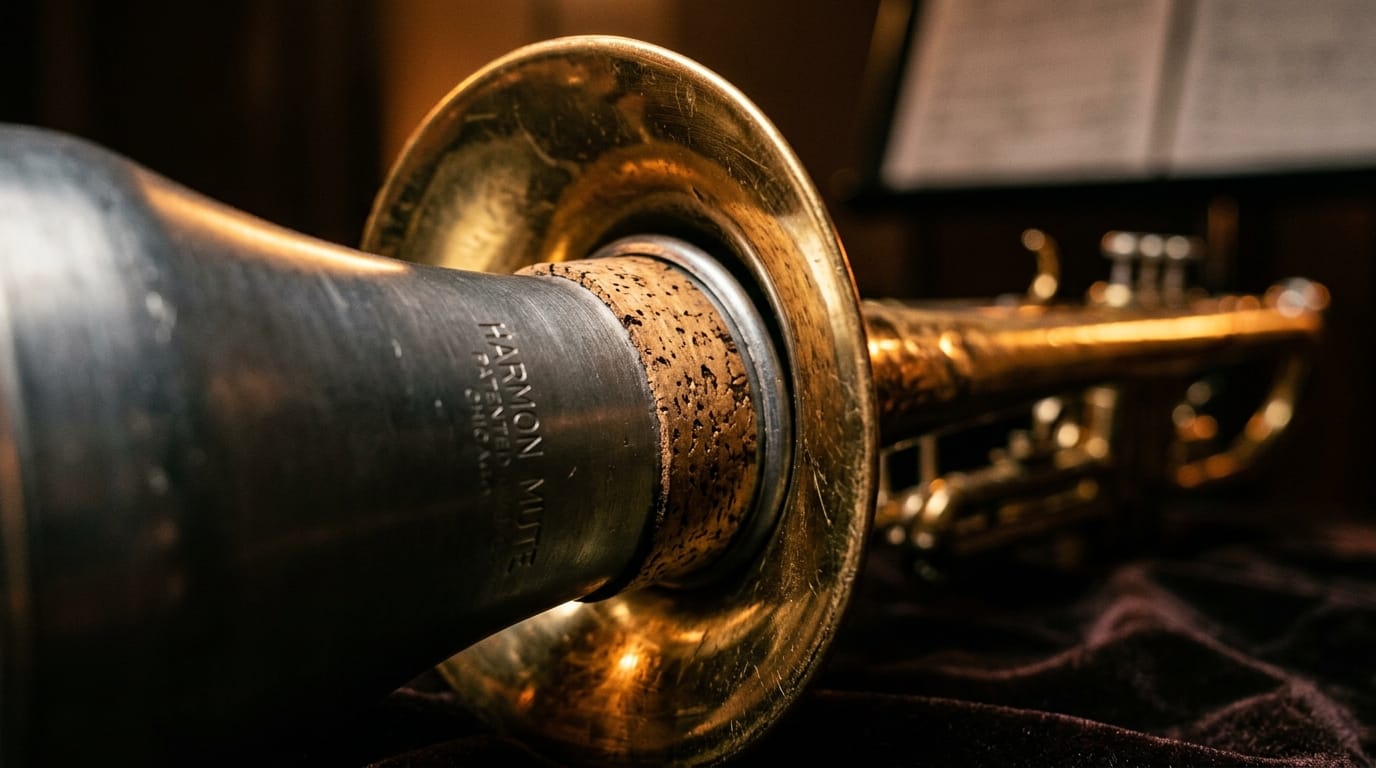
The trumpet is a brass instrument in the key of B♭, typically played with a bright, forward, projecting tone. In jazz, especially bebop, the convention was power and speed. Davis inverted both. He used a Harmon mute, a hollow metal device inserted into the bell of the trumpet, held close to a microphone, which transformed the instrument’s sound into something breathy, intimate, and almost conversational. Where other trumpeters pushed toward the audience, Davis’s horn turned inward. For a complete overview of jazz instruments and how they function, our guide to jazz instruments covers the trumpet family in detail.
The Harmon Mute, A Sound That Became a Signature
The Harmon mute technique is most clearly audible on ‘Round About Midnight (1957), Kind of Blue (1959), and Someday My Prince Will Come (1961). On those recordings, the trumpet floats above the rhythm section like a thought rather than a statement. Davis also positioned the horn angled slightly downward rather than projecting outward, which affected both tone quality and his famous visual stage presence, including the “back to the audience” stance that became his trademark and, for a while, a controversy.
Davis’s economical phrasing, fewer notes, longer silences, more space between phrases, was both an artistic philosophy and a practical adaptation to the physical demands of performing. As musicologist Ted Gioia writes in The History of Jazz (Oxford University Press), Davis “treated silence as a musical element with the same authority as any note.” In his electric period, Davis added a wah-wah pedal to the trumpet’s signal chain, pushing the instrument into funk and rock sonic territory that no brass player had touched before.
The Musical Eras, Six Reinventions of Miles Davis
Davis didn’t evolve so much as he detonated and rebuilt. Six distinct periods mark his recording career, and each one was controversial enough when it arrived that established fans felt betrayed. Each one also turned out to be correct.
Era 1, Birth of the Cool (1949–1950)
The nonet sessions Davis recorded for Capitol Records in 1949 and 1950 were compiled and released as Birth of the Cool in 1957. The lineup was unusual: French horn, tuba, baritone saxophone, alongside more standard jazz instrumentation. Collaborators included arranger Gil Evans and saxophonists Gerry Mulligan and Lee Konitz. The music pushed back against bebop’s velocity and density, introducing lighter textures and chamber-jazz arrangements. These sessions became the direct foundation for the entire West Coast Cool movement of the 1950s.
Era 2, Hard Bop and the First Great Quintet (1955–1959)
Davis signed to Prestige Records and produced a prolific run of recordings in 1955 and 1956 in sessions that became four albums: Cookin’, Relaxin’, Workin’, and Steamin’. He also signed with Columbia Records in 1955, a major-label move that dramatically widened his audience. His first Columbia album, ‘Round About Midnight (1957), introduced the Harmon mute sound to a much larger public. The First Great Quintet featured John Coltrane on tenor saxophone, Red Garland on piano, Paul Chambers on bass, and Philly Joe Jones on drums. Davis continued his Gil Evans collaboration through three major orchestral albums: Miles Ahead (1957), Porgy and Bess (1958), and Sketches of Spain (1960).
Era 3, Modal Jazz and Kind of Blue (1959)
Kind of Blue was recorded in March and April of 1959 and released on August 17, 1959. It is, by every commercial and critical measure, the best-selling jazz album in history, certified 5x Platinum by the RIAA. Davis built the record around modal improvisation rather than conventional chord changes: the musicians improvised within scale frameworks rather than working through rapid harmonic movement, which opened up space, breath, and melody in ways bebop’s architecture had closed off. The personnel was extraordinary: Coltrane, Cannonball Adderley, Bill Evans, Wynton Kelly, Paul Chambers, and Jimmy Cobb. Ashley Kahn’s Kind of Blue: The Making of the Miles Davis Masterpiece (2000) remains the definitive account of the sessions.
For context on how modal jazz fits within the broader development of the music, our complete guide to jazz genres and subgenres covers modal jazz alongside all 16 major jazz forms.
Era 4, The Second Great Quintet and Modal Deconstruction (1964–1968)
The Second Great Quintet assembled one of the most formidable rhythm sections in jazz history: Wayne Shorter on tenor saxophone, Herbie Hancock on piano, Ron Carter on bass, and Tony Williams on drums. The group recorded E.S.P. (1965), Miles Smiles (1967), and Nefertiti (1968), and pioneered what they called “time, no changes”: freely shifting rhythm without abandoning melodic reference points entirely. The Complete Live at the Plugged Nickel 1965 captures the group dismantling and rebuilding standards across two nights in Chicago and remains one of the most complete documents of a jazz group working at its absolute peak.
Era 5, Electric Miles and Jazz Fusion (1969–1975)
In a Silent Way (1969) served as the hinge between acoustic and electric, featuring organ, electric piano, and guitar alongside Davis’s wah-wah trumpet. It’s the quietest possible way to go electric. Bitches Brew (1970) arrived the following year as a double album that invented jazz-rock fusion from scratch, and became a commercial breakthrough that brought jazz to rock audiences who had never considered the music before. Davis performed at the Isle of Wight Festival in 1970 before one of the largest crowds any jazz artist had ever faced. On the Corner (1972) went further into funk territory and confused jazz critics thoroughly. Hip-hop producers, decades later, understood it immediately. Davis’s health was deteriorating by 1974, and by 1975 he had withdrawn entirely from performing.
Era 6, Comeback and Final Years (1981–1991)
Davis returned to Columbia Records and released The Man with the Horn in 1981, his first album in six years. It was a modest comeback commercially but confirmed he was still capable. Tutu (1986, Warner Bros.) was the real statement: it won the Grammy Award for Best Jazz Instrumental Album and proved the electric palette of synthesizers and studio production could carry his voice as well as any acoustic band had. Doo-Bop, released posthumously in 1992, incorporated hip-hop rhythms and has since been recognized as prophetic. Davis performed at the Montreux Jazz Festival in 1991, one of his last public appearances, conducting a program of Kind of Blue and Birth of the Cool era material arranged by Quincy Jones.
Miles Davis’s Wives, Love, Marriage, and the Women Who Shaped Him
Davis was married three times, and each marriage didn’t just run parallel to his music: it actively tracked and, in some cases, accelerated a major artistic shift. Let’s be honest about what these relationships tell us, because the spouse queries around Miles Davis generate more than 2,200 searches a month. People aren’t just looking for names. They want the story.
Frances Taylor, The First Wife (Married 1958–1968)
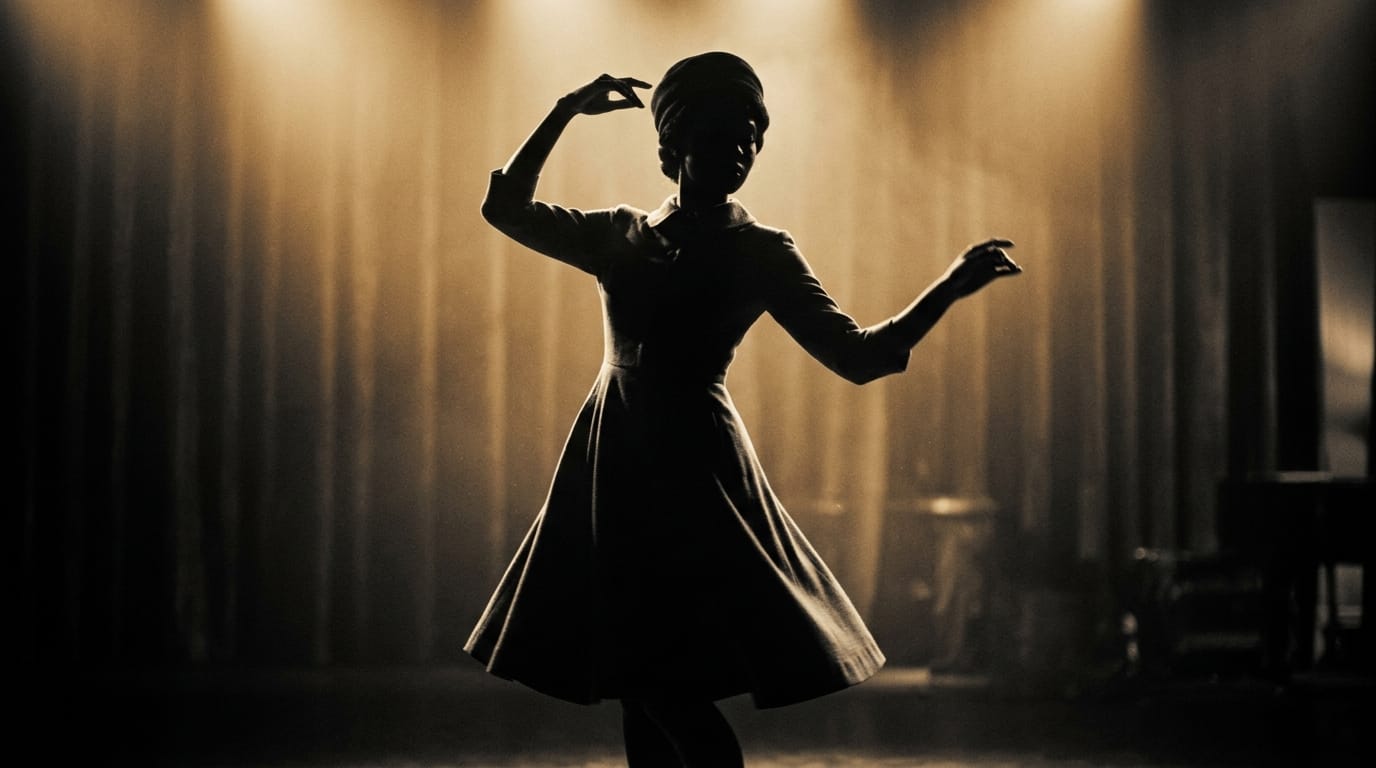
Frances Taylor, born in 1929, was a professional dancer who had performed with Katherine Dunham’s celebrated dance company and appeared on Broadway. Davis pursued her with the same focused intensity he applied to music. They married in 1958, the same year he recorded ’58 Miles, which includes the composition “Fran-Dance,” written in her honor. The marriage coincided precisely with his modal jazz peak: Kind of Blue, the Gil Evans orchestral collaborations, the formation of the Second Great Quintet.
Davis pressured Taylor to abandon her professional career after their marriage. He acknowledged this in his 1989 autobiography with visible regret. Biographer Ian Carr, in Miles Davis: The Definitive Biography, identifies Frances as Davis’s most profound romantic attachment. Davis also admitted in that same autobiography to physical abuse during the marriage, a fact that has complicated but never disappeared from honest accounts of his life. They divorced in 1968 as Davis’s substance abuse deepened and his musical direction began pivoting toward electricity and rock.
Betty Mabry, The Catalyst for Fusion (Married 1968–1969)
Betty Mabry, born in 1945 and known later in her career as Betty Davis, was a singer-songwriter, model, and a significant figure in the New York music scene in her own right. She died in 2022 at age 76. Their marriage lasted less than a year, but its influence on Davis’s catalog outlasted most longer unions. Mabry introduced Davis to Jimi Hendrix, Sly Stone, and James Brown. She brought records home. She dragged him into conversations about where rock and funk were going. Davis later wrote directly: “I have to thank Betty for introducing me to the music that was happening” (sourced: Miles: The Autobiography, 1989).
The album Filles de Kilimanjaro (1968) features a track called “Mademoiselle Mabry,” named in her honor, and it already sounds like a musician whose ear has shifted toward electric rhythm. In a Silent Way and Bitches Brew followed directly. After their divorce in 1969, Betty Mabry went on to a solo recording career as a pioneering funk artist whose influence has been reassessed significantly in recent decades.
Cicely Tyson, The Comeback Partner (Married 1981–1988)
Cicely Tyson (1924–2021) was one of the most acclaimed Black actresses in American history, later receiving an honorary Academy Award. She and Davis married in September 1981, the same month he released The Man with the Horn. The timing was not coincidental. Multiple biographers credit Tyson with playing a central role in pulling Davis out of his five-year withdrawal, his drug use, and the physical deterioration that had left him barely functional. In her memoir Just As I Am (HarperCollins, 2021), Tyson addressed their relationship with candor, describing both its depth and its difficulties. They divorced in 1988 but remained on reasonably civil terms. Davis dedicated the comeback decade that followed to her in everything but name.
Other Significant Relationships
Jo Gelbard was Davis’s partner in his final years, present during his last performances and his final hospitalization in 1991. Davis had several other significant long-term relationships, documented in published biographies, including his relationship with Irene Cawthon, who was the mother of his three eldest children. These relationships never carried the same artistic weight as the three marriages, but they were part of the full human record.
Miles Davis’s Children
Davis fathered four children. His eldest, Cheryl Davis, and youngest son Erin Davis have been publicly active as representatives of his father’s legacy, alongside nephew Vince Wilburn Jr., as partners in the Miles Davis Estate.
His Four Children
| Name | Mother | Birth Year | Known For |
|---|---|---|---|
| Cheryl Davis | Irene Cawthon | 1944 | Active in estate and archival preservation |
| Gregory Davis | Irene Cawthon | 1946 | Documented in published biographies |
| Miles Davis IV | Irene Cawthon | 1950 | Musician; public representative of his father’s legacy |
| Erin Davis | Marguerite Eskridge | 1970 | Musician; involved in archival recording projects |
These names are verified through Davis’s autobiography and published biographies. Our editorial team has not included any children not confirmed by those primary sources. Erin Davis has participated in projects related to his father’s recorded legacy, and Cheryl Davis has been active in estate-related preservation work.
Addiction, Absence, and Darkness (1954–1981)
The darkness in Davis’s biography isn’t incidental. It ran directly through his music, his relationships, and his long silences. Understanding it is not separate from understanding the art.
Heroin Addiction, The Late 1940s Through 1954
Davis began using heroin around 1949 to 1950, during the bebop years on 52nd Street when the drug was widespread in jazz circles. His addiction deepened through the early 1950s, producing missed engagements, erratic performances, and recording sessions where his concentration was visibly compromised. In 1954, he kicked heroin through will alone, locking himself in his father’s house in East St. Louis and enduring cold turkey withdrawal without medical assistance. He recounted this experience in vivid, unglamourized detail in Miles: The Autobiography. It stands as one of the most striking acts of self-rescue in the history of American music.
The Cocaine and Prescription Drug Years, 1970s
Sobriety from heroin held for years, but cocaine and alcohol became serious problems again in the early 1970s. Davis’s physical health was also compounding: per accounts in multiple published biographies, he had been diagnosed with sickle cell anemia, and a hip replacement in 1965 was followed by further hip deterioration and bursitis that made standing and performing genuinely painful. By 1975, Davis had retired from performing entirely. Accounts from musicians who knew him during the 1975–1980 period, including published interviews with Gary Bartz and Dave Liebman in the jazz press, describe a reclusive, heavily medicated man who rarely left his New York home and almost stopped playing entirely.
Sobriety and Comeback, 1981
Medical intervention, documented in published biographies as occurring at Lenox Hill Hospital in New York City, and the stabilizing influence of Cicely Tyson helped Davis rebuild a functional life. In 1981 he returned to Columbia Records. The Man with the Horn was his first new music in six years. Critics were divided. Audiences showed up. The comeback was real, even if the peak of his powers was behind him. What followed was a decade of work that deserves to be evaluated on its own terms rather than against the impossible standard of 1959.
Miles Davis’s Death, Cause, Circumstances, and Final Days
Miles Davis died on September 28, 1991. He was 65 years old. The fact is clean. The circumstances were not sudden: his health had been declining for months, and those around him knew it.
September 28, 1991, What Happened
Davis died at St. John’s Hospital and Health Center in Santa Monica, California. His cause of death was a combination of stroke, pneumonia, and respiratory failure occurring concurrently, as reported by the Associated Press on September 28, 1991, and confirmed in all major published biographies including Ian Carr’s Miles Davis: The Definitive Biography. He had been hospitalized in the days prior, and the three conditions together proved irreversible. He was 65 years old.
Health in His Final Year
Davis had performed at the Montreux Jazz Festival in July 1991, approximately two months before his death, conducting an extraordinary concert of Kind of Blue and Birth of the Cool era material re-arranged by Quincy Jones. Footage from that concert shows a man visibly diminished physically but still commanding. He had experienced multiple hospitalizations in 1990 and 1991 related to pneumonia and the cumulative effects of decades of sickle cell anemia (documented in published biographies), drug use, and hip complications. Jo Gelbard, his companion in his final years, has given interviews describing his final weeks as difficult but not without moments of the characteristic focus he brought to everything.
Immediate Reaction and Tributes
News of Davis’s death ran on front pages internationally. DownBeat dedicated its November 1991 issue to tributes from musicians worldwide. President George H.W. Bush issued a formal statement acknowledging Davis’s cultural contributions. The reaction was proportionate: the world understood immediately that the loss wasn’t just personal but structural. Something that had been generating new music for 47 years had stopped.
Legacy, Why Miles Davis Still Matters in 2025 and Beyond
Miles Davis’s legacy isn’t a monument. It’s an active force. The evidence is in the streaming numbers, the samples, the musicians who cite him across genres that didn’t exist when he died, and in the centennial preparations now underway for 2026.
Statistical Legacy
Kind of Blue is RIAA certified 5x Platinum in the United States, making it the best-selling jazz album in history. Bitches Brew is certified Gold and remains the foundational text for jazz-rock fusion, trip-hop, and a generation of electronic music producers. Davis won 8 Grammy Awards and received 32 nominations across his career, including the Grammy Lifetime Achievement Award in 1990, as confirmed by Grammy.com. He was inducted into the Rock and Roll Hall of Fame in 2006. His discography spans at least 60 studio albums, 39 live albums, and 46 compilation albums, according to documented discography records. His words were as sharp as his playing; our collection of verified Miles Davis quotes traces the most important ones to their original sources. For a musician who died more than three decades ago, his continued presence in streaming playlists and new listener discoveries demands attention.
Influence on Subsequent Generations
The list of musicians who cite Davis as a direct influence crosses every genre boundary his career crossed. Wynton Marsalis, Herbie Hancock, and Chick Corea all came up in his bands before building their own careers. John McLaughlin and Marcus Miller carry the electric period forward. Thundercat and Kendrick Lamar have both discussed Davis in published interviews. J Dilla, Pete Rock, and A Tribe Called Quest have cited Kind of Blue and On the Corner as source material for hip-hop production. Ted Gioia, in The History of Jazz (Oxford University Press, 3rd ed.), places Davis at the center of nearly every major directional shift in the music from 1949 through 1975. Our editorial team at eJazzNews considers him, without qualification, the single most directionally influential figure in jazz history. For rankings and context on where his albums sit in the broader canon, see our editorial selection of the 50 best jazz albums of all time.
The 2026 Centennial
May 26, 2026, marks Miles Davis’s 100th birthday, and the preparations are substantial. The Miles Davis Estate unveiled the official “Miles Davis 100” centennial logo in January 2026. In April 2026, the Miles Davis Estate and Park Avenue Artists announced “The Voice of Miles: A Symphonic Celebration,” premiering at National Sawdust in Brooklyn, New York. In March 2026, singer Laufey released a lyrical cover of “Blue in Green” specifically to honor the centennial, bringing Davis’s modal jazz vocabulary to an entirely new generation of listeners. SFJAZZ has organized programming around Davis’s connections to the San Francisco Bay Area. These events confirm what the streaming numbers already suggest: Miles Davis isn’t being preserved. He’s being continued.
Essential Listening, Miles Davis Albums by Era
Every era of Davis’s career produced essential recordings, and the right entry point depends on where you’re starting from. Our editorial team at eJazzNews has selected five core albums and added two key additions for those ready to go further. These aren’t ranked against each other. They’re stations on a journey. For a deeper look at each record, see our ranked guide to the 10 best Miles Davis albums.
| Album | Year | Era | Why It Matters |
|---|---|---|---|
| Birth of the Cool | 1957 (sessions 1949–50) | Cool Jazz | Invented a subgenre whole; the most accessible entry point for listeners coming from classical music |
| ‘Round About Midnight | 1957 | Hard Bop | Davis’s Columbia debut; the Harmon mute in full effect; Coltrane audible and already extraordinary |
| Kind of Blue | 1959 | Modal Jazz | The single greatest entry point into jazz, full stop; the best-selling jazz album of all time for reasons you’ll hear immediately |
| Sketches of Spain | 1960 | Orchestral / Third Stream | Davis and Gil Evans fuse Flamenco and jazz into something that has no real genre name; deeply moving |
| In a Silent Way | 1969 | Electric Transition | The bridge album; if Kind of Blue is your foundation, this is the door to everything that came after |
| Bitches Brew | 1970 | Jazz Fusion | Still startling; the record that invented an entire genre; required listening for anyone interested in where jazz went next |
| Tutu | 1986 | Late Career | Grammy winner; the comeback distilled into one coherent statement; proves the last decade mattered |
For placement of these albums within the larger jazz canon and comparisons to other essential recordings, our editorial team’s ranking of the 50 best jazz albums of all time provides fuller context on each era represented here.
Frequently Asked Questions About Miles Davis
Who was Miles Davis in love with?
Davis had three marriages and several significant long-term relationships. Biographers and Davis himself, in Miles: The Autobiography (1989), consistently identify Frances Taylor as his most intense romantic attachment. Davis expressed lifelong regret over how he treated her, including pressuring her to abandon her professional dance career and his admitted physical abuse during the marriage. His relationship with Cicely Tyson during the 1981–1988 period is described in multiple sources, including Tyson’s own memoir Just As I Am (HarperCollins, 2021), as deeply affectionate and stabilizing.
What was Miles Davis’s cause of death?
Miles Davis died on September 28, 1991, from a combination of stroke, pneumonia, and respiratory failure, three conditions that occurred concurrently. He was 65 years old. His death was reported by the Associated Press on the same date and has been confirmed in all major published biographies. He had been in declining health throughout 1991, with a documented history of sickle cell anemia and prior hospitalizations contributing to his deteriorating condition.
What instrument did Miles Davis play?
Miles Davis was a trumpet player. He is especially known for his use of the Harmon mute, a metal insert placed into the trumpet’s bell that transformed the instrument’s normally bright, projecting tone into something intimate, breathy, and conversational. This sound is most famously heard on Kind of Blue (1959) and ‘Round About Midnight (1957). Davis also played with minimal vibrato, a technique directly traced to his first teacher, Elwood Buchanan.
How many times was Miles Davis married?
Miles Davis was married three times. His first marriage was to dancer and actress Frances Taylor, from 1958 to 1968. His second marriage was to singer-songwriter Betty Mabry, from 1968 to 1969. His third marriage was to actress Cicely Tyson, from 1981 to 1988. Each marriage tracked a distinct phase of his artistic development, with Betty Mabry’s influence directly connected to his pivot toward jazz fusion.
Who is Miles Davis IV?
Miles Davis IV is the son of Miles Davis and Irene Cawthon, Davis’s high school sweetheart. He was born in 1950, the same year Kind of Blue was recorded. He has pursued music and has been publicly active in representing his father’s legacy, giving interviews to publications including DownBeat. His name generates its own search traffic, reflecting genuine public interest in the continuation of the Davis family’s connection to the music.
Miles Davis turns 100 on May 26, 2026. On May 26, 2026, the world gets to mark a century since he was born in Alton, Illinois, to a dental surgeon father and a violinist mother who wanted him to play violin. He played trumpet instead, and changed everything. The centennial events now taking shape at venues from Brooklyn to San Francisco suggest that the conversation he started isn’t close to finished. If you’re new to his music, start with Kind of Blue and go in both directions from there. If you already know it, the centennial season will offer new reasons to listen harder.